FTVOGUE CO2 Air Quality Monitor Indoor Tester Review
Introduction: An Eye on Your Indoor Air
In our quest for a healthy home, we often invest in air purifiers, dehumidifiers, or steam cleaners. But how do we know if these devices are actually working? How can we identify the precise moment to ventilate, or understand which household activity is degrading our air? This is where the air quality monitor comes in. It is to the purifier what the speedometer is to the car: an essential performance indicator. Today, we analyze in detail the FTVOGUE CO2 Air Quality Monitor Indoor Air Tester, a portable device that promises to measure five key parameters of your air. Our goal: to decipher its technical promises, understand what it truly brings to managing a healthy, chemical-free home, and see what early users are saying.
Key Strengths: A Complete Measurement Panel in a Compact Body
The FTVOGUE CO2 Air Quality Monitor immediately stands out for its ambition to measure everything in a single device. This is its main asset.
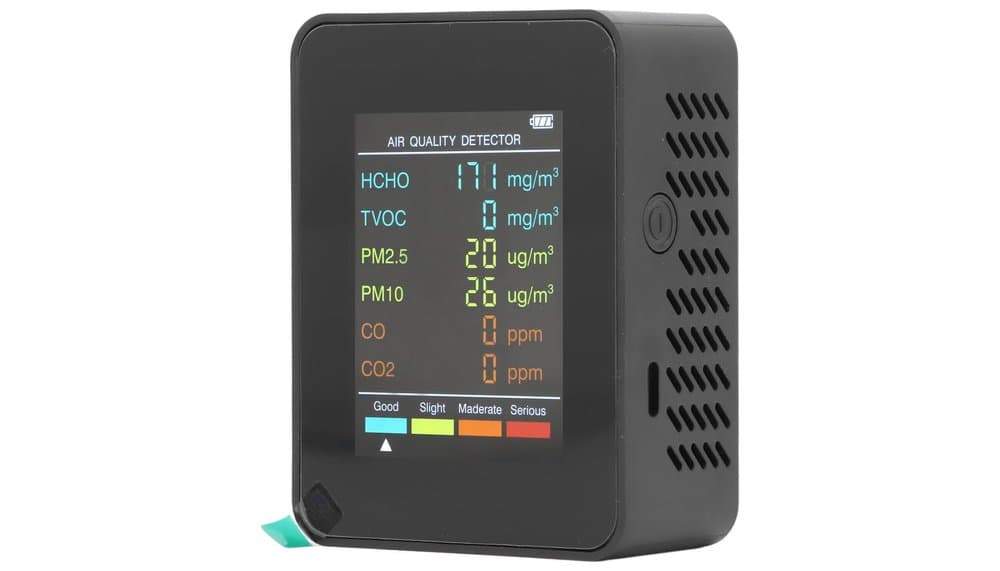
An immediate multi-parameter view. On paper, its specifications are comprehensive: it measures CO2 (carbon dioxide), VOCs (Volatile Organic Compounds, labeled TVOC), formaldehyde (HCHO), as well as fine particles PM2.5 and PM10. For a household concerned about its air quality, having a single device to monitor both the "breathing" of a room (CO2), chemical emissions from furniture or cleaning products (VOCs/HCHO), and dust in suspension is a major advantage. The backlit LCD screen clearly displays these five data points, providing an instant snapshot of the environment.
A design focused on accuracy? The manufacturer highlights openings on the sides and at the back to create an airflow by convection. This feature is important: it means the device passively draws in ambient air, thus avoiding measuring only the stagnant air immediately around it. This is a crucial point for a representative reading of the room.
Portability and simplicity. With its lithium battery power via USB and compact design, it is built to be easily moved from one room to another. You can check the air quality in the baby's room after vacuuming, then in the living room during cooking, and finally in the basement near the dehumidifier. This flexibility is valuable for diagnosing localized problems.
Weak Points: The Limits of an All-in-One Consumer Device
Despite its comprehensive panel, an in-depth technical analysis reveals certain limitations inherent to its price category and technology.
The tricky question of the formaldehyde (HCHO) sensor. The specifications indicate an electrochemical sensor for HCHO, which is the correct technology for this gas. However, the testing community and air metrology experts point out that low-cost electrochemical sensors, especially when integrated into a multi-gas device, can be non-specific. They can be cross-sensitive to other VOCs, leading to potentially overestimated readings for HCHO. This device is an excellent indicator of the presence of gaseous pollutants, but it should not be considered a lab-grade formaldehyde measurement tool.
Battery life in continuous monitoring mode. User feedback highlights an important issue: battery life. One user notes that it needs to be recharged "approximately every two days" for continuous use. This makes it a tool for spot measurements or monitoring sessions of a few hours, rather than a wall-mounted device running 24/7. For permanent monitoring, you will need to leave it plugged into its USB cable.
Calibration and long-term reliability. Like any consumer-grade sensor, its long-term drift should be anticipated. Another user mentions the need to calibrate it "from time to time." Semiconductor CO2 sensors (NDIR would be more stable) and electrochemical sensors can lose accuracy. The provided user manual, sometimes reported as not being in French, is crucial for understanding the startup procedures and potential calibration cycles.
Detailed Analysis: What Does It Really Measure for Your Health?
Let's break down each parameter through the lens of health and a chemical-free home.
CO2 (400-5000 ppm): The indicator of poor ventilation. This is a reliable and useful measurement. Beyond 1000-1200 ppm, a drop in concentration, headaches, and a feeling of stale air are observed. For families working from home or in bedrooms at night, it is a perfect indicator for knowing when to ventilate. This is the most tangible strength of the device.
VOCs and HCHO (0-9.999 mg/m³): The radar for chemical emissions. These measurements should be interpreted as a global alarm. A high reading will signal gaseous pollution: perhaps the fumes from a conventional cleaner you just used, emissions from new furniture, products from cooking, or those from a scented candle. It is a powerful tool to validate the effectiveness of your "chemical-free" choices. If you use a purifier with an activated carbon filter, you can see in real-time if the VOC level drops. This is where its value is undeniable.
PM2.5/PM10 (0-999 µg/m³): The particle counter. Measuring particles is essential for allergy sufferers (dust mites, pollen, dust). It allows you to check the real effectiveness of your HEPA vacuum cleaner: does the level drop after vacuuming? It also reveals the impact of cooking, vacuuming (if it's not equipped with a sealed HEPA filter, it can release particles!), or simply shaking out a sheet. Coupled with a purifier, it becomes the dashboard for its efficiency.
In summary, the FTVOGUE does not eliminate pollutants, but it gives you the power to see them and therefore to act. Opening a window, turning on the purifier, vacuuming, avoiding certain products: its measurements turn intuitive gestures into targeted, proven actions.
Summary Technical Sheet
| Parameter | Details | Comment |
|---|---|---|
| Measured Parameters | CO2, TVOC (VOCs), HCHO (Formaldehyde), PM2.5, PM10 | Very comprehensive panel for home use. |
| Sensor Technologies | Semiconductor, Infrared (NDIR), Electrochemical | Standard mix. The NDIR CO2 sensor is a good point. |
| Measurement Ranges | CO2: 400-5000 ppm / TVOC & HCHO: 0-9.999 mg/m³ / PM: 0-999 µg/m³ | Ranges suitable for indoor environments, even degraded ones. |
| Display | Backlit LCD screen | Simultaneous reading of all 5 values. Clear. |
| Battery Life | 1200mAh Li-ion battery, USB recharge | Limited autonomy (≈ 2 days continuous based on feedback). |
| Design | ABS, convection openings | Design promoting representative measurement of ambient air. |
| Usage | Portable, desktop | Plan to recharge frequently for permanent tracking. |
What Users Say: Field Feedback and Trends
The overall rating of 4.1/5 on a small set of reviews indicates general satisfaction, but with clearly identified technical reservations.
Recurring positive points revolve around overall satisfaction ("Very good", "Yeterli" - sufficient in Turkish), display clarity, and the appreciated multi-measure concept. Users seem to value having a tangible indicator of their air quality.
The points of attention raised are more instructive:
- Battery life is the most concrete topic. A user in France specifies that for "constant monitoring," the device is not ideal as it requires recharging "approximately every two days." They recommend it more for occasional use. This is crucial information for your choice.
- Calibration. One user notes that it needs to be "calibrated from time to time." This confirms it is not a "set-and-forget" laboratory instrument. Its long-term accuracy requires maintenance, likely by leaving it in clean outdoor air to reset periodically.
- Documentation. One piece of feedback mentions the manual being only in English ("Too bad the manual is not in French"). This can be a barrier to optimal setup, especially for understanding the color-coded alerts or screen symbols.
The trend is clear: it is a highly appreciated diagnostic and educational device, but with the practical (battery life) and technical (maintenance) limits of its price segment. It is perceived as a good tool for awareness and investigation, more than an industrial-grade permanent monitoring probe.
Conclusion: A Valuable Companion for a Healthy and Conscious Home
The FTVOGUE CO2 Air Quality Monitor fits perfectly into our philosophy of a healthy home. It doesn't clean, but it makes the invisible visible, which is the first step towards cleaner air.
For us, advocates of chemical-free cleaning, it is an objective ally. It validates (or invalidates) our efforts: does it confirm that using a steam cleaner (at high temperature) does not emit VOCs? Does it show a drop in PM2.5 after using the HEPA vacuum? Does it indicate an accumulation of VOCs after using a conventional cleaning product borrowed from a neighbor? That is its strength: providing numerical proof.
Its limitations (battery life, calibration) are real but predictable for a device at this price. We see it as a tool for auditing and learning more than for 24/7 monitoring. Walk it around your house, test different scenarios, identify pollution sources. Once habits are established and problems targeted, you can recharge it and use it for spot checks.
Ultimately, if you are looking to understand the dynamics of your indoor air, to optimize the use of your purifier, or simply to be reassured about the air your family breathes, the FTVOGUE is a sensible investment. It transforms worry into informed action, and that is precisely the spirit of a healthy, well-kept home.
Independent and transparent — Our articles are based on in-depth research and real user reviews. No brand sponsors our content. Affiliate links help fund the site, at no extra cost to you.
Articles you might like
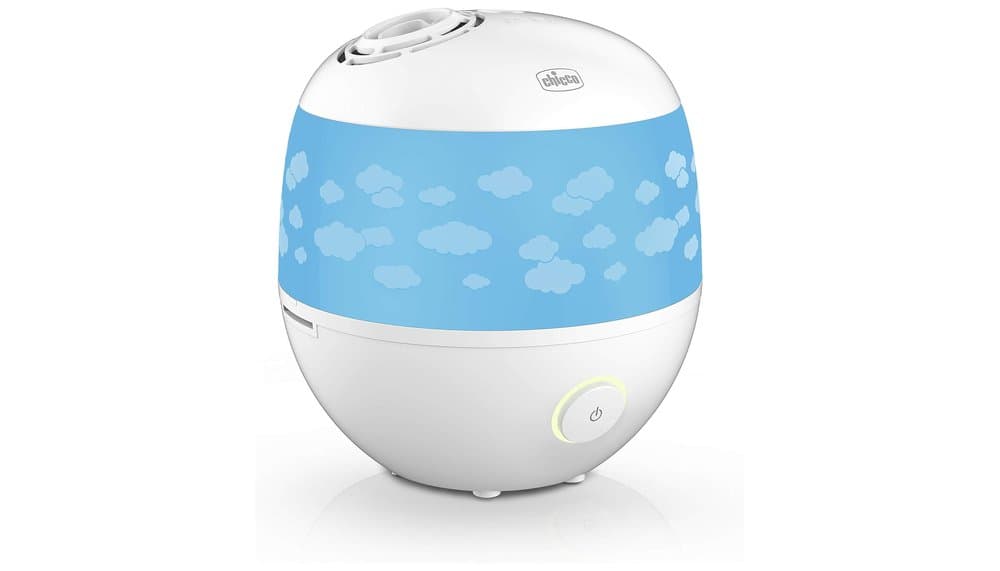
Chicco Humi Hot Advance Air Humidifier Review
Chicco Humi Hot Advance Air humidifier review for kids: warm steam relief for seasonal discomforts in a chemical-free home.

Veegreen White Sage and Palo Santo Incense Set Review
Review the traditional ritual of smudging with white sage and palo santo for cleansing air naturally, as an alternative to modern air purifiers.
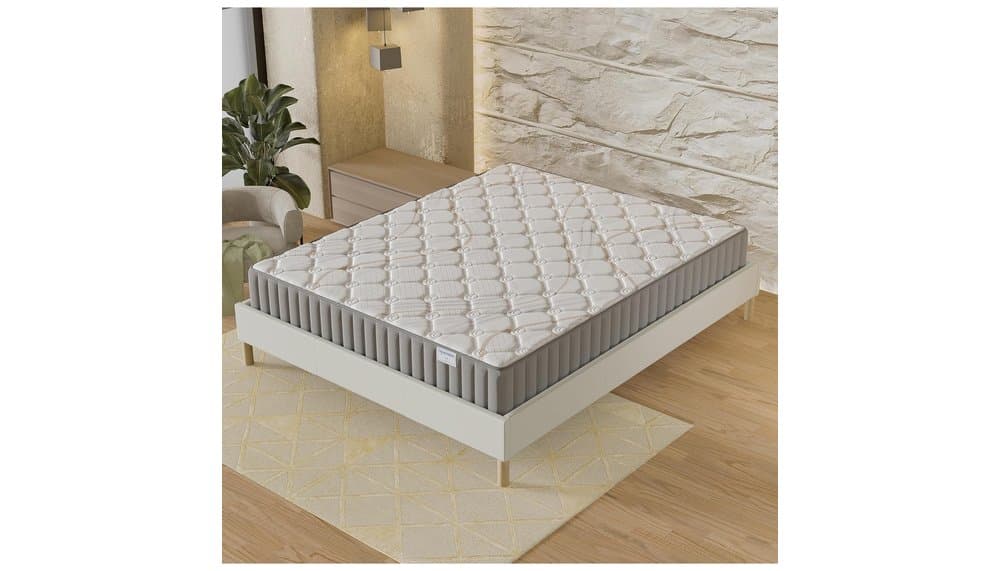
NOVEMBER Sirius Mattress Review: Complete Test Analysis
A deep analysis of the NOVEMBER Sirius mattress for healthy sleep. We test its materials and construction for allergens, VOCs, and overall sleep hygiene.
Guides you might like
Air Purifier Buying Guide
Indoor air can be more polluted than outside. Learn how to choose the right air purifier to combat dust, VOCs, and allergens.
Allergen Fighter Dehumidifier Buying Guide
Combat allergies from dust mites and mold caused by high humidity at home. A good dehumidifier protects your family's health.

Anti-allergen vacuum cleaner
Does vacuuming worsen allergies? Yes, with a poor filter. Choose the right vacuum to trap allergens and protect your health.