Choosing Your Effective Steam Mop
Tired of juggling bottles of chemical products to disinfect your floors? Choosing a good steam mop is betting on a healthier home without complicating your life. It eliminates dirt and allergens through the simple power of heated water. And frankly, seeing steam lift grime without any aggressive odor is rather magical.
Key Points to Remember
- A good steam mop cleans and disinfects using only the power of heated water, without chemicals.
- For an effective result, scrutinize the pressure (min. 3.5 bar), the steam flow rate, and the heating time.
- Choose a corded model for large areas and a cordless one for mobility in small spaces.
- Select your equipment according to your floors (caution on wood floors) and favor useful accessories like the window squeegee.
- Regular maintenance, especially completely emptying the tank after use, is crucial to combat limescale and the appliance's lifespan.
Why Steam is Your Ally Against Household Pollutants
We often believe our homes are havens of peace, but they host a real ecosystem of invisible pollutants. Dust mites in carpets, mold spores in grout, chemical residues on tiles… the list is long. This is where the steam mop comes in, positioning itself as the best chemical-free steam mop to take back control. Its principle is remarkably simple: water, heated to a high temperature, turns into steam capable of dislodging, dissolving, and eliminating these unwanted elements through thermal force alone. Frankly, it's unbeatable.
How Does Steam Work, Specifically?
The magic happens thanks to two combined actions. Firstly, heat. Steam at 130°C at the soleplate's exit is a deadly weapon for many microorganisms. Dust mites, for example, do not survive beyond 60°C. Secondly, the pressure of the steam. It penetrates the micro-porosity of surfaces and textiles, lifting embedded dirt and allergens that vacuuming alone cannot reach. The result? A floor that is not only visually clean but hygienically healthy, without a slippery film or detergent smell.
Which Pollutants to Target First?
- Dust mites and their droppings: Main causes of allergies, they thrive in floor dust and deep within carpets. High-temperature steam eliminates them effectively.
- Mold: These fungi love the humidity in bathrooms and kitchens. Steam, especially with a narrow nozzle, cleans tile grout deeply and prevents reappearance by removing spores.
- Pollen and pet dander: These fine particles stick to floors. Steam aggregates them and allows for easy removal, whereas a traditional mop would put them back into the air.
- Certain VOCs (Volatile Organic Compounds): From certain adhesives or floor finishes, they can be "fixed" and washed away by the action of steam on the surface, reducing their evaporation into your indoor air.
Steam vs. Traditional Cleaning: The Real Match
Forget the bucket of soapy water. Even with a "green" product, you risk leaving residues that attract dust again. Steam, however, cleans and evaporates. Period. It's this absence of chemical residue that makes it a tool of choice for children's rooms or for asthmatic individuals. My opinion? If you're looking for mechanical, not chemical, purity, the steam mop has no equal. However, be careful: not all models are equal. Prioritize so-called "dry" steam, which is less humid, will dry faster, and is safe for most floors, unlike overly wet steam which could leave marks.
Key Figures to Scrutinize: Pressure, Flow Rate, and Heat-up Time
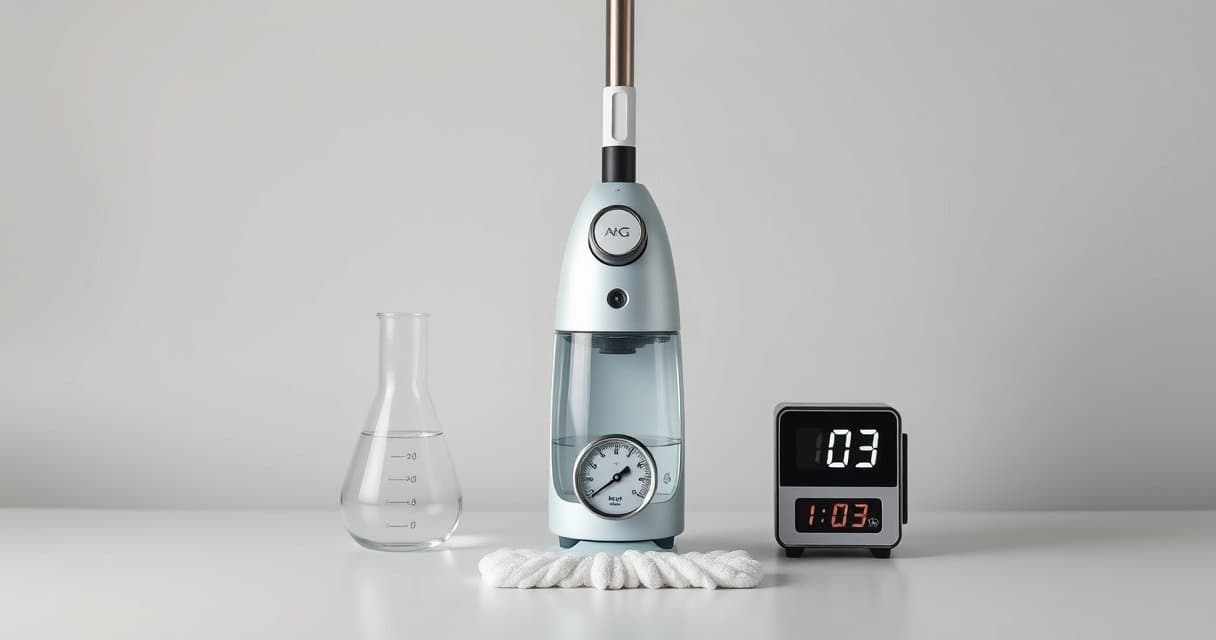
Taking the step to purchase is good. But choosing a model that delivers on its promises is better. On a technical sheet, three figures make all the difference between a gadget and an effective tool. Don't skip over them.
Steam Pressure: Your Penetration Force
Expressed in bars, it's the engine of your cleaning. Imagine: low pressure is like a lukewarm shower flowing over dirt. High pressure is a powerful jet that dislodges everything. For hygienic cleaning that goes beyond the surface, aim for a minimum of 3.5 bars. Below that, you'll struggle to remove grime embedded in tile grout or to effectively eliminate biofilms. From 4-5 bars, you're in the comfort zone for the majority of tasks. Frankly, a model with 2 bars is often a disappointment.
Steam Flow Rate: The Work Pace
Measured in grams per minute (g/min), it indicates the amount of steam produced. A flow rate that's too low, and you'll have to go over the same spot ten times. A generous flow rate cleans faster and more broadly. For a 50m² apartment, a flow rate around 30-40 g/min is a good balance. For a house with large rooms, opt for 50 g/min and above. Be careful, a high flow rate also consumes more water: check the tank capacity so you don't have to refill it mid-task.
Heat-up Time: The Patience Test
This figure is the one that makes you wait between the moment you press the button and when the steam is ready. Early models could take 4 to 5 minutes. Today, many indicate less than a minute, sometimes even 15 to 30 seconds for the most responsive ones. It's a real comfort for daily use. You have a small stain to treat quickly? A fast heat-up time makes all the difference. It's an essential ergonomic criterion, often linked to the boiler technology.
To help you navigate, here is a quick guide to reading these three indicators:
| For which use? | Target Pressure | Target Flow Rate | Ideal Heat-up Time |
|---|---|---|---|
| Small studio, light and quick cleaning | Minimum 3 bars | 20-30 g/min | Less than 45 seconds |
| Standard house, regular and thorough cleaning | 3.5 - 4.5 bars | 35-50 g/min | Less than 60 seconds |
| Large surfaces, stubborn dirt (grout, patios) | 5 bars and above | 50 g/min and above | Variable, prioritize performance |
Keep in mind that the best chemical-free steam mop for you is the one that balances these three parameters with the reality of your home. Record-breaking pressure is useless if the runtime is 10 minutes. An ultra-fast heat-up time is less crucial if you plan long, scheduled cleaning sessions. Weigh it all up.
Our Selection
Effectively cleaning floors without resorting to an arsenal of chemicals is a real consideration for many households today. Steam mops meet this expectation, but not all are created equal. We have scrutinized three popular models with similar promises but distinct specificities. Our analysis is based on their technical characteristics and user feedback to help you see things more clearly.
To compare these three steam cleaners, here is a summary of their most relevant technical specifications.
| Product | Power & Heating | Tank Capacity | Key Technical Strengths | Maneuverability & Usage |
|---|---|---|---|---|
| Beldray BEL01986VDE | 1300W / Heats in 30s | 350 ml (~15 min) | Auto shut-off, compact design | 180° swivel head, triangular head |
| Vileda Steam Plus | 1550W / Heats in 15s | 400 ml (~28 min) | 3 steam settings, temperature detection | Triangular head, detachable handle |
| BLACK+DECKER FSM1616-QS | 1600W / Heats in 30s | 350 ml (~14 min) | Rectangular head + detachable delta head | 180° swivel head, removable tank |
Beldray Steam Cleaner BEL01986VDE
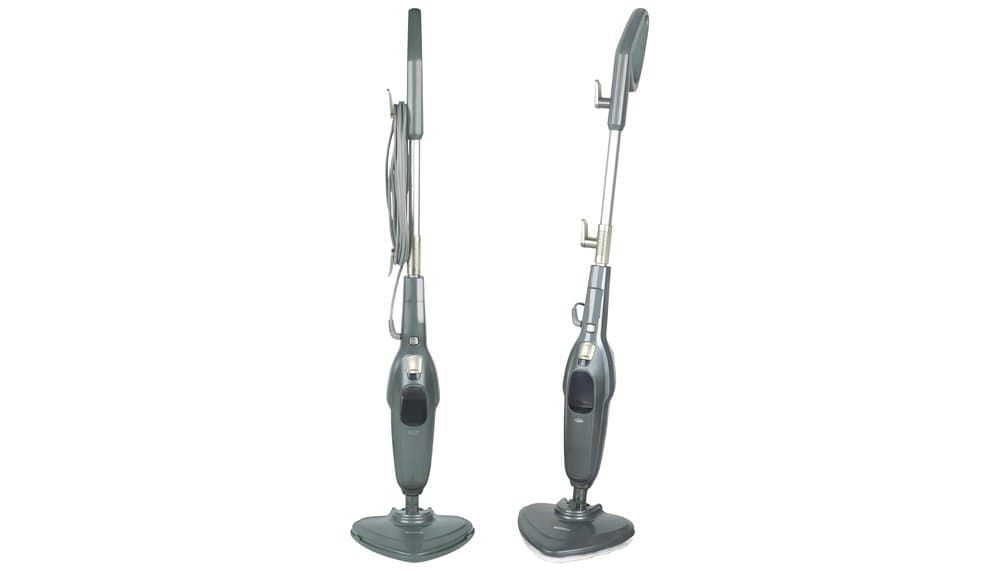
The Beldray BEL01986VDE presents itself as a simple, effective, and quick-to-grasp model. On paper, its specifications suggest an appliance focused on practicality: a very fast 30-second heat-up time, a 180° swivel triangular head for corners, and a contained weight that seems to facilitate handling. The auto shut-off function is a significant safety point highlighted in its features.
According to user feedback, it's a model that wins over with its ease of use. Reviews confirm that it heats up indeed very quickly and that the steam is sufficient for daily cleaning of smooth floors (tile, vinyl, laminate). Its lightweight design is appreciated for small areas. However, community feedback highlights some limitations. The 350 ml tank capacity is considered a bit small for cleaning large rooms in one go; you need to plan on refilling it for surfaces over ~50 m². Another point noted by users: although supplied with a carpet accessory, its effectiveness on thick carpets seems limited, as the steam sometimes struggles to penetrate. This model therefore does a decent job for regular and quick maintenance, but you shouldn't expect miracles on ingrained dirt or very large surfaces.
Vileda Steam Plus
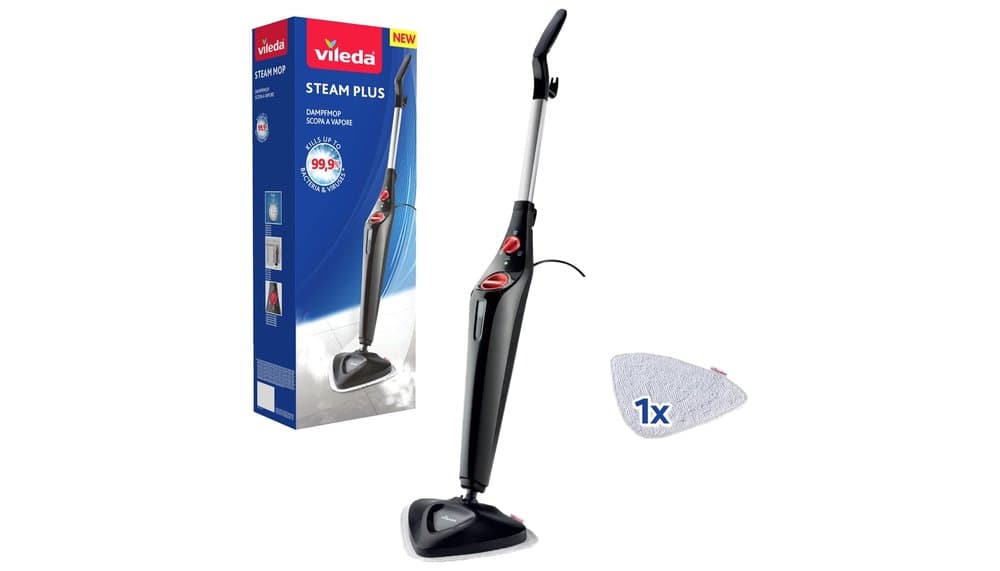
The Vileda Steam Plus clearly stands out with its announced performance and autonomy. With heating in 15 seconds (the fastest in our selection), 1550W power, and a 400 ml tank allowing up to 28 minutes of runtime, the specs promise powerful and long-lasting cleaning. The presence of three steam settings (hardwood, carpet, tile) is a major technical argument for finely adapting to the floor type. Another practical innovation: the temperature detection, which according to the manual, would allow unplugging and re-plugging the appliance without waiting for it to reheat.
The community is overall very positive about this model. Reviews highlight its steam power and its autonomy, which is truly suited to medium-sized houses or apartments. The triangular head is considered very effective for cleaning along baseboards and under low furniture. The fact that the handle is detachable for storage is a concrete plus for limited spaces. However, some points of caution emerge. Despite its 2.3 kg, several users note that it can feel a bit heavy at arm's length during prolonged sessions. Furthermore, the inclusion of only one spare pad (albeit washable) in the entry-level package is sometimes regretted. In summary, the Vileda Steam Plus seems to be a very robust choice for those seeking a versatile and high-performing appliance, provided you are not put off by a somewhat heavier weight.
BLACK+DECKER Steam Mop FSM1616-QS
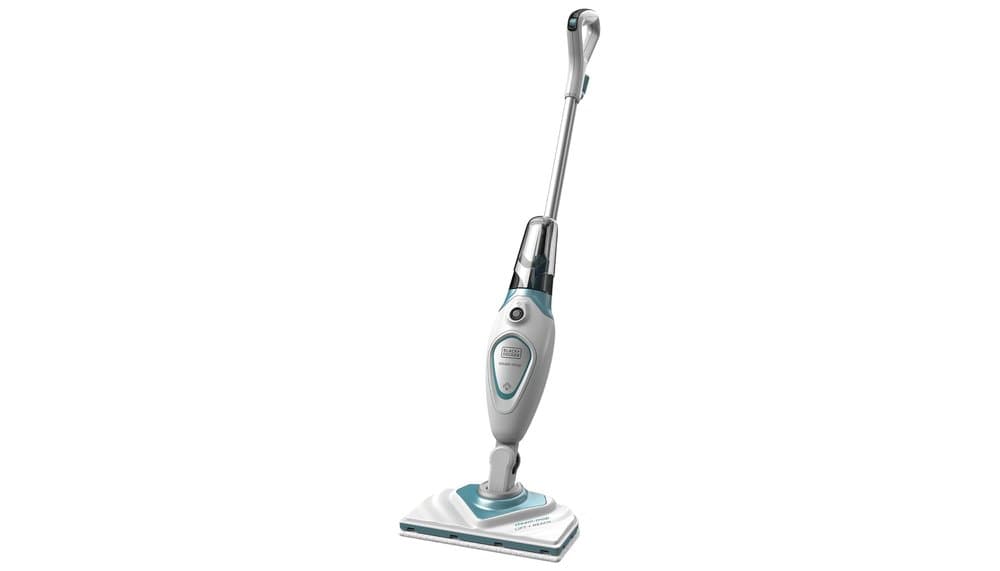
The BLACK+DECKER FSM1616-QS bets on technical versatility and practical design. Its most visible asset is its 2-in-1 head: a classic rectangular base that incorporates a small detachable delta head for corners and tight spots. This avoids having to change accessories to clean along walls. Another practical point praised in reviews: its removable tank, which greatly simplifies filling and cleaning the tank. At 1600W, it is also the most powerful in our trio.
User feedback, which is plentiful, confirms its effectiveness on hard floors and its great maneuverability thanks to the swivel head. The integrated delta head is often cited as a real plus for precise cleaning. However, the community also notes its constraints. The autonomy is the lowest of the three, with about 14 minutes of continuous use, making it better suited for cleaning room by room. Furthermore, although advertised for all sealed floors, some reviews advise the greatest caution on hardwood floors sensitive to moisture, recommending using steam sparingly and not leaving the damp pad in contact for too long. It is therefore an excellent tool, precise and powerful, particularly well-suited for tiled floors, but one that requires vigilance regarding its autonomy and on delicate surfaces.
Wired or Cordless: Finding the Right Autonomy-Practicality Compromise
This is the great dilemma. On one hand, total freedom. On the other, the guarantee of never running out of juice in the middle of the living room. Each technology has its camp, and the right choice depends mainly on your way of living at home.
Cordless: The Promise of Absolute Mobility
The argument is unbeatable: no cord to drag, untangle, or carefully avoid. You move from one room to another, you slide the cleaner under furniture without worrying about the outlet. It's ultra-practical for quick and reactive cleaning. But be careful, this freedom has a price: battery life. It's often the weak point. Marketing promises sometimes claim 30 or 40 minutes, but in reality, with continuous use at medium power, rather count on 15 to 25 minutes of effective steam. Enough for a tidy 3-room apartment if you're efficient, but borderline for a house with multiple floors. And you have to remember to recharge. If you opt for cordless, check the battery type (Li-ion is the standard) and its full recharge time (often between 3 and 5 hours). Frankly, for a large area, it's a risky bet.
Wired: Continuous and No-Surprise Power
With a cord, no more bad surprises. You plug it in, and you can clean for hours without any drop in performance. It's the assurance of finishing your task, no matter the size of your home. The power is generally more constant, and wired models often offer more generous pressure and flow for an equivalent price. The real sticking point? The cable length. 6 to 8 meters is a bare minimum to work in an average room without changing outlets. Below that, you'll spend more time looking for an extension cord than cleaning. The trick is to check the layout of your outlets and imagine the cleaner's path.
So, how to decide? Ask yourself two simple questions.
First, what is the actual surface area you clean in a single session? Not the total square footage of your home, but the space you cover without stopping. For a studio or a small open apartment, cordless can be a real joy. For a 120m² house with hallways and stairs, wired is often more reassuring.
Second, is your priority reactivity or thoroughness? If you take the appliance out for a localized stain or a quick clean during the week, cordless excels. If you plan a meticulous weekly deep clean, the constraint of the cord becomes negligible compared to its consistency.
The best chemical-free steam cleaner for you isn't necessarily the most expensive or the most high-tech one. It's the one whose power source matches your habits. Personally, I find that a good wired model with a long cord remains the safe bet to never be disappointed. But if you hate cords above all else, modern cordless can do the job, provided you accept its limits and manage charging well.
Choosing the Right Equipment for Your Floors and Surfaces
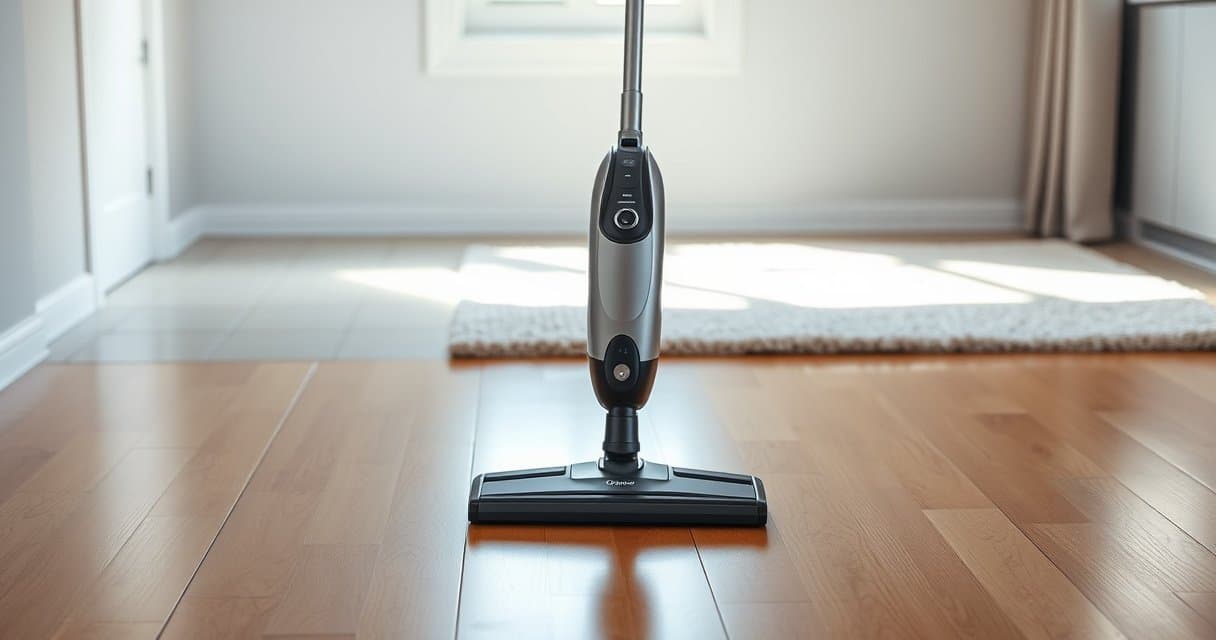
A better chemical-free steam mop does not exist in itself. What matters is that it is the best one for your floors. Because you don't clean bathroom tiles like an old parquet floor or carpet. This is where the details make all the difference.
The Soleplate: Your First Contact with the Floor
Forget basic single-layer fabric soleplates. What you need is a removable, machine-washable soleplate, ideally with two covers: a thick microfiber one for stubborn dirt and a softer one for finishing or delicate surfaces. The shape is crucial. A triangular or pointed head is a real plus for wall corners, behind toilets, or under radiators. Some models have a swiveling head, which makes all the difference for maneuvering around table legs without straining your wrist. Also check the thickness of the foam under the soleplate: it should be sufficient to create a "cushioning" effect and not scratch a shiny floor.
The Accessories That Change Everything (and Those That Gather Dust in a Drawer)
A mop limited to the floor is a shame. The true potential of steam often lies in the accessories provided. Two are really useful.
- The window squeegee: this is a magical accessory. Spray steam onto the glass and run the squeegee: goodbye streaks and fingerprints, without glass cleaner. Also effective on mirrors and kitchen tiles.
- The upholstery brush: essential if you are fighting dust mites. It allows you to treat sofas, mattresses, and even car seats with steam that penetrates deeply. This is where cleaning becomes truly healthy.
On the other hand, be wary of overloaded kits with dozens of small brushes you'll never know what to do with. One or two well-designed accessories are better than a gimmicky box set.
Your Floor Type Dictates the Settings
This is the most critical point. Improper use can damage a floor covering.
- Tile, stone, vinyl: these are the king surfaces for steam. You can go all out, with maximum steam pressure. The steam will lift grease in the kitchen and disinfect bathroom grout, where mold loves to hide.
- Laminate or lacquered parquet: here, caution is required. Always use the steam on the lowest setting and keep the mop in constant motion. Never leave puddles or stagnant condensation. A lightly dampened (not soaked!) microfiber mop to dry as a follow-up can be a good idea.
- Old solid or waxed parquet: frankly, I advise against it. Steam, even gentle, can penetrate micro-cracks, cause the wood to swell, or alter the wax. Prefer a specific cleaning method.
- Carpet: not all steam mops do this. It often requires a specific accessory (the textile brush) and a slow sweeping motion so the steam heats up without soaking the fibers. It's excellent for reviving colors and eliminating odors.
My advice? Before buying, go look at the technical manual online for the model you like. Manufacturers always clearly indicate compatible surfaces and, most importantly, those that are not recommended. Don't take any risks on this point.
Maintaining Your Appliance to Ensure Its Efficiency and Lifespan
A steam mop is a bit like a good kettle: if you only give it quality water and empty it after use, it will last you for years. But neglect, especially when it comes to limescale, can render it inoperative in a few months. To keep your best chemical-free steam mop that way, here is the routine to adopt.
Water, The Main Topic: What Type and How Often to Empty?
The golden rule is simple: use tap water, unless the manufacturer explicitly states otherwise (which is very rare). Demineralized or distilled water is often a false good idea; it can be too "aggressive" for certain internal components. Tap water contains minerals that, paradoxically, offer some protection.
The real enemy is limescale. Its accumulation clogs the small holes in the soleplate, reduces steam pressure, and can damage the heating element. To avoid it:
- Always empty the tank after each use. Never leave it filled for days, even if it's tempting for the next cleaning session. It's the best habit to develop.
- Run an empty cycle (with steam) for 30 seconds after emptying the water. This purges the conduits of residual moisture.
- If you live in an area with very hard water, use the mixture recommended by the manual, sometimes half tap water, half distilled water. And plan for a descaling every 3 to 6 months of regular use.
Cleaning External Elements: Soleplate and Filters
While the steam cleans your floors, it also dirties the appliance. Residue and fibers stick to the soleplate.
- Remove the microfiber pad after each session and wash it in the machine at 30° or 40°C. Avoid fabric softener, it reduces absorbency. Have a second one in reserve so you can rotate them.
- Carefully wipe the hot metal plate (once cooled down!) with a damp cloth to remove any deposit that could burn during the next heating.
- Many models have a removable anti-limescale filter at the tank inlet. Rinse it with clear water every two weeks. If it becomes grayish and hard, replace it. It's an inexpensive part that saves the heart of the appliance.
Storage and Pre-Storage Check
Going on vacation or won't be using it for a while? Don't put it away "dirty." Follow this checklist:
- Complete emptying of the tank and an empty cycle.
- Cleaning of the pad and the plate.
- Disassembly and air-drying of all removable parts.
- Coil the cord (for corded models) without pinching it.
- Store it in a dry place, protected from frost.
One last piece of friendly advice: if you hear an abnormal noise, a gurgling sound, or if the steam becomes weak and sputtering, stop everything. This is often a sign of a blockage. Consult the manual for the unclogging procedure before the problem worsens. A little prevention is better than an expensive repair.
Conclusion
In summary, choosing an effective steam mop isn't just about watts or gadgets.
It's a choice for your health and peace of mind.
Once you've found the right model, a little regular maintenance is all it takes.
You will then enjoy deep, chemical-free cleaning for many years to come.
So, the ball is in your court. Your home is waiting for it.
Frequently Asked Questions
Is the steam mop effective without detergent?
Yes, a good steam mop effectively removes dirt and allergens through thermal action alone, without requiring chemical products. The high-temperature steam (often around 130°C) dissolves grime and kills microorganisms like dust mites.
Which steam mop for laminated flooring?
For laminated flooring, you should use a steam mop on its lowest steam setting and keep it in constant motion to avoid any moisture stagnation. Using steam is generally not recommended on old, solid, or waxed hardwood floors.
What steam pressure to choose for effective cleaning?
For hygienic cleaning that penetrates ingrained dirt, aim for a minimum pressure of 3.5 bars. A pressure between 4 and 5 bars is ideal for most common tasks like cleaning tile grout.
Corded or cordless steam mop, which one to choose?
Choose a cordless model for its mobility and convenience in small spaces, but accept a limited runtime (often 15-25 minutes). Opt for a corded steam mop if you have a large surface area to clean, as it offers continuous and uninterrupted power.
How to maintain a steam mop against limescale?
Always empty the water tank after each use and perform a 30-second dry cycle to remove residual moisture. For very hard water, plan to descale the appliance every 3 to 6 months according to the manufacturer's recommendations.
Does steam kill dust mites in carpets?
Yes, high-temperature steam is effective at eliminating dust mites, which cannot survive beyond 60°C. To treat a carpet, use a specific textile brush and a slow movement to allow the steam to work without soaking the fibers.
Independent and transparent — Our articles are based on in-depth research and real user reviews. No brand sponsors our content. Affiliate links help fund the site, at no extra cost to you.
Guides you might like
Air Purifier Buying Guide
Indoor air can be more polluted than outside. Learn how to choose the right air purifier to combat dust, VOCs, and allergens.
Allergen Fighter Dehumidifier Buying Guide
Combat allergies from dust mites and mold caused by high humidity at home. A good dehumidifier protects your family's health.
Anti-allergen vacuum cleaner
Does vacuuming worsen allergies? Yes, with a poor filter. Choose the right vacuum to trap allergens and protect your health.
Articles you might like
Philips PureProtect 3200 Series AC3210 Air Purifier Review
Discover how the Philips air purifier tackles dust, pollen, VOCs & odors, creating a cleaner, healthier indoor environment for your well-being.
Luxiabed Memoryvex Memory Foam Mattress Review
Luxiabed Memoryvex review: Analyzing memory foam mattress comfort, VOC emissions, allergens & sleep hygiene for a healthy night's rest.
Philips Hand Steamer 3000 Series Test & Review
Philips Hand Steamer 3000 Series: A quick, chemical-free way to de-wrinkle clothes while improving hygiene and indoor air quality.