The Ultimate Air Sensor Guide
What if the air in your home is more polluted than that of the outside boulevard? We rarely think about it, yet it is a reality for many households. The first step to regaining control? A good air sensor. I'm going to explain how it becomes your best ally for protecting your family's health, without complicating life.
Key Points to Remember
- A good air sensor transforms a vague worry into measurable data to take concrete action for health.
- The key parameters to monitor are CO2, fine particles (PM2.5), VOCs/formaldehyde, and relative humidity.
- For reliable data, prefer a sensor with laser technology and calibration, and place it away from direct pollution sources.
- Connectivity and automation (purifier, VMC) allow the sensor to maintain healthy air without manual intervention.
- Interpreting data enables you to adopt simple habits like ventilating, identifying pollution sources, or using the right appliances.
Why Monitoring Your Indoor Air Changes Everything
We spend up to 90% of our time indoors, and I bet most people drastically underestimate what they breathe within their four walls. This isn't just vague ecological worry; it's concrete: spikes in CO2 during a family gathering that make you lethargic, fine particles (PM2.5) that irritate your throat after vacuuming, or humidity nearing 70% becoming a cozy nest for dust mites and mold.
Without measurement, you're navigating blindly. It's like wanting to improve your health without ever stepping on a scale or measuring your blood pressure. A better indoor air quality sensor finally gives you the eyes to see what's happening, and it completely changes your approach.
The Concrete Impacts on Your Daily Life
Let's take examples. Do you have recurrent headaches on weekends at home? A good sensor can show you a CO2 level that regularly exceeds 1200 ppm (parts per million), a threshold where concentration, fatigue, and headaches set in. The solution? Open the window for ten minutes and see it drop below 800 ppm. Magical, and above all, proven. Do you have an asthmatic child? Seeing the fine particle (PM2.5) level skyrocket after drying laundry indoors or during an outdoor pollution peak gives you a tangible reason to adapt your habits: air out at another time, or turn on your air purifier.
Moving from Worry to Measured Action
The huge advantage is that it replaces vague anxiety with precise action. Instead of wondering "Is the air good?", you have a number. And with that number, you can act effectively. Frankly, investing in an air purifier without a sensor is a bit like adjusting your heating without a thermostat: you run it constantly based on a feeling, without knowing if it's actually necessary or effective at that specific moment.
Monitoring makes you smart about your environment. You learn that cooking without the hood on makes particle counters explode. You understand that your new sofa or fresh paint emits Volatile Organic Compounds (VOCs) for weeks. You realize that your beautiful indoor plant has, in reality, no measurable impact on overall air quality. It is this awareness, backed by numbers, that durably transforms your reflexes and truly protects your family's health.
Decoding Measured Parameters: From CO2 to Fine Particles

Faced with a sensor screen, you can feel a bit lost with all these acronyms and numbers. Don't panic, let's break down what really matters together. A better indoor air quality sensor is not the one that displays the most parameters, but the one that reliably measures those that impact your daily health. Let's focus on the four main players.
CO2: The Number 1 Indicator of Your "Stale Air"
It is not a pollutant in the toxic sense, but its level is a fantastic indicator. It simply measures... your breathing! Below 800 ppm, all is well. Between 800 and 1200 ppm, it's time to ventilate – you'll start to feel a drop in concentration. Above 1500 ppm, the air is frankly stale: fatigue, headaches, and drowsiness loom. It's your most basic and one of the most useful alarm signals for managing ventilation in a bedroom, office, or living room during a gathering with friends.
Fine Particles (PM2.5 and PM10): The Invisible Enemy
Here, we're talking about real pollution. PM10 (less than 10 microns) irritate the respiratory tract. PM2.5 (less than 2.5 microns) are the most dangerous: they penetrate deep into the lungs and can enter the bloodstream. Their source? Cooking (especially at high temperature and with oil), candles, incense, tobacco, but also outdoor air coming inside. A "good" level is below 10 µg/m³ for PM2.5. If your sensor regularly exceeds 25 µg/m³ indoors, look for the source and take action – this is where a purifier with a HEPA filter proves its usefulness.
VOCs and Formaldehyde: Household Chemistry
Volatile Organic Compounds are a large family emanating from chemical products. The most well-known and monitored is formaldehyde. It is found in the glues of particleboard furniture, some paints, conventional cleaning products, and even new upholstery fabrics. Its warning threshold in indoor air is around 10 µg/m³. A high and persistent VOC measurement is an excellent reason to prefer cleaning with steam or natural products, and to ventilate a newly furnished room thoroughly.
Temperature and Relative Humidity: The Basic Conditions
Don't ignore these two! An ideal relative humidity is between 40% and 60%. Below 40%, the air is too dry, which irritates mucous membranes. Above 60%, you encourage the proliferation of dust mites and mold – a real nightmare for allergy sufferers. Coupling this data with temperature (comfortable target: 18-22°C) allows you to regulate your environment in a healthy way, sometimes simply by opening a window or using a targeted dehumidifier. These parameters are the foundation upon which the others are built.
Our Selection
We have selected three indoor air quality monitors to help you gauge the state of your home environment. These devices promise to inform you about what you are actually breathing at home, but each adopts a different approach and integrates into a different ecosystem. Here is our comparative analysis to help you see more clearly.
| Product | Main Sensors | Connectivity & Ecosystem | Power & Mobility | Key Strengths |
|---|---|---|---|---|
| Amazon Smart Air Quality Monitor | PM 2.5, VOCs, CO, humidity, temperature | Wi-Fi, Built-in Alexa | Mains (USB) | Native Alexa integration, automated routines |
| SwitchBot Meter Pro CO2 | CO2, temperature, humidity, weather* | Bluetooth (Hub required for full func.) | Battery (12 months) | Built-in screen, portability, audible/visual alarms |
| Netatmo Home Coach | CO2, temperature, humidity, ambient noise | Wi-Fi, Apple HomeKit | Mains (USB) | Noise measurement, personalized profiles, sleek design |
*Weather data requiring a SwitchBot Hub 2.
Amazon Smart Air Quality Monitor
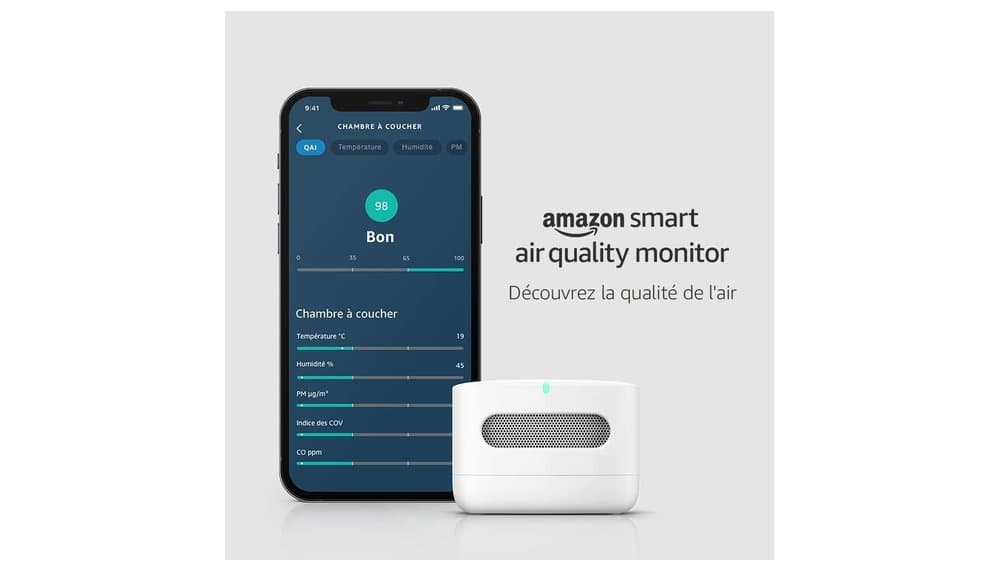
This monitor positions itself as the dedicated sensor for homes already deeply integrated into the Amazon ecosystem. On paper, its specifications are solid with tracking of five key parameters, including fine particles (PM 2.5) and carbon monoxide (CO), which is less common. Its main strength, according to user feedback, is its simplicity of integration with Alexa. The device itself, without a screen, communicates primarily via a colored LED indicator and especially via the Alexa app, where data is presented as a simplified air quality index.
The community notes that its true value lies in automations. You can set up routines for a connected air purifier or fan to turn on automatically if the air deteriorates. Reviews do, however, highlight some limitations. Its total dependence on the Alexa app: without it, you only have an indicative LED. Some feedback also mentions a slightly slow sensor response time to adapt to rapid changes. Finally, the complete lack of a screen and built-in audible alarm makes it a passive device, designed for those who want background monitoring managed by home intelligence, rather than an instant-check device.
SwitchBot Meter Pro CO2
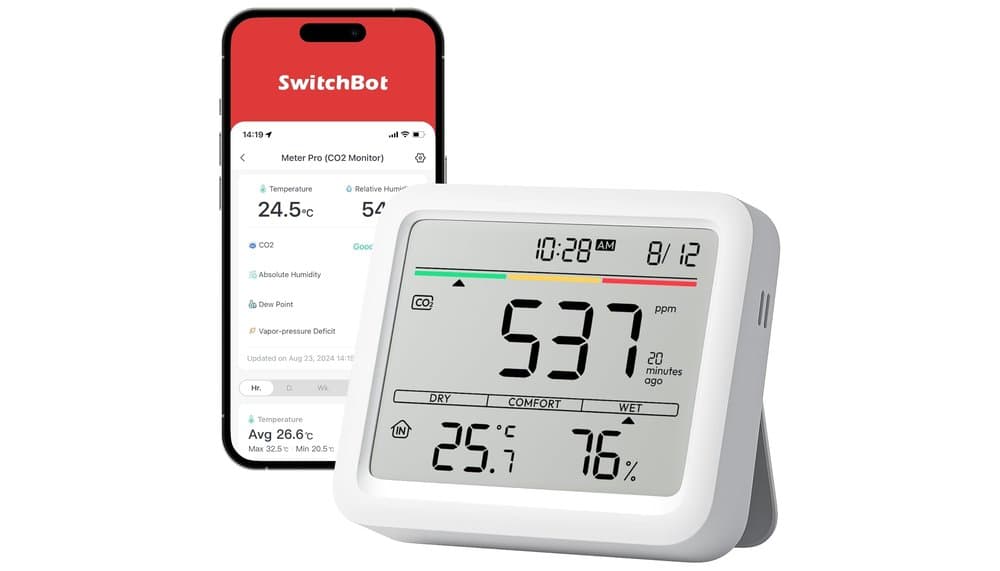
The SwitchBot Meter Pro CO2 adopts a different philosophy: it is a standalone device with a large screen and a focus on accurate carbon dioxide measurement. According to the specifications, it uses an industrial-grade Swiss NDIR sensor, known for its reliability and accuracy for CO2, with measurements every second. This is a major strong point for people wanting to specifically monitor air renewal in a room, office, or classroom.
Community feedback appreciates the permanent readability of data and the multiple alert modes (audible, visual on the screen, app notification). Its portability, thanks to an advertised battery life of about 12 months, is also a big plus. However, reviews highlight a major constraint: to access advanced features like smartphone notifications, data history, weather, or integration with voice assistants, the purchase of a separate SwitchBot Hub is absolutely required. Without it, the device remains a smart local display, but its potential is limited. Therefore, its appeal is greatly enhanced if you plan to immerse yourself in the SwitchBot ecosystem, with its plugs, smart switches, and other connected devices.
Netatmo Home Coach
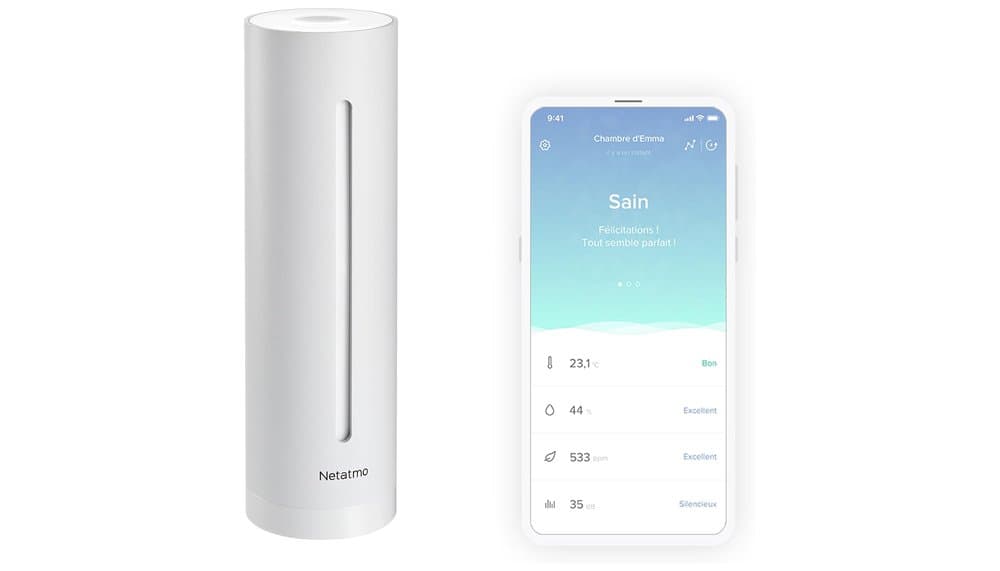
Netatmo bets on a comprehensive "well-being" approach with its Home Coach. In addition to standard parameters (CO2, temperature, humidity), it integrates an ambient noise sensor, an interesting feature for assessing the acoustic comfort of a room, especially for sleep or remote work. On paper, its technical specifications announce good accuracy, particularly for temperature (±0.3°C). Its software strength lies in its dedicated app, which is very comprehensive and offers personalized profiles (baby room, sensitive person, office) and tailored advice to improve the environment.
The community notes that the station's discreet and elegant design is a plus for integrating into decor. Its native integration with Apple HomeKit makes it a natural choice for users of the Apple ecosystem. However, user feedback also points out some limitations. The device requires a stable 2.4 GHz Wi-Fi connection and is not compatible with Alexa or Google Assistant outside of Apple HomeKit. Some would also have appreciated a local screen for a quick check without taking out a smartphone. Finally, although very comprehensive, the app can seem a bit complex at first glance compared to Alexa's simplicity.
What's Inside the Technology and Affects Reliability
You might see two sensors displaying the same parameter, like PM2.5, and think they do the same thing. Big mistake. The difference in price is often justified by what's inside the black box. And frankly, for a device whose purpose is to inform you so you can make the right decisions, reliability is not a minor detail.
Particle Sensors: Low-Cost Optical vs. Laser
This is the heart of the matter. Many consumer devices use low-cost optical sensors. A small fan draws in air, an LED illuminates the particles, and a photodiode detects the scattered light. Problem: their accuracy often drops on the finest particles (precisely the most dangerous ones) and they can be disturbed by humidity or coarse dust. A better indoor air quality sensor will use a laser sensor. Here, a precise laser beam illuminates each particle that passes, enabling much finer and more reliable detection, even at very low concentrations. The difference is visible in real-time measurements: a laser sensor will react instantly to a blown-out candle, while an optical one will take longer and may overestimate or underestimate. It is this technology that provides the precision necessary to truly understand pollution spikes in your home.
Stability and Calibration: The Long-Term Guarantee
A sensor can be accurate on the day of purchase and drift over time. This is normal, sensors wear out. The real question is: what does the manufacturer do to remedy this? Serious models incorporate compensation algorithms and some allow for manual or automatic calibration. For CO2, for example, a good practice is to place the device outside (ensuring there is no combustion source nearby) so it recalibrates to the reference atmospheric CO2 level, around 400-420 ppm. Ignore this function, and in six months your reading of 1000 ppm could actually be 800 or 1200... which completely changes your interpretation.
The Importance of Airflow and Protection
An often-forgotten detail: how does air enter the device? A poor design, with small, poorly placed openings, does not renew the air around the sensors fast enough. Result: the sensor has a slow response time and can miss short-term pollution spikes. Look for models with active ventilation (a small fan) for dynamic and responsive measurement. And check for the presence of a coarse filter at the air inlet. This simple piece of foam protects sensitive sensors from clogging by dust and pet hair, thereby extending their life and accuracy. Without it, your investment risks degrading as quickly as the air it's supposed to measure.
Connect and Automate for Peaceful, Healthy Air
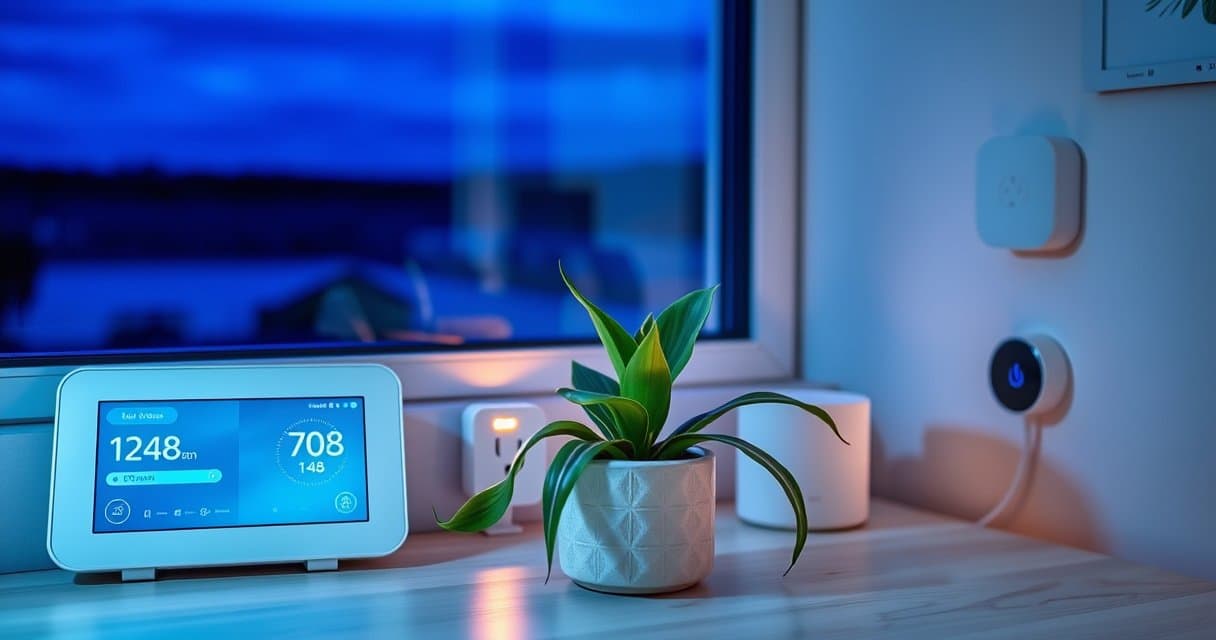
A good sensor gives you numbers. A connected, well-integrated sensor, however, makes decisions for you. That's where the real magic happens for your peace of mind. Imagine: you're at the movies and your phone alerts you that the VOC level has skyrocketed in the kitchen. Thanks to the connected camera, you see that everything is fine, but that you forgot to turn off the range hood after frying onions. One click in the app, and the VCM is activated remotely. That's the real added value.
The Application: Your Real-Time Dashboard
The app is not just a gadget. It's your control center. A good application presents you with clear historical graphs (by hour, day, week) to spot patterns: does the CO2 level consistently rise two hours after the kids come home from school? Do fine particles spike every morning at breakfast time? More than just a simple gauge, it should allow you to configure personalized alerts. You can, for example, receive a notification only if PM2.5 exceeds 20 µg/m³ for more than 10 minutes, avoiding false alarms for a brief, isolated spike. Frankly, a poorly designed app, slow or without detailed history, is a deal-breaker. It makes the device much less useful.
Home Automation: The Ecosystem That Acts for You
This is the next level. Your sensor no longer just measures; it triggers actions. To do this, it needs to "talk" to your other devices, via protocols like Matter, HomeKit, Google Home, or IFTTT. Here are some game-changing automations:
- Smart Air Purifier: When the sensor detects a PM2.5 level above a threshold you set (say 15 µg/m³), it automatically turns on your air purifier at the appropriate speed. When the air quality returns to normal, it turns it off. No more manual management.
- Controlled Ventilation: A CO2 level reaching 1000 ppm? Your dual-flow VMC system shifts to a higher speed, or your bathroom extraction fan turns on automatically.
- Regulated Humidity: The relative humidity persistently exceeds 65%, ideal breeding ground for dust mites and mold? Your dehumidifier starts up until the level drops back to 50%.
Think about it: a top indoor air quality sensor is not an isolated island. It's the sensor in your home ecosystem, the one that sets the tempo and allows your home to become truly proactive for your family's health. Without this integration capability, you risk simply collecting data... without ever really using it to improve your daily life.
Install, Maintain, and Understand the Data to Take Action
You have your sensor. Great! But placing it on the mantelpiece or the bookshelf is often the first mistake. The location is crucial for reliable readings. Imagine taking your temperature under a lit radiator: the results would be useless. It's the same logic here.
Where to place your sensor? The golden rule
Keep it absolutely away from direct sources of disturbance. That means: not near an open window or a glass door (drafts), not next to a heating vent or an air conditioner, and not in the kitchen right next to the stove. The ideal? Place it in a static living area, at breathing height (between 1m and 1.5m from the floor), in the center of the room or on a side piece of furniture. For the bedroom, avoid the nightstand if you sleep with your mouth open – direct exhalation can distort CO2 measurements. The living room, near the sofa, is often an excellent candidate.
Maintenance: a simple but not negligible routine
A neglected sensor becomes a lying sensor. Dust is its worst enemy, especially for particle sensors (PM2.5). Once a month, gently wipe the air intake vents with a small dry microfiber cloth. Some models have removable particle filters that need to be vacuumed or replaced periodically – check your manual! For VOC and formaldehyde sensors, simple dusting is usually enough. And most importantly, check the manual to see if it requires periodic calibration. Some high-end models do this automatically, others send you a reminder. Not doing it is like continuing to use a scale that you know shows 500g too much.
Interpreting the numbers and taking action
This is where the best indoor air quality sensor proves its value. Numbers alone are useless if you don't know what to do with them. Here is a concrete roadmap:
- CO2 above 1000 ppm: This is the clear signal that you need to ventilate. Open the windows wide for 5 to 10 minutes, even in winter. It's the simplest and most effective remedy.
- PM2.5 consistently above 10 µg/m³ indoors: Your air is too loaded with fine particles. Ventilation can worsen the problem if the outside air is polluted (check a weather app with an air quality index). The solution? Identify the source (cooking without a hood, candles, tobacco, vacuuming) and invest in an air purifier with an effective HEPA filter.
- Relative humidity always above 60%: You are unintentionally growing mold. Turn on the bathroom fan after showering, dry laundry outside if possible, and consider a dehumidifier, especially in poorly ventilated rooms like the laundry room or north-facing bedrooms.
- VOC levels that rise after cleaning or DIY work: You may have just introduced pollutants with your products. Opt for cleaners without harsh solvents, ventilate thoroughly after work, and consider a purifier with a good layer of activated carbon to absorb these gases.
The goal is not to become obsessed with numbers, but to develop healthy reflexes. Your sensor is like a coach: it alerts you, gives you feedback, and guides you towards better habits so your home remains a true place of restoration.
Conclusion
So, there you have it. A good air sensor isn't just another gadget. It's your guardian.
It reveals the invisible to you. It transforms vague concerns into clear data. And most importantly, it gives you the keys to take action.
To ventilate at the right time. To choose the right appliances. To create a truly healthy environment for your family.
Start by measuring. You'll never breathe the same way again.
Frequently Asked Questions
How do you measure indoor air quality?
To precisely measure indoor air quality, you must use a reliable sensor that monitors the four key parameters: CO2 (alert threshold at 1200 ppm), fine particles PM2.5 (target < 10 µg/m³), VOCs/formaldehyde, and relative humidity (ideal between 40% and 60%).
Why is the CO2 level important in a home?
The CO2 level is a direct indicator of ventilation: a level above 1200 ppm in a room often causes decreased concentration, headaches, and fatigue, signaling an urgent need to ventilate to renew the air.
What are the sources of PM2.5 fine particles in a home?
The main sources of PM2.5 fine particles indoors are cooking (especially at high temperatures), candles and incense, tobacco, vacuuming, and polluted outdoor air that enters the home.
Air sensor: optical sensor or laser sensor, what's the difference?
A laser sensor is much more precise than a low-cost optical sensor, as it reliably detects the finest particles (PM2.5) even at low concentrations and reacts instantly to variations, providing truly actionable data.
Where to place an air quality sensor in a room?
Place the sensor in a static living area, at breathing height (1m to 1.5m from the floor), away from windows, ventilation vents, or direct pollution sources like the kitchen.
Is an air purifier useful without a sensor?
Using a purifier without a sensor is like regulating your heating without a thermostat: you operate it blindly, without knowing if it is necessary or effective at that precise moment, which can lead to overconsumption and reduced efficiency.
Independent and transparent — Our articles are based on in-depth research and real user reviews. No brand sponsors our content. Affiliate links help fund the site, at no extra cost to you.
Guides you might like
Air Purifier Buying Guide
Indoor air can be more polluted than outside. Learn how to choose the right air purifier to combat dust, VOCs, and allergens.
Allergen Fighter Dehumidifier Buying Guide
Combat allergies from dust mites and mold caused by high humidity at home. A good dehumidifier protects your family's health.

Anti-allergen vacuum cleaner
Does vacuuming worsen allergies? Yes, with a poor filter. Choose the right vacuum to trap allergens and protect your health.
Articles you might like
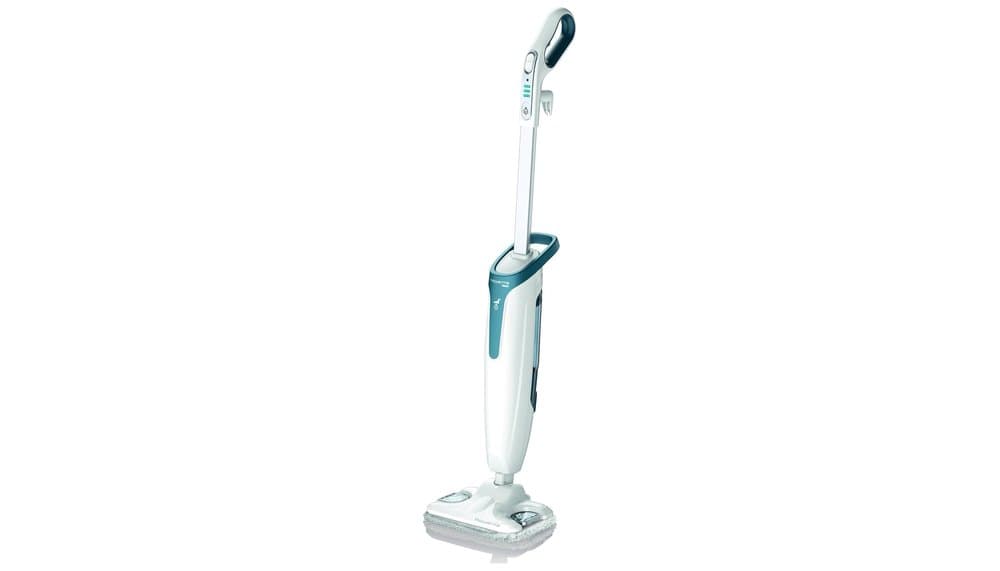
Rowenta Steam Power RY6597WH Steam Cleaner Review
Review: Rowenta Steam Power All Floors cleaner. Chemical-free deep cleaning & disinfection for hard floors & textiles via high-temperature steam.
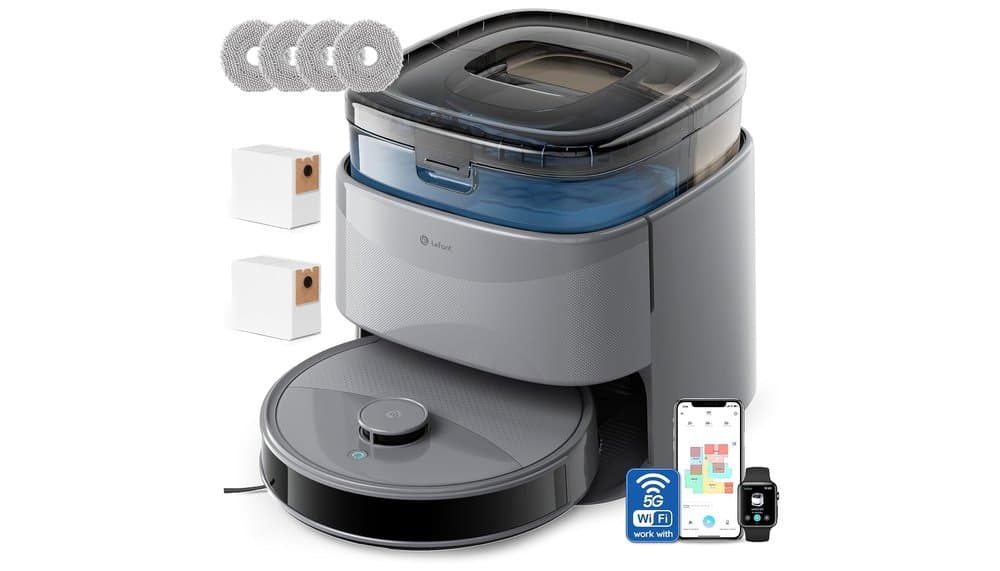
Lefant M3 Max Review: Ultimate Robot Vacuum & Mop
Lefant M3 Max: A robot vacuum and mop duo with a self-cleaning station for a powerful, hands-free clean. Promises efficiency for a dust-free home.
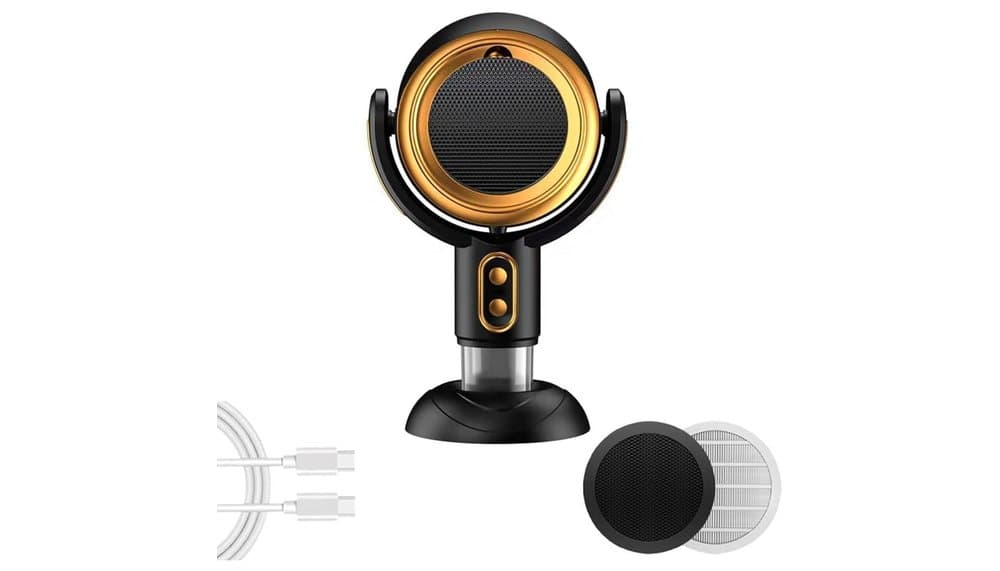
NNOVAT Puff Chill Smoking Fan Portable Air Purifier Review
Compact portable air purifier for smoke & odors. Filters air in real-time like a table fan.