Anti-allergen vacuum cleaner
You think vacuuming relieves your allergies, but what if it was the opposite? A classic vacuum can unfortunately make the situation worse by releasing the finest particles into the air you breathe. To truly protect your family's health, you need to choose a model designed to capture and retain allergens. Frankly, the choice is technical, but let's decipher the essentials together to make the right purchase.
Key Points to Remember
- A poorly filtering vacuum can worsen allergies by releasing fine particles into the air.
- To be effective, an anti-allergen vacuum must have a sealed HEPA system (class H13 minimum) and power suitable for surfaces.
- The choice of format (canister, stick, robot) depends on your home and your routine for regular use.
- Rigorous maintenance of filters and the container is essential to maintain the appliance's effectiveness.
- The indispensable accessory for eliminating dust mites from textiles is a powered mini-turbobrush.
Why Your Current Vacuum Cleaner Can Worsen Your Allergies
It's a real paradox, isn't it? You vacuum to clean, and you can end up breathing air that's even more loaded with allergens. If your eyes itch or you sneeze after cleaning, your appliance is likely to blame. The reason is simple: many vacuum cleaners suck up large debris but expel air laden with the finest and most problematic particles for your health. We're talking about dead dust mites, their microscopic droppings, mold spores, or pollen.
The Culprit: Insufficient Filtration
Imagine your vacuum cleaner as a net. If the holes are too large, everything small passes through. Standard or low-end "anti-allergen" filters often only capture particles visible to the naked eye, about 30 microns in size. The real problem lies with particles smaller than 10 microns, which penetrate deep into the respiratory tract. A dust mite measures about 200 microns, but its droppings, one of the main allergens, are between 10 and 40 microns. An inefficient vacuum will crush them, suck them in, and then eject them as an invisible cloud. Frankly, at that rate, you might as well shake a rug out the window.
What You're Really Risking Breathing
The air expelled by a poorly filtering vacuum is a veritable polluted soup. Studies have shown that some models can release up to 30% of the allergens and fine particles they have just captured back into the ambient air. In practice, if you vacuum dust off your sofa – a dust mite haven – you are creating an aerosol of these allergens that will then settle back down on all surfaces or remain suspended for hours. Your effort backfires. This is precisely the scenario we aim to avoid by looking for a better anti-allergen vacuum cleaner: an appliance with a sealed circuit and a final filter that lets nothing escape.
Check Your Current Equipment: The Telltale Signs
How can you know if you're in this situation? A few clues don't lie. First, the smell: if a smell of burnt dust or mustiness comes from your vacuum when in use, it's a bad sign. Secondly, dust around the tank or bag: do you see fine powder accumulating on the seals or gaps? This is proof that the system is not sealed. Finally, and most revealingly, place a fine white cloth (like an old T-shirt) over the air outlet and run the appliance for one minute. If the cloth shows gray marks, your vacuum is spewing particles. It's time to seriously think about a replacement.
How True HEPA Filtration Makes a Difference
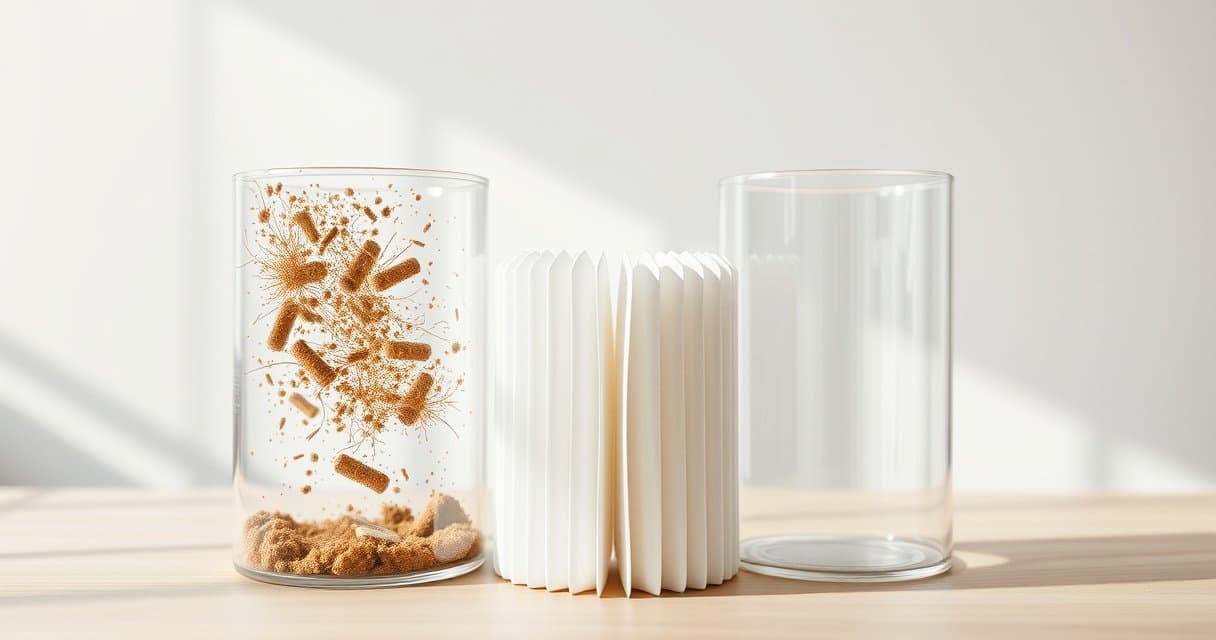
The difference between a vacuum that promises "anti-allergen" filtration and a true HEPA vacuum comes down to two things: the standard and the system's airtightness. Many models sport a "HEPA-like" or "HEPA filter" sticker with no details, which often means nothing. The true standard is the EN 1822 test. It guarantees the filter has been laboratory-tested to retain a precise quantity of particles of a defined size.
HEPA H13 vs H14: Understanding the Numbers That Matter
Don't get lost in marketing percentages. To be effective against household allergens, your vacuum should aim for an H13 or H14 class.
- HEPA H13: A filter retaining at least 99.95% of particles sized 0.3 microns. This is the minimum reference for serious anti-allergy use. This size (0.3 microns) is the MPPS (Most Penetrating Particle Size), the point where particles are most difficult to capture. Mold spores, a large portion of bacteria, and of course, dust mite and pollen allergens are trapped.
- HEPA H14: Performance above 99.995%. Frankly, for most households, a well-designed H13 is more than sufficient. H14 is often reserved for medical environments.
The real trap? A superbly rated HEPA filter in a poorly designed appliance is useless. If air can bypass the filter through a faulty seal or a poorly closed dustbin, all the particles escape. A better anti-allergy vacuum is an airtight system. Look for terms like "sealed system" or "total sealing". Simply put, all the sucked-in air must be forced to pass through the HEPA filter, with no possible leaks.
Beyond HEPA: The Role of the Pre-Filter and Activated Carbon
A HEPA filter is an elite soldier, but it needs support to last. That's the role of the pre-filter, often a foam or fabric, which captures large debris (hair, crumbs, visible dust) and protects the HEPA from premature clogging. Without a good pre-filter cleaned regularly, your expensive HEPA filter will be saturated in six months.
And odors? VOCs (Volatile Organic Compounds) or litter box smells? The HEPA filter alone doesn't stop them, as they are gases. This is where an activated carbon filter comes in. This additional layer adsorbs odorous molecules. For a household with pets or sensitive to cooking or cleaning product odors, it's a real plus. But be careful, it saturates quickly and must be replaced more often than the HEPA filter.
An Investment for Health, Not Just for Cleaning
Choosing a vacuum with a true sealed HEPA system is an investment in the air your family breathes every day. The benefits are tangible: less fine dust settling on shelves between cleanings, a noticeable reduction in symptoms for allergy sufferers, and the satisfaction of knowing what you vacuum stays locked away. Yes, these models often cost more upfront, but also consider the hidden costs: a genuine HEPA filter needs replacing every 12 to 24 months with normal use, compared to a few months for a low-end filter that lets you breathe in dust. The real calculation is right there.
Our Selection
For those looking to enhance their cleaning routine with equipment tailored to specific needs, we have scrutinized three products focused on allergen control. Whether you need to specifically treat your bedding, keep your robot vacuum in working order, or choose a powerful main vacuum, this selection analyzes each option based on its technical specifications and user feedback. What do they have in common? They all feature HEPA filtration for healthier air.
| Product | Type / Use | Filtration | Capacity / Autonomy | Key Strengths |
|---|---|---|---|---|
| HYCHIKA MV2501 | Handheld vacuum for mattresses and textiles | Washable foam filter (99.2% retention) | 0.5 liter (tank) | 16 kPa suction, 60°C heat and ultrasonic function, 24 cm wide head |
| Morain for T20Pro | Accessory kit for robot vacuum | Replacement HEPA filter | N/A (parts kit) | Economical, includes main brush, side brushes and dust bags |
| Nilfisk Select | Main canister vacuum | Certified HEPA 13 filter | 3.1 liters (bag) | A++ energy efficiency, versatility with 5 accessories, 8 m reach |
HYCHIKA MV2501 Mattress Vacuum Cleaner
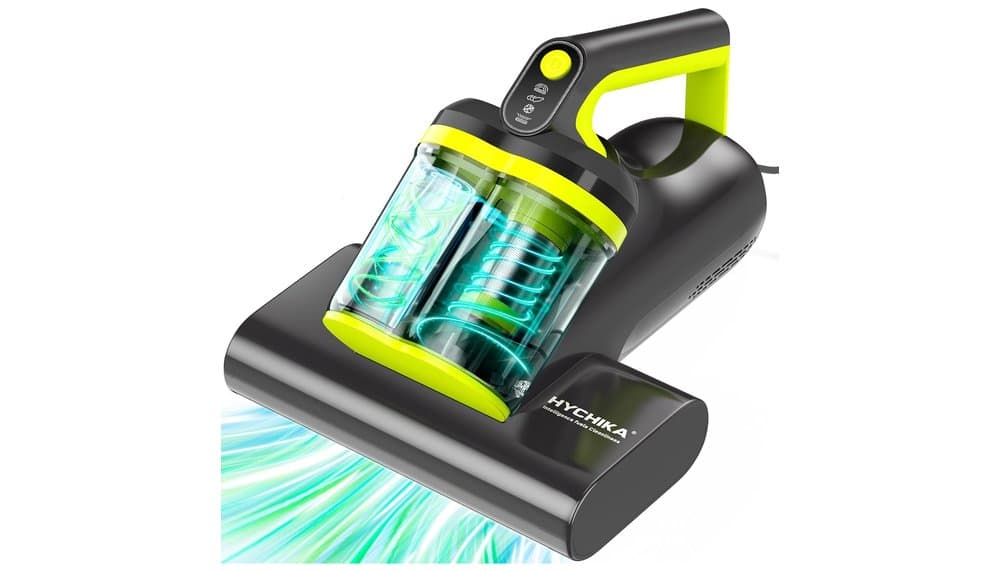
This model clearly positions itself as a textile specialist. On paper, its technical specifications are impressive for a dedicated appliance. The advertised suction power of 16 kPa promises to effectively lift dust and mites from mattresses, sofas, and other upholstered surfaces. The user community generally confirms this effectiveness, with several reviews highlighting that the device collects a visible amount of dust even on bedding that appears clean.
Beyond suction, the HYCHIKA relies on a thermal and acoustic approach. The 60°C heat function is designed to dry out and disrupt the habitat of mites, while ultrasonic technology aims to dislodge embedded particles. According to feedback, this combination is appreciated for the feeling of a "deep clean", especially by those sensitive to allergies. Another positive point noted: the 24 cm wide cleaning head and low noise level (around 72 dB) make usage quick and less intrusive.
However, reviews also highlight concrete limitations. Firstly, it is a corded appliance, which can restrict maneuverability. Its 0.5 liter tank is considered a bit small by some for large areas in a single session, requiring frequent emptying. Furthermore, although its foam filter is washable, its long-term effectiveness compared to a true HEPA filter (like those of the other two products in this selection) may raise questions for severe allergy sufferers. In summary, it is a very effective complementary tool for targeted textile maintenance, but not a general-purpose cleaning solution.
Morain Filtre HEPA Brosse T20Pro
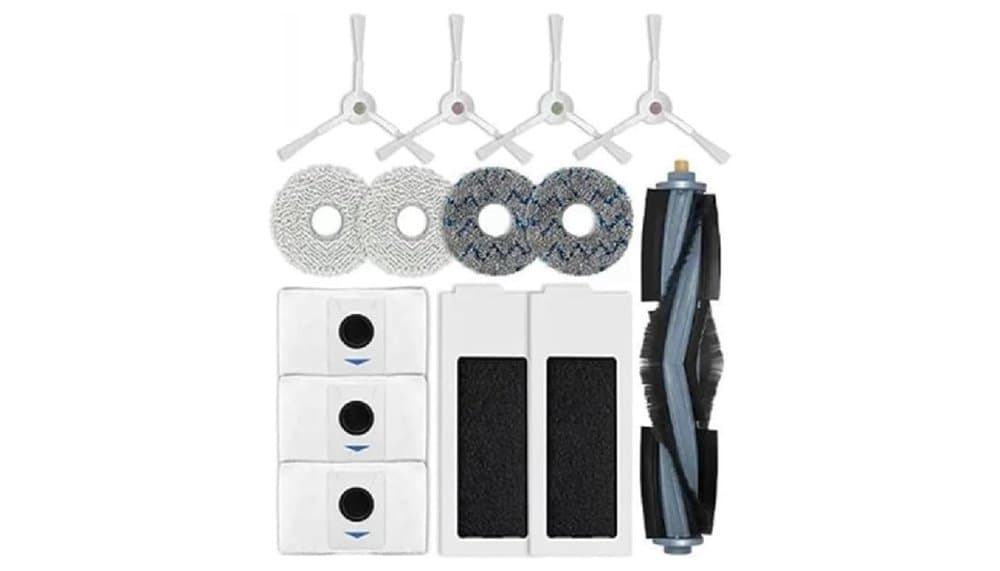
This product is of a completely different nature: it is a kit of spare parts and consumables designed specifically for the T20Pro robot vacuum (likely a model from Yeedi or similar). Here, we are not talking about a standalone appliance, but a maintenance and replacement solution to maintain the effectiveness of one's robot vacuum.
According to its description, the kit is quite comprehensive, including a new main brush, side brushes (often the first to wear out or get tangled), a replacement HEPA filter, and even anti-allergen dust bags. For owners of the compatible robot, the benefit is obvious: extending the lifespan and performance of their initial investment. Customer reviews for this type of product generally point out that regularly replacing the brushes and filter gives the robot a "new lease on life", often restoring suction and leaving fewer marks on the floor.
The main limitation, and it's a significant one, is obviously the strict compatibility. This kit is only useful if you own the T20Pro model. An ordering error makes it unusable. Also, as it is a generic accessory from the Morain brand and not from the original manufacturer, some users may question the exact quality and durability of the materials compared to original parts, even though the descriptions promise durable ABS plastic. It is therefore a niche, economical, and practical product, but its relevance depends entirely on owning very specific equipment.
Nilfisk Select
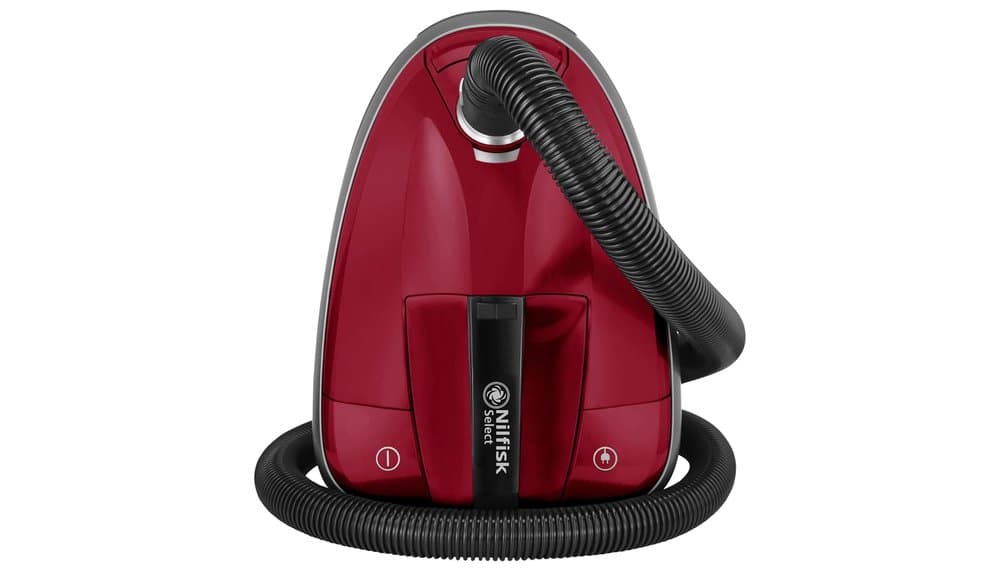
The Nilfisk Select stands out as the versatile main vacuum in this selection. With its certified HEPA 13 filter, it directly targets households concerned about indoor air quality, promising to trap microparticles, pollen, and allergens. Its strong technical argument is its excellent A++ rated energy efficiency, a notable performance for a 450W corded bag vacuum.
The community notes several strengths. The 3.1 liter bag capacity is suitable for regular use in a medium-sized home, limiting the frequency of changes. The large working radius, with its 8-meter cable, is also praised for cleaning several rooms without constantly changing outlets. The appliance comes with five accessories (combination floor brush, crevice tool, etc.), allowing it to easily switch from hardwood floors to carpets, and even vacuum mattresses or seats, making it a more complete tool than the HYCHIKA MV2501 for general cleaning.
User feedback also points out some drawbacks. Its weight of 6.4 kg can make it somewhat cumbersome to maneuver for some people, especially on stairs. As a canister vacuum, it requires more storage space than a handheld appliance. Although very well-rated, a few reviews mention that the suction power, while sufficient for daily use, might be less impressive on very thick carpets than that of more powerful (and often more energy-hungry) vacuums. It thus represents a balanced and well-considered choice, prioritizing energy efficiency and high-level filtration over raw power.
Choosing the Right Power and Accessories for Your Surfaces
You don't clean a varnished parquet floor the same way you clean a thick carpet, and this is even more true when hunting allergens. Raw power, often highlighted in watts, is a misleading indicator. What truly matters is the airflow (in liters per second or dm³/s) and the suction power (in kPa or aw). Airflow is what allows the vacuum cleaner to "sweep" a wide area, while suction power is the force that will pull out embedded dust. For allergens lodged deep within fibers, like mite droppings in a sofa or mattress, this suction power is crucial.
Suitable Power and Surfaces: The Concrete Guide
Imagine your home. Do you mainly have tile and parquet flooring? A high airflow is your best ally for quick and effective cleaning of large surfaces. Do you have thick carpet, long-pile rugs, or shedding pets? Here, strong suction power is essential. Without it, you will only "clean" the surface, leaving the entire reservoir of allergens deep down.
Concretely, a best anti-allergen vacuum cleaner for a mixed home (carpet and hard floors) should offer a suction power of at least 25 kPa and an airflow greater than 35 dm³/s. Below that, you risk making no progress on your rugs. For a small apartment with only hard floors, you can get by with slightly less suction, but don't skimp on airflow for good efficiency. Frankly, a robot vacuum, even a high-end one, will rarely have sufficient suction for a deep anti-mite cleaning; it's perfect for daily maintenance, but not for the weekly deep clean.
Essential Accessories: Your Allergen Hunting Kit
This is where most people cut corners, and it's a monumental mistake. The central vacuum is the engine, but the accessories are your tools. Without the right ones, you miss the target.
- The Mini Turbo Brush (or Turbo Brush): This is accessory number one, the one you should never compromise on. It's a small rotating brush, often motorized by the vacuum's airflow, designed for textiles. It literally whips the fibers of your mattress, sofa, cushions, and stuffed toys to shake out mites and their droppings, which the suction then captures. It's ten times more effective than a simple flat nozzle.
- The Flat/Crevice Tool: Ideal for hard floors and corners, it allows you to press the nozzle firmly against the floor for maximum efficiency. For baseboards and nooks where dust accumulates.
- The Soft Long-Bristle Brush: For delicate surfaces like books, lampshades, or ventilation grilles without damaging the material.
A piece of advice worth its weight in gold: check before purchase that these accessories are included in the box and compatible with the chosen model. Buying them separately can quickly double the bill. And for homes with pets, a special "pet hair" nozzle with rubber teeth to hook hair from textiles is a real plus. Think about it, as pet hair is a nest for dust and allergens.
Bag, Canister, or Water: Which System to Seal Allergens?
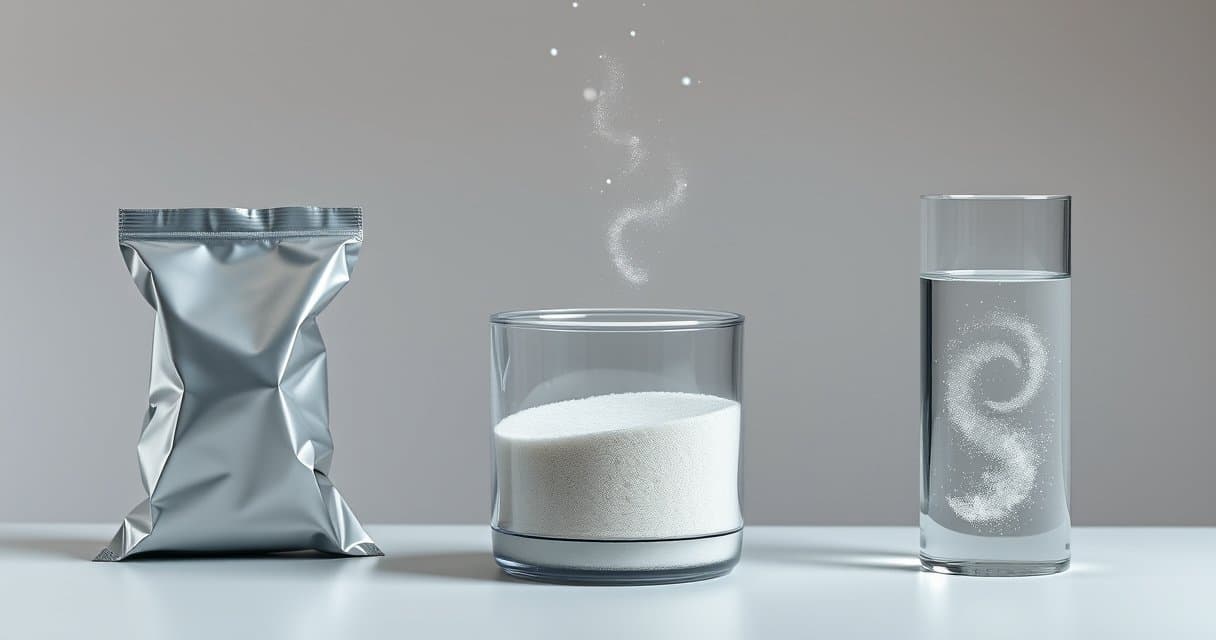
This is THE critical moment: when you empty your vacuum cleaner. The entire HEPA filtration strategy can be ruined in seconds if the dust recovery system releases a cloud of allergens. The goal is simple: capture them and keep them trapped, from the appliance's intake all the way to the trash. Three principles compete.
Bagged Vacuums: The Champions of Sealing
Here, the high-density paper bag is your first line of defense and your pre-motor filter. When it's full, you seal it and throw it away. It's radical.
- Major advantage: The complete absence of handling dust. It's the cleanest and most reliable system for an allergic person, provided you choose model-specific, high-quality bags (often with an "anti-allergy" label).
- Point to watch: The recurring cost. You need to anticipate this purchase and never run out. Also, once the bag is half full, suction can already drop. It needs to be changed more often than you think. Frankly, if your absolute priority is to never come into contact with the vacuumed dust, this is the royal road. A best anti-allergy vacuum cleaner for a severe allergy will often be a bagged model, as it eliminates the risk of dispersion during emptying.
Canister Vacuums (Bagless): Practical, but Demanding
You see what you're vacuuming, and there's no consumable cost. It's tempting. But beware, that's where the devil lies.
- The key: a sealed, no-contact emptying system. Look for models with a dust bin that detaches as a single unit and can be emptied directly into your outdoor trash without you having to touch or shake it. Some even have sealed, disposable bins.
- The trap: Low-end models where you have to tap the canister on the rim of the trash can, or worse, where you have to use your hand to dislodge the dust. This is exactly what must be avoided. Totally to be avoided.
Water Vacuums: The Ultimate Dust Trap?
The principle is fascinating: dust and allergens are carried into a water tank and remain trapped there. The expelled air is theoretically washed and humidified. It's radically different.
- The big plus: No emission of fine dust during disposal. You just empty dirty water. It's very reassuring.
- The real constraints: After each use, and I mean each use, you must empty and meticulously clean the water tank. Otherwise, mold and bacteria develop quickly, turning your appliance into a veritable allergen factory. It's a heavier, bulkier appliance, and the post-use cleaning process is longer and dirtier than throwing away a bag. It requires absolute rigor.
So, which one to choose? Ask yourself this simple question: what is my priority? Simplicity and total safety (bags), economy and transparency provided you are meticulous (sealed canister), or the radical capture method if I'm ready to maintain it scrupulously (water). For quick daily use, the bagless model with a good canister is fantastic. For the major weekly cleaning where the allergen load is at its maximum, the bag or water offer a very strong psychological and physical barrier.
Essential Maintenance Gestures to Preserve Efficiency
Buying a high-performance vacuum is good. Letting it get clogged and become inefficient, even harmful, is the nightmare scenario many experience without knowing it. Maintenance is not an option; it is the essential condition for your investment to truly protect your health. A poorly maintained best anti-allergen vacuum quickly becomes worse than a basic vacuum.
Managing the HEPA Filter: The Heart of the System
It's simple: a clogged HEPA filter no longer filters. Worse, it creates resistance that reduces suction power and can damage the motor.
- Never wash it (unless explicitly and rarely stated by the manufacturer). Water degrades the fibers and destroys its effectiveness. It is a consumable to be replaced.
- Frequency? It all depends on your usage. With a long-haired pet and daily use, plan on replacement every 4 to 6 months. In an apartment without pets, every 12 months may suffice. But don't rely solely on time: if suction noticeably drops or the motor seems to be straining, check the filter.
- A little tip: write the replacement date on a discreet sticker placed on the appliance. You always forget.
Emptying the Tank or Changing the Bag: Well Before Saturation
Waiting until the tank is full to the brim or the bag is completely packed is a very bad habit. Air no longer circulates properly, power plummets, and allergens can be re-projected.
- For bagless models: empty the bin as soon as it reaches the maximum fill line, often indicated. Even if it's only half full after a big cleaning session, empty it. Fine dust compacts.
- For bags: change them when they are two-thirds full. Yes, it's more frequent, but it's the price to pay for optimal suction and perfect sealing.
Meticulous Cleaning of Brushes and Ducts
Hair, thread, and pet fur wrap around brush rolls and clog small nozzles. This reduces fiber agitation and surface suction, leaving allergens deep down.
- As soon as you see a clump of hair on the brush, cut it with scissors and pull it out. Don't just pull, you risk damaging the bristles.
- Every month, check the hose duct and the air intake of the appliance. A long flexible stick or the vacuum itself in "blower" mode can dislodge clogs.
- Don't forget the small pre-motor or protective filters, often foam, which need to be washed in clear water and thoroughly dried (minimum 24 hours) before reinsertion. Their clogging stresses the motor and costs money in the long run.
Frankly, that's where most people give up. They see maintenance as a chore. But see it instead as a guarantee: each simple gesture ensures that the air expelled into your living room is truly purified, and that your appliance will last for years. Take five minutes after each major cleaning session, that's all.
Canister Vacuum, Stick Vacuum, or Robot: Which Partner for Your Daily Life?
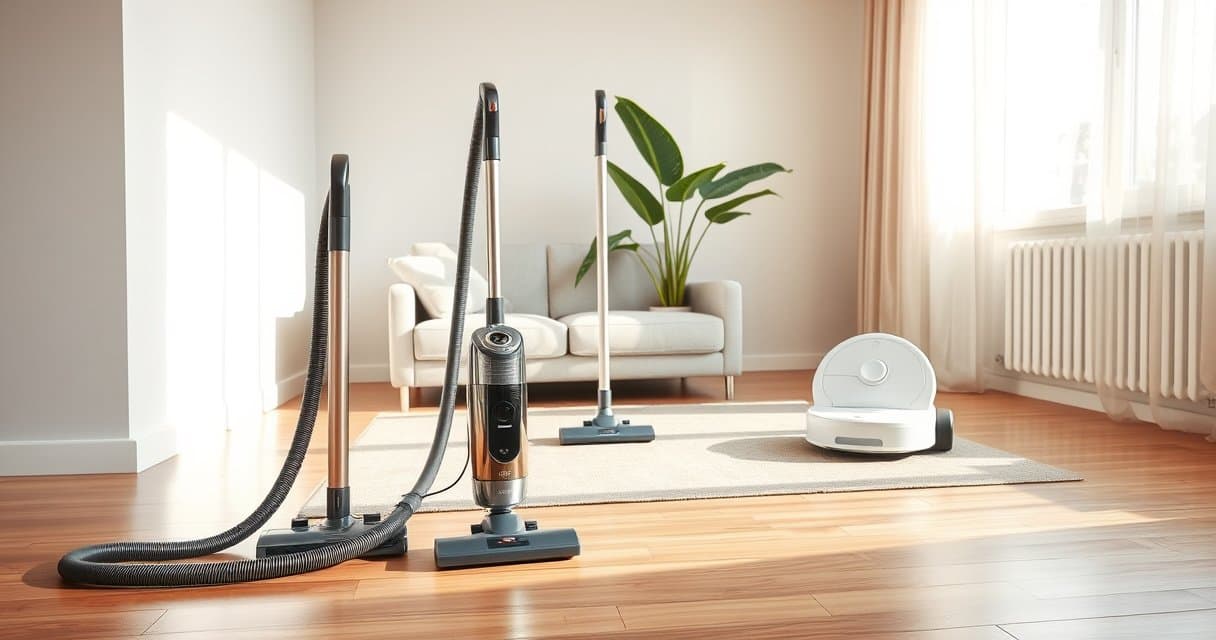
Choosing the format is not simply a matter of preference. It determines how easily you will be able to maintain a healthy environment, especially if allergies are part of your life. Frankly, there isn't just one good choice, but the one that suits your constraints and your routine. Here's how to see clearly.
The Canister Vacuum: Dedicated Power and the Ally for Allergy Attacks
This is the heavy-hitter, both literally and figuratively. Ideal for large areas, thick carpets, or homes with pets, it generally offers the most consistent power and the best integrated filtration systems. If you have severe allergies and only do a deep clean once a week, this is your best asset.
- Why choose a canister? For its ability to lift deeply embedded allergens thanks to a powerful motor and effective turbo brushes. Its large dust capacity is also a plus.
- The drawbacks to accept: The bulk if storage is difficult, the weight, and often a higher noise level. It requires motivation for each use; it's not an appliance you pull out for five minutes.
- A concrete tip: if you live in a large apartment or a house with stairs, seriously consider a model with a long cord (at least 8 meters) and a complete set of accessories to avoid lugging everything around.
The Cordless Stick Vacuum: Maneuverability for Frequent Maintenance
This is the champion of responsiveness. Perfect for quickly going over dirty tile, vacuuming crumbs after a meal, or doing a quick session on the sofa without preparation. For it to be a true best vacuum for allergies, it must have sufficient battery life (at least 40 minutes in normal use) and powerful suction, even in eco mode.
- The ideal scenario: A home with mainly hard floors (hardwood, tile), modest size (so you don't have to recharge mid-clean), and a desire to do quick, frequent passes.
- Beware of the trap: Low-end models often have power that drops with the battery level and poor-quality HEPA filters. They can give you the illusion of clean without eliminating fine particles. Aim for a serious mid-range model.
- My personal recommendation: If you have both carpets and hard floors, make sure the stick vacuum offers a true motorized brushroll and not just a mechanical brush, otherwise you'll leave dust mites deep in your carpets.
The Robot Vacuum: The Daily Guardian, Not the Heavy-Duty Cleaner
Don't be mistaken about its role. The robot is not there to do the deep cleaning for you, but to maintain a low level of dust between your thorough cleaning sessions. It's a valuable ally for allergy sufferers, as it reduces the overall allergen load by passing regularly, even under furniture.
- For it to be effective against allergens, it MUST be equipped with a HEPA filter and ideally a sealed dust bin. Models with an automatic emptying base are a luxury that drastically limits contact with dust.
- Its limits are clear: it doesn't replace the suction power of a canister on a deep-pile carpet, it doesn't climb on sofas to vacuum bedding, and it requires a pre-tidied environment (cords, small toys).
- In my opinion, it's a fantastic complement, especially if you have pets and hard floors. Program it to run in your absence daily. You'll come home to a house where the air already feels lighter.
So, who is your ideal partner? Ask yourself these two questions: "Am I ready to pull out a bulky appliance every week?" and "Do I need an almost daily solution to control dust?" The answer could even be a duo: a robot for daily upkeep and a high-performance cordless stick for small, targeted interventions.
Conclusion
Choosing an anti-allergen vacuum cleaner is making a choice for your health.
It means understanding that effective HEPA filtration, suitable power, and rigorous maintenance make all the difference.
Choose the format that truly fits into your routine. Because the best vacuum cleaner is above all the one you will use regularly and without frustration.
Breathe better, and clean better. That's the goal.
Frequently Asked Questions
Can a vacuum cleaner worsen allergies?
Yes, a conventional vacuum cleaner with insufficient filtration can worsen allergies by releasing up to 30% of the most problematic allergens and fine particles, such as dust mite droppings, back into the air.
What HEPA filtration is needed for allergies?
To be effective against allergens, choose a vacuum cleaner with a HEPA H13 filter (retaining 99.95% of 0.3 micron particles) or H14 filter integrated into a sealed system, as a high-performance filter in a non-sealed appliance is useless.
Bagged or bagless vacuum cleaner for allergies?
Bagged vacuum cleaners are often recommended for severe allergies as they avoid any handling of dust, while a bagless model must absolutely have a sealed, no-contact bin for emptying to avoid spreading allergens.
Which accessory is essential against dust mites?
The motorized mini turbo brush is the essential accessory because it agitates textiles (mattresses, sofas) to bring deeply embedded dust mites and their droppings to the surface, allowing the suction to capture them effectively.
Is a robot vacuum sufficient against allergies?
No, a robot vacuum alone is generally not sufficient; it is excellent for daily maintenance and overall dust reduction, but it often lacks power (suction) for deep cleaning of carpets and textiles against allergens.
How to maintain an anti-allergy vacuum cleaner?
Maintain it by replacing the HEPA filter every 4 to 12 months depending on usage, emptying the bin before it is full, and regularly cleaning hair and threads from the brushes to maintain its efficiency and prevent it from releasing allergens.
Independent and transparent — Our articles are based on in-depth research and real user reviews. No brand sponsors our content. Affiliate links help fund the site, at no extra cost to you.
Guides you might like
Air Purifier Buying Guide
Indoor air can be more polluted than outside. Learn how to choose the right air purifier to combat dust, VOCs, and allergens.
Allergen Fighter Dehumidifier Buying Guide
Combat allergies from dust mites and mold caused by high humidity at home. A good dehumidifier protects your family's health.
Choosing Your Effective Steam Mop
Ditch harsh chemicals. Clean and disinfect floors with just water using an effective steam mop. A guide to pressure, performance, and a healthier home.
Articles you might like
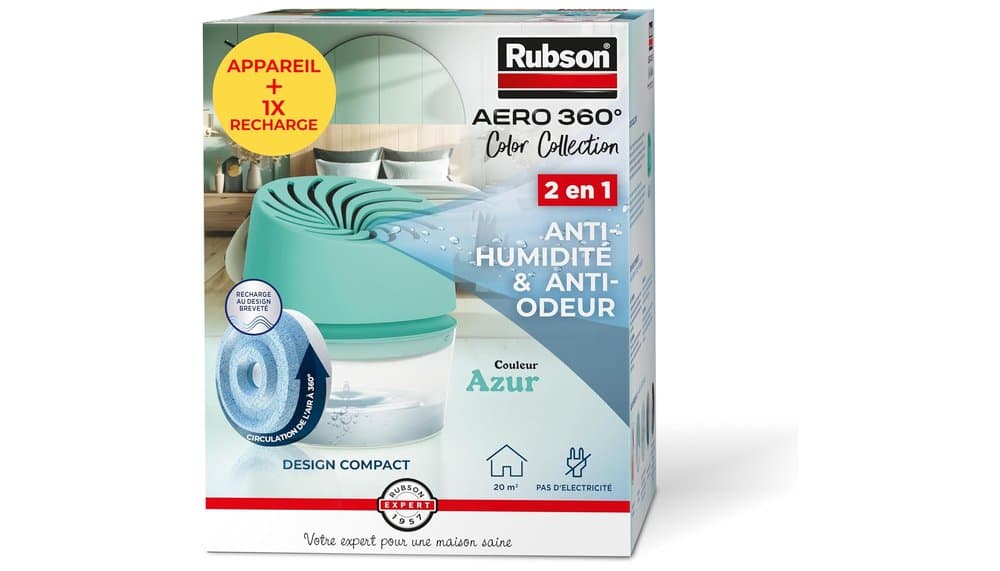
Rubson Moisture Absorber Aero 360° Azure Review
Review of the Rubson Aero 360° dehumidifier. A passive, chemical, cordless unit for combating household damp and excess moisture in small spaces.
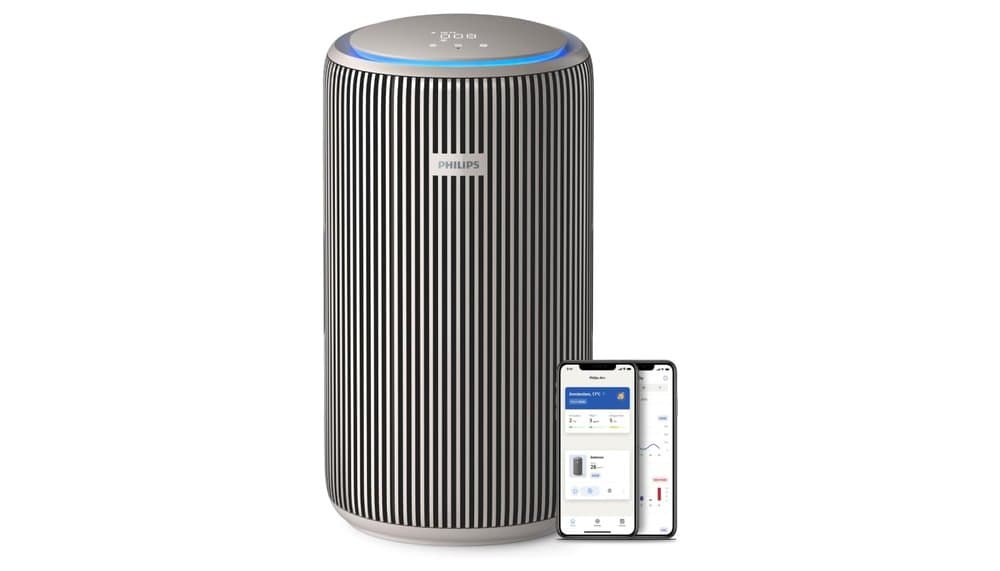
Philips PureProtect 3200 Series AC3210 Air Purifier Review
Discover how the Philips air purifier tackles dust, pollen, VOCs & odors, creating a cleaner, healthier indoor environment for your well-being.
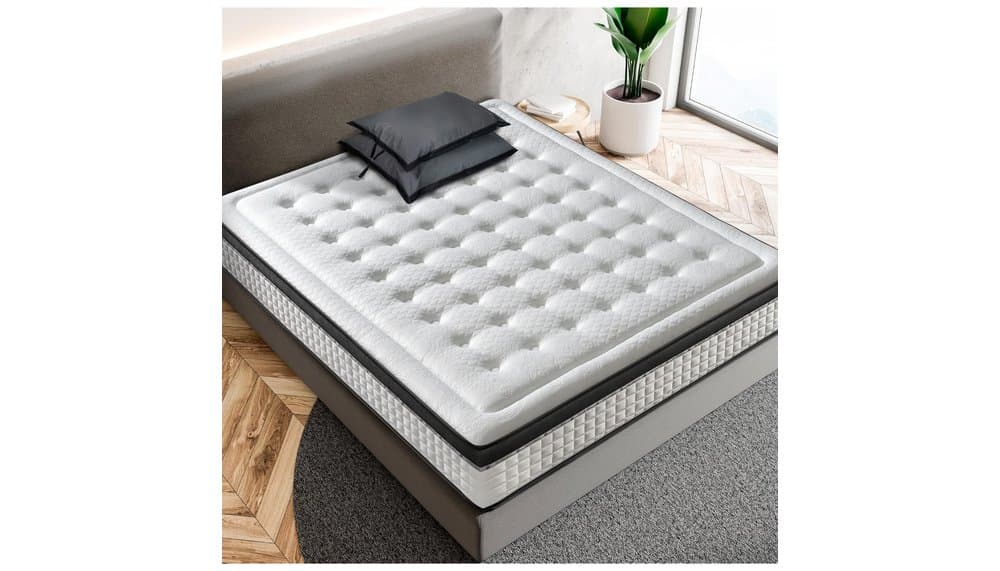
Luxiabed Memoryvex Memory Foam Mattress Review
Luxiabed Memoryvex review: Analyzing memory foam mattress comfort, VOC emissions, allergens & sleep hygiene for a healthy night's rest.