Air Purifier Buying Guide
Confinement in seemingly clean interiors can paradoxically expose us to a cocktail of pollutants more harmful than a trip through the city. Dust mites, pollen, volatile chemical compounds… the list is long. To escape this trap, a good air purifier becomes a true health ally. I'll explain how to choose the right one.
Key Points to Remember
- First, identify your primary pollutant (particles, VOCs, mold) to choose the appropriate filtration technology (HEPA, activated carbon).
- Size your appliance according to the room's volume using the CADR, aiming for 5 air changes per hour.
- Prioritize a proven filtration duo (H13/H14 HEPA filter and substantial activated carbon bed) over "active" technologies like ionization.
- Consider daily living criteria: a quiet night mode (≤25 dB) and a reasonable filter replacement cost.
- Combine the purifier with preventive actions (ventilation, natural cleaning products) for maximum effectiveness.
Indoor Pollutants: Identify Your Invisible Enemies
You know, before rushing out to buy a device, you first need to understand what you want to fight against. Believing an air purifier is a universal solution is the first mistake. Frankly, they don't all treat the same targets with the same effectiveness. Your goal is to protect your family's health? Let's identify your adversaries.
Fine Particles, Enemy Number One
This is the most common category and the one that the best air purifier must absolutely master. We're talking about the allergens you know well: dust, pollen, pet dander, and above all, dust mite droppings. The latter are a major trigger for respiratory allergies. But there is something more insidious: PM2.5 fine particles, smaller than 2.5 micrometers, are capable of penetrating deep into your lungs and bloodstream. A study by the French Indoor Air Quality Observatory showed that in 40% of French homes, PM2.5 levels exceed WHO recommendations. It is these that sometimes make the air feel "heavy."
Gases and Chemical Compounds (VOCs), the Stealthy Enemy
Here, we enter a more treacherous domain. Volatile Organic Compounds (VOCs) are emitted by your new particleboard furniture, your paints, your conventional cleaning products (even air fresheners!), and some glues. The most well-known and dreaded is formaldehyde, classified as a carcinogen. A standard HEPA filter purifier alone does almost nothing against them. They require a specific trapping technology, like a substantial and high-quality bed of activated carbon. If you've recently renovated or use chemical cleaning products, this category should be your absolute priority.
Molds, Bacteria, and Viruses, the Biological Enemy
In a damp or poorly ventilated house, mold spores proliferate and can trigger severe respiratory problems, well beyond a simple allergy. Bacteria and viruses also circulate in the air, especially in winter. Against them, H13 or H14 mechanical HEPA filtration is very effective at capturing them (they are physically trapped in the fibers). Some models add UV-C light to deactivate their DNA, but be careful: this technology is only useful if the air is exposed to the lamp long enough, which is not always guaranteed in a fast airflow. Frankly, don't pay extra for this feature if the airflow is too high.
To see more clearly, here is a little recap of what each pollutant requires as a defense:
| Type of Pollutant | Common Sources in the Home | Key Purification Technology |
|---|---|---|
| Fine Particles (PM2.5, allergens) | Dust, cooking, tobacco, pets, pollen | HEPA Filtration (H13 or higher) |
| Gases & VOCs (e.g., formaldehyde) | New furniture, paints, chemical household products | Thick, high-quality activated carbon filter |
| Biological Pollutants (spores, viruses) | Humidity, poor ventilation, sick occupants | HEPA for capture, UV-C (under conditions) for inactivation |
My friendly advice? Do a little audit of your home. A family with dust mite allergies won't have the same needs as a couple who just moved into a freshly renovated apartment. This first step will keep you from spending hundreds of euros on a device that fights the wrong enemy.
Breaking Down Filtration Technologies and Their Limits
Once you know which pollutants you are targeting, you need to understand the tools at your disposal. Marketing is full of impressive technical terms, but not all technologies are equal. Some are essential pillars, others are downright to be avoided, and others still are gimmicks that inflate the price for little real benefit. Let's be clear: the best air purifier for you relies on an intelligent combination of these systems, without unnecessary frills.
Mechanical Filtration: HEPA, The Essential
This is the foundation, the most reliable and best-documented technology. A HEPA (High Efficiency Particulate Air) filter is a mat of microscopic fibers that acts like an ultra-fine net. To truly deserve its name, look for classes H13 or H14 (EN 1822 standard). These filters capture at least 99.95% of particles sized 0.3 microns (the hardest to catch), such as allergens, PM2.5, and a large portion of bacteria and viruses. The limit? They do nothing against gases and odors. And they have a long-term cost: they need to be replaced every 8 to 12 months on average, depending on use. A concrete tip: be wary of very cheap devices that advertise a "HEPA-type" or "HEPA-like" filter. This is often a less effective filter, of class E10 or E11, which will let the most harmful particles through.
Activated Carbon: The Gas Trap (When It's Serious)
To tackle VOCs, cooking odors, or smoke, activated carbon is your only real ally. The catch is the quantity and quality. A thin layer of carbon powder on a pre-filter is useless. You need a real bed of granular activated carbon, thick and dense, so that gaseous molecules have time to be adsorbed (meaning stuck to the carbon's surface). Look at the weight of the combined HEPA/carbon filter: a good filter often weighs more than 2 kg, because carbon is heavy. A light filter is a bad sign. Its lifespan is also limited (about 6 months) and it is not rechargeable: once saturated, it releases pollutants. It's a consumable to budget for.
"Active" Technologies: Ionization and UV-C, To Be Used With Caution
Here's where it gets tricky.
-
Ionization: The device emits negative ions that charge airborne particles, which are supposed to then clump together and fall to the floor or be attracted to a plate. The problem? These particles are not eliminated, they simply settle on your furniture and floors, waiting for the next vacuuming or a draft to become airborne again. Worse, some ion generators can produce ozone, a gas that irritates the lungs. Frankly, I advise against this option, unless the device is certified "ozone-free" and has an electrostatic collection system to actually capture the particles.
-
Photocatalysis (PCO) and UV-C: often presented as pollutant "destroyers." Photocatalysis uses a UV lamp on a catalyst (like titanium dioxide) to break down molecules. In theory, it's great. In practice, in a consumer-grade purifier, the air's contact time with the lamp is too short to be fully effective. It can also produce undesirable byproducts like formaldehyde if the process is not perfectly controlled. For pure UV-C, they are useful for disinfecting air from microorganisms, but only if the air speed is very low and exposure is long. In most models, it's an accessory function, not a primary reason to buy.
My firm opinion? Base your choice on a solid duo: a true HEPA H13 filter and a large activated carbon filter. This is the safest and most effective combination for a vast majority of homes. Other technologies can be bonuses, but don't let their presence mask a weakness in these two fundamentals.
Our Selection
We have selected for you three compact HEPA air purifiers for small and medium spaces. These popular models promise to combat allergens, odors, and fine particles while remaining discreet and economical. Here is a comparative analysis based on their technical specifications and user community feedback to help you see more clearly.
| Product | Max Area | Min Noise Level | Power Consumption | Key Strengths |
|---|---|---|---|---|
| LEVOIT Core Mini | 17 m² | 25 dB | 7 W | Quiet, simple maintenance, aromatherapy option |
| AROEVE DH-JH12 | 20 m² | 22 dB | 5 W | Very quiet, compact with timer, energy efficient |
| LEVOIT Core 300S | 50 m² | 22 dB | 23 W max | Powerful, smart, connected, air quality sensor |
LEVOIT Core Mini
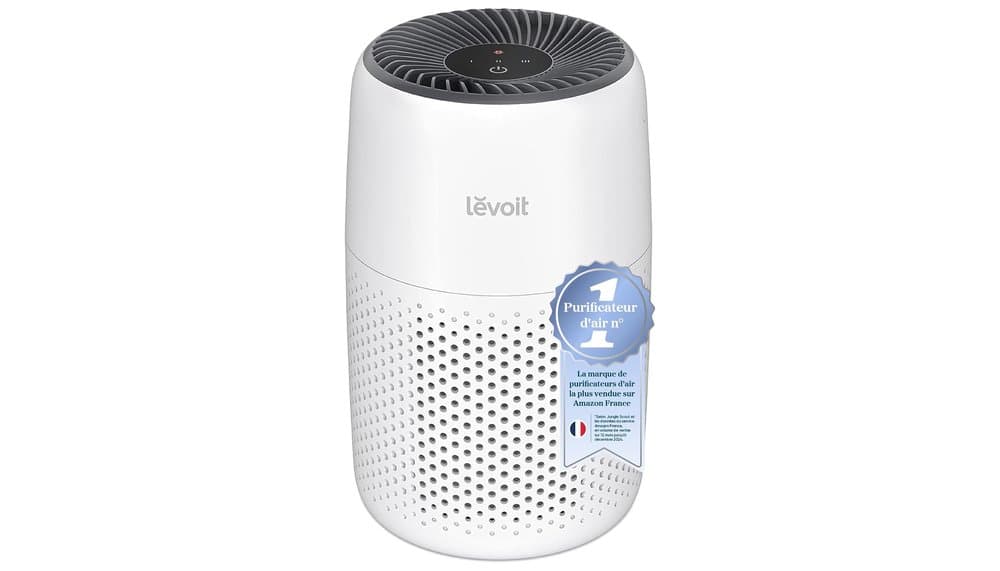
The LEVOIT Core Mini positions itself as an entry-level purifier designed for small rooms like a bedroom or office. On paper, its specs indicate a simple, understated, and energy-efficient device.
Its main asset, according to user feedback, is its discretion. Its minimal noise level of 25 dB is frequently praised by light sleepers and those using it in a work environment. It seems to keep its promise of not being disruptive. Its economical operation (7W) is also a positive point highlighted. The presence of an aromatherapy pad (for essential oils) is appreciated as a pleasant bonus feature, even if it remains secondary to purification.
However, the community also notes its limits. Its air processing capacity is suited for small spaces (up to 17 m²). Several reviews indicate it can be less effective in larger rooms or in the presence of strong pollution sources like a smoker. Its 3-in-1 filtration system (pre-filter, HEPA, activated carbon) is standard, but its clean air delivery rate (CADR) is not disclosed by the brand, making power comparison more difficult. Finally, its basic touch control interface is described as intuitive but does not offer an automatic mode or air quality sensor.
In summary: The Core Mini is a solid choice if you are looking for a simple, quiet, and economical device for a small room. It is perfectly suited for maintaining ambient air against common allergens, but you should not expect miracles in extreme situations or for large volumes.
AROEVE Air Purifier DH-JH12
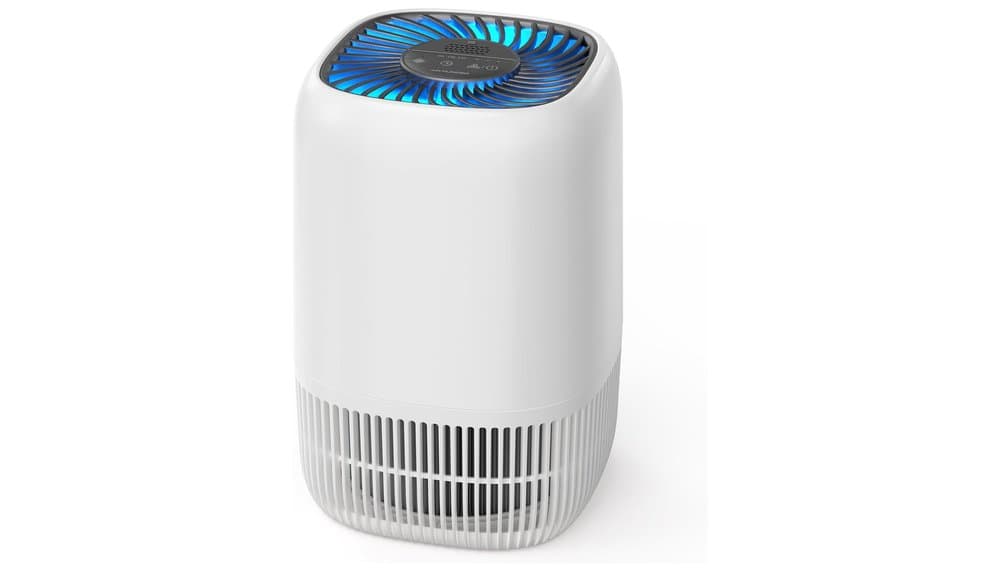
The AROEVE DH-JH12 targets a niche similar to the Core Mini, with some interesting specificities that stand out from the technical sheets and customer comments.
Its key selling point is its exceptional quietness. With a minimum of 22 dB, it is often presented as one of the most discreet on the market, ideal for bedrooms. Its ultra-low power consumption (5W) is also a highlighted strength. Its compact and lightweight design makes it easy to move. A practical feature that users seem to like is the programmable timer (6h, 12h, 24h), allowing for basic automation without the need for a smartphone app. Like the Core Mini, it includes an aromatherapy diffuser.
Feedback, however, points to some compromises. Although it claims to cover up to 20 m², some reviews suggest it is more effective in slightly smaller rooms. Its H13 HEPA filter is of good quality, but the brand is not as established as Levoit, which may raise questions about the long-term availability of replacement filters. The absence of an air quality sensor and an automatic mode places it in the category of manually controlled devices. Some users also wished for a clearer filter replacement indicator.
In summary: The AROEVE DH-JH12 is the champion of quietness and energy savings in this selection. Its timer is a real plus. It is perfect for those who prioritize minimal background noise and reduced consumption, and who do not need connected or automatic functions for a small to medium-sized room.
LEVOIT Core 300S
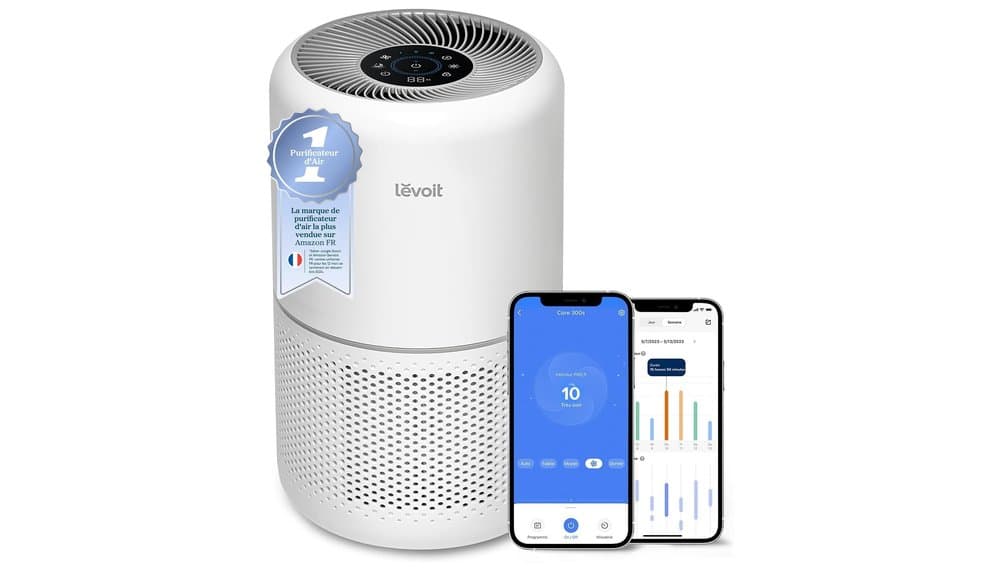
The LEVOIT Core 300S is clearly the most advanced and highest-performing model in this roundup. It steps up a notch in terms of power, technology, and connectivity, for larger rooms.
On paper, its specifications are impressive: a CADR of 240 m³/h allows it to effectively purify spaces up to 50 m². It is the only model here equipped with a laser air quality sensor (AirSight Plus) that visually displays air status via colored halos and drives an automatic mode. Its compatibility with Alexa, Google Assistant, and a dedicated app offers superior ease of use and remote control. Despite its power, it also achieves a minimum noise level of 22 dB in sleep mode.
Nevertheless, this sophistication has its downsides. According to reviews, the app can sometimes have connection bugs or less intuitive interfaces, a common pitfall of connected devices. Its consumption at full power (23W) is logically higher, although still reasonable for its performance. Its maintenance is also more costly: the filter must be changed every 6 to 12 months and there are different types of specialized filters (anti-smoke, anti-pet allergies), which slightly complicates the choice of consumables. It is also the bulkiest and heaviest model in the selection.
In summary: The Core 300S is the all-in-one solution for those looking for power, intelligence, and connectivity. It is ideal for a living room, large bedroom, or open space, and for tech-savvy users who want to automate purification and monitor their air quality in real time.
CADR and Square Footage: The Calculation to Avoid Disappointment
You've identified your pollutants, understood the filters. Now, you need to size the device. This is where most people go wrong, and it's a costly mistake. Buying an undersized purifier is like trying to empty a lake with a small cup: you'll wear yourself out with no result. The key to avoiding this is called CADR.
What is CADR and Why is it the Only Metric That Counts?
CADR stands for Clean Air Delivery Rate. This figure, expressed in cubic meters per hour (m³/h), simply tells you how much clean air the device can deliver in 60 minutes. It's objective, measured in a laboratory according to strict standards (AHAM in the US is a benchmark). A CADR of 300 m³/h means the purifier can theoretically treat the equivalent of a 300 m³ room about 5 times per hour.
Ignore vague marketing claims like "effective for 50 m²". They are often inflated. Only CADR gives you a reliable basis for comparison between models. Frankly, if a manufacturer does not communicate its CADR (or worse, hides it), walk away. It's often a sign of poor performance.
The Concrete Calculation for Your Room
Here is the golden rule you must remember: for effective purification, you should aim for an air turnover of 5 times per hour in the room. That's the standard.
The calculation is simple:
- Calculate the volume of your room: Area (in m²) x Ceiling height (in meters). For example, a 30 m² living room with a 2.5 m ceiling is 75 m³.
- Multiply this volume by 5 to get the minimum CADR required. For our living room: 75 m³ x 5 = 375 m³/h.
That is your target figure. A device with a CADR of 380 m³/h will work well. A model with 250 m³/h would be too weak: it would constantly run at full power without really cleaning the air, consuming more energy, making more noise, and wearing out its filters prematurely.
The Trap of Ceiling Height and Open Spaces
The flaw in this calculation is that it assumes a closed room. In real life, a purifier in a living room open to the kitchen and entryway must handle a much larger volume. My advice: if you have an open-plan apartment, base your calculation on the total area of the main living zone. And add a safety margin of 20% to your CADR calculation. For our example, aim for around 450 m³/h. It's a heavier initial investment, but it's the only way to get a tangible result.
Don't forget: a powerful purifier in a small space is not a problem. You can always run it on a low, quiet speed. The opposite is impossible. When it comes to air purifiers, processing power is the primary quality to look for in the best air purifier for your situation. A powerful motor with a high CADR is your guarantee of not throwing your money out the window.
Daily Life Criteria: From Noise to Long-Term Cost
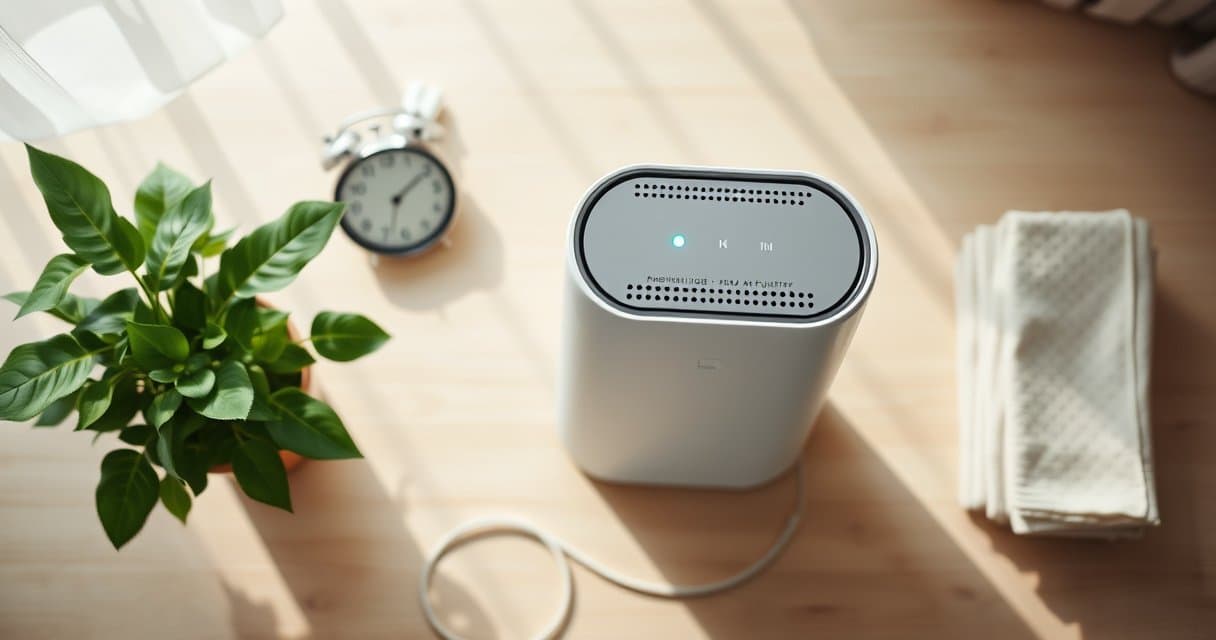
Processing power is one thing. But you're going to live with an air purifier 24/7. If the noise bothers you or maintenance becomes a headache, you'll end up unplugging it. And goodbye to your investment. Let's examine what will really impact your daily life.
Noise Level: Your Personal Tolerance in Decibels
An air purifier makes noise. It's mechanical: a fan draws air through filters. At maximum speed, it's often noisy, around 50 to 60 dB, comparable to an animated conversation. This is normal and necessary during a pollution peak.
But on its lowest speed, especially at night, it should be unnoticeable. Aim for a night mode advertised at 25 dB or less. To give you an idea, 25 dB is the gentle whisper of a laptop on standby. At 30 dB, it starts to resemble a constant low hum. Personally, I consider 28 dB to be the absolute maximum for a bedroom, especially if you are a light sleeper. Always ask yourself: "Could I fall asleep next to this?" Some brands excel on this point, others are notoriously bad, even on their high-end models.
The Hidden Cost: Filter Replacement Frequency and Price
This is the classic financial trap. You buy a device for €200 and discover to your amazement that replacement filter sets cost €80 and must be changed every 6 months. Over 5 years, you'll pay more for filters than for the device itself!
Before buying, do this simple calculation:
- Check the advertised lifespan of the main filter (in months or hours of use).
- Find the price of the replacement filter set (pre-filter + HEPA + activated carbon).
- Calculate the annual cost.
Concrete example: a €120 filter supposedly lasting 12 months results in an annual cost of €120. Another at €70 needing change every 6 months will cost €140 per year. The second device is clearly more expensive in the long run. My firm opinion: if the manufacturer does not clearly communicate these figures on its product sheet, it's suspicious. A meilleur purificateur d'air is also one with a controlled long-term cost of ownership.
Maintenance: The Chore That Guarantees Effectiveness
Neglecting maintenance is like never changing your car's oil. The device gets clogged, its airflow drops, and it ends up filtering nothing at all. Fortunately, it's not complicated.
The pre-filter, usually a simple foam or nylon mesh, is cleanable. Do this every month: vacuum it, rinse it with water if allowed, let it dry. It's free and greatly extends the life of the expensive HEPA filter.
For the main filters, scrupulously follow the manufacturer's recommendations. Do not attempt to vacuum or wash them, you will destroy them. And be wary of electronic replacement indicators: some are based on a simple timer, not on an actual clogging sensor. Keep a mental note of the elapsed time, it's often more reliable. A well-maintained device is the guarantee of truly clean air, not a fan circulating dirty air.
Sensors and Connectivity: Between Real Usefulness and Fads
Many air purifiers now resemble high-tech gadgets: blinking screens, mobile apps, real-time data. Is it marketing to justify a higher price, or genuine, game-changing comfort? I'll help you sort it out.
Air Quality Sensors: Your Electronic Eye
A good sensor is what transforms your device from a dumb fan into an intelligent assistant. But be careful, not all sensors are created equal.
The most common is the particle sensor (PM2.5). It measures fine dust, pollen, and dander. It's the most useful for daily life. Some models also include a VOC (Volatile Organic Compounds) sensor, which reacts to paint fumes, chemical cleaning products, or air fresheners. Finally, the most comprehensive models even add a humidity or formaldehyde sensor.
The real question is: what does the device do with this data? The best feature is an automatic mode that genuinely adjusts the fan speed based on the readings. You come home after vacuuming? The sensor detects the stirred-up dust and increases power for a few minutes, then reduces it. It's practical, it saves energy, and it avoids constant noise. Be wary of devices where the automatic mode seems to just run random cycles, unrelated to reality. For me, an accurate sensor is a major criterion for finding the best air purifier for your home.
The Mobile App: Comfort or Unnecessary Complexity?
Downloading an app to control your purifier is appealing in theory. But in practice, it can be frustrating.
The tangible advantages: turning the device on or off remotely (handy before returning home), checking an air quality history (very informative for identifying spikes related to your activities), and receiving alerts to change the filter. Some apps also allow for creating precise schedules.
The frequent drawbacks: an unstable Bluetooth connection that requires you to be in the same room (so what's the point?), a poorly translated, buggy app that ends up abandoned, or worse, personal data sent who-knows-where. Frankly, if you're not a home automation geek, a physical remote and a readable display on the device itself are often more reliable and faster. Don't pay a significant premium just for connectivity, unless the app offers truly unique and stable functions.
Home Automation Integration: For Enthusiasts... Only
"Compatible with Google Home and Alexa!" This label sells, but its utility is very niche. Controlling your purifier by voice might seem futuristic, but in practice, you set the speed once and then rarely change it. Integration can be interesting if you have a complex ecosystem: for example, your purifier turns on when your independent CO2 sensors detect a problem. But for the vast majority of people, it's a marketing point that doesn't, by itself, justify choosing one model over another.
Is Your Air Purifier an Island or a Link in Your Home?
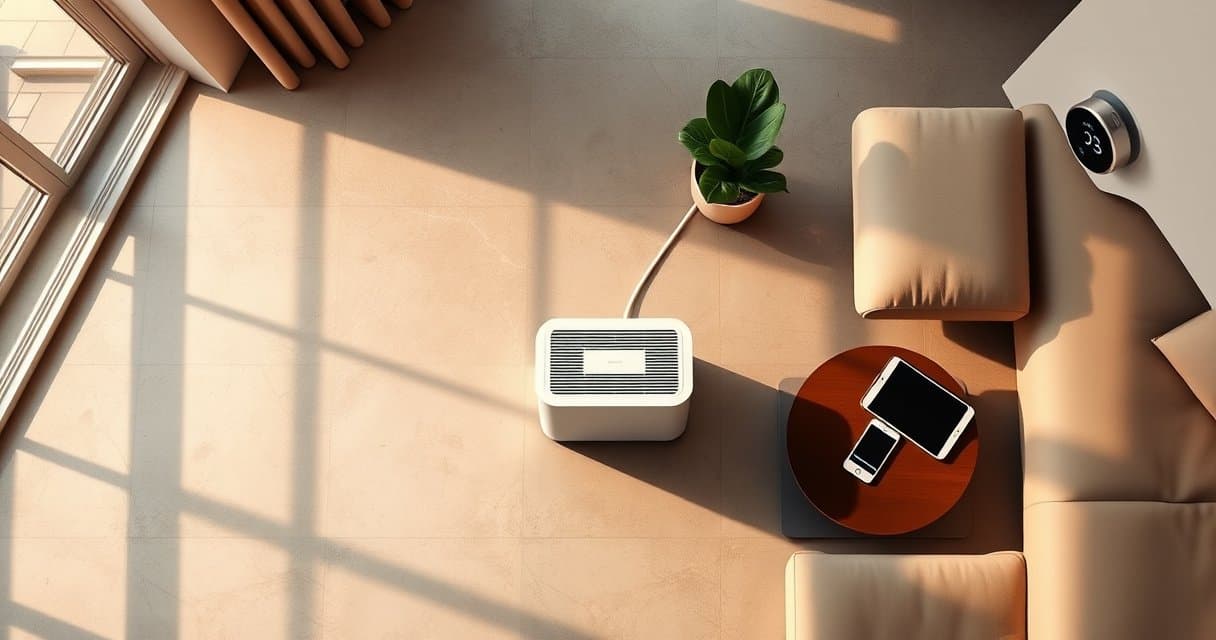
Buying an air purifier is often a one-off reaction: to combat spring allergies, at the birth of a child, after renovations. We hope the machine will solve the problem all by itself. But an appliance, no matter how efficient, does not operate in a vacuum. Its effectiveness deeply depends on what you do around it. Let's see how to make it an active link in a cleaner ecosystem, rather than an island fighting the tide alone.
Preventive Action: Reducing Pollution at the Source
An air purifier treats the air, but it does not make the source of pollution disappear. Letting it run at full power while you daily use a scented candle or an aggressive chemical cleaner is like mopping the floor without turning off the tap. It's inefficient and prematurely wears out your filters, especially the activated carbon one.
What actions make all the difference? Mechanically ventilating during and after cooking, favoring cleaning products based on simple ingredients (vinegar, black soap, baking soda) or certified low in VOCs, and limiting ambient sprays or diffuser scents. For dust mites and dust, the fight primarily involves regular cleaning of textiles (bedding, curtains) and a vacuum cleaner with an efficient HEPA filter. If your vacuum cleaner releases microparticles into the air, your purifier will have to work twice as hard just to get back to the starting point.
Appliance Synergy: The Art of Teamwork
In a house, air is in motion. Thinking in terms of synergy between your appliances multiplies their effects.
Take a concrete example with humidity, which is responsible for mold. A purifier alone can treat spores in the air, but it will not regulate the ambient humidity level. In a very humid room (above 60%), combining a dehumidifier and a purifier is much smarter. The former cleans the air by drying it, the latter captures allergens. Similarly, after vacuuming – even with the best machine – the air is temporarily loaded with fine particles. Setting your purifier to a turbo mode for 20 minutes or leaving it on automatic with a good sensor allows you to "finish the job" and quickly clean the disturbed air.
Choosing a Model Adapted to Your Overall Strategy
This reasoning directly influences your choice of appliance. If your goal is to combat stubborn cooking odors or VOCs from new furniture, a model with a substantial activated carbon filter (in weight and volume) is essential. If, on the other hand, your main battle is against allergens (pollen, dust mites) in a bedroom, the priority will be a purifier with a very high CADR for particles and an ultra-quiet night mode.
Frankly, the best air purifier for you is not necessarily the most expensive or the most high-tech on the market. It's the one whose strengths correspond to your main pollution sources, and which integrates seamlessly into your lifestyle habits and your existing cleaning ecosystem. Think about what you already do, and see how the appliance can help you, not do everything for you. That is the key to a truly effective and lasting investment.
Conclusion
Choosing an air purifier is making a choice for the health of your indoor environment. Don't let yourself be overwhelmed by marketing promises. Go back to the fundamentals: your precise needs, the size of your rooms, and proven filtration technology.
A good appliance is a discreet ally. It works with you, not in your place. By combining it with good daily practices, you create a true haven for respiratory peace.
Take your time. Make the right choice to finally breathe freely in your own home.
Frequently Asked Questions
What is the best air purifier for allergies?
An air purifier effective against allergens like dust mites and pollen should be equipped with a H13 or H14 class HEPA filter and have a sufficiently high CADR for your room. This combination captures at least 99.95% of the fine particles responsible for allergic reactions.
How to choose an air purifier for a large room?
First calculate the volume of the room (area x height) and multiply it by 5 to get the minimum required CADR in m³/h. For an open space, add a 20% safety margin to this calculation to ensure effective purification.
Does an air purifier eliminate odors and VOCs?
Yes, but only if it is equipped with a thick and dense granular activated carbon filter, as a standard HEPA filter does not capture gases. You need to check the weight of the combined filter; a good filter often weighs more than 2 kg to effectively adsorb volatile chemical compounds.
Should purifiers with ionizers be avoided?
Choosing a purifier with ionization is not recommended, as this technology often causes particles to settle back onto surfaces without eliminating them and can produce ozone, a gas irritating to the lungs. Prefer mechanical filtration based on a HEPA and activated carbon duo.
How often should air purifier filters be changed?
A HEPA filter should generally be replaced every 8 to 12 months, while an activated carbon filter has a lifespan of about 6 months. Monthly maintenance of the pre-filter (vacuum cleaning) helps extend the life of the main filter.
Is an air purifier noisy for a bedroom?
A purifier suitable for a bedroom should have a night mode advertised at 25 dB or less, equivalent to the slight whisper of a laptop. It is crucial to check this sound level on the lowest speed so as not to disturb sleep.
Independent and transparent — Our articles are based on in-depth research and real user reviews. No brand sponsors our content. Affiliate links help fund the site, at no extra cost to you.
Guides you might like
Allergen Fighter Dehumidifier Buying Guide
Combat allergies from dust mites and mold caused by high humidity at home. A good dehumidifier protects your family's health.
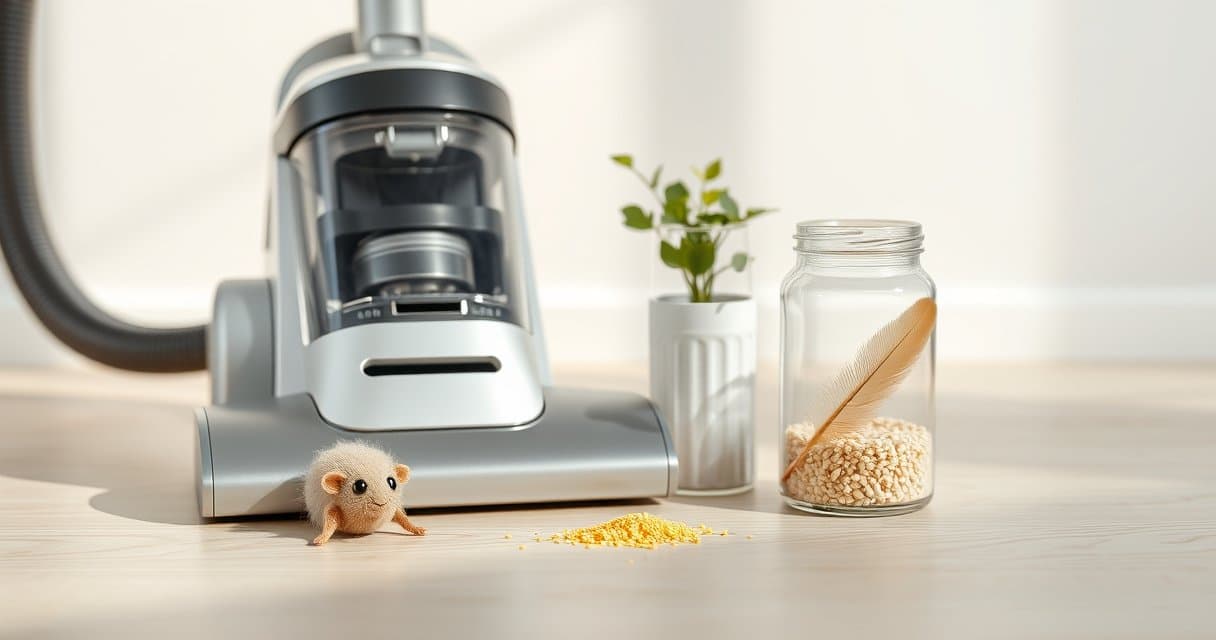
Anti-allergen vacuum cleaner
Does vacuuming worsen allergies? Yes, with a poor filter. Choose the right vacuum to trap allergens and protect your health.
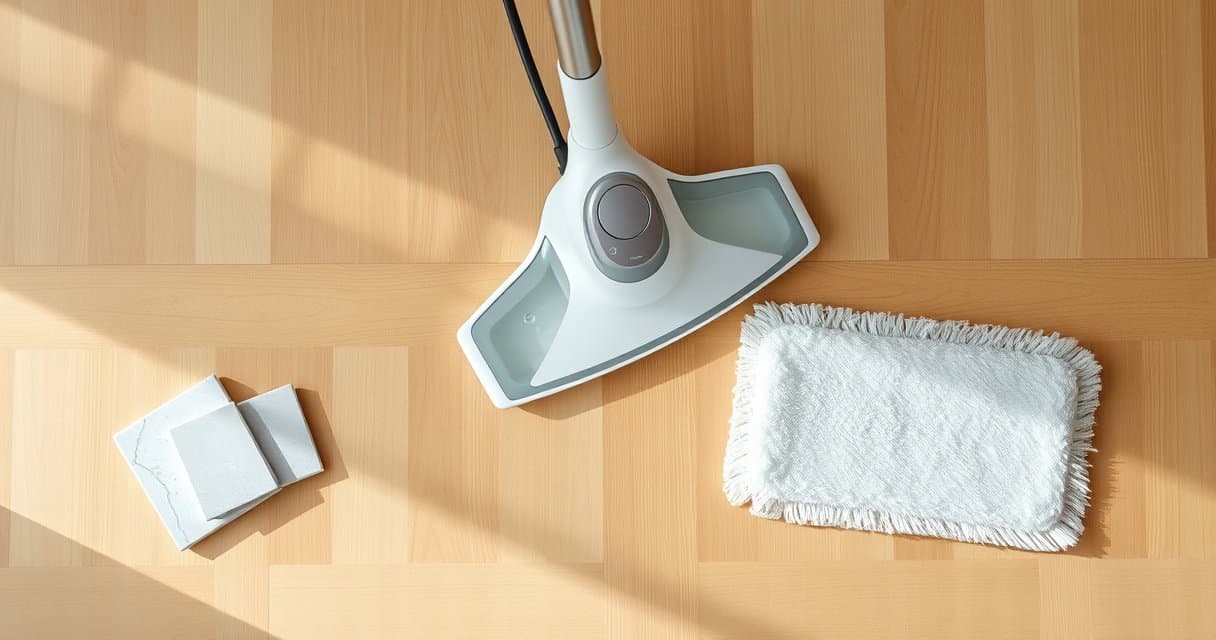
Choosing Your Effective Steam Mop
Ditch harsh chemicals. Clean and disinfect floors with just water using an effective steam mop. A guide to pressure, performance, and a healthier home.
Articles you might like
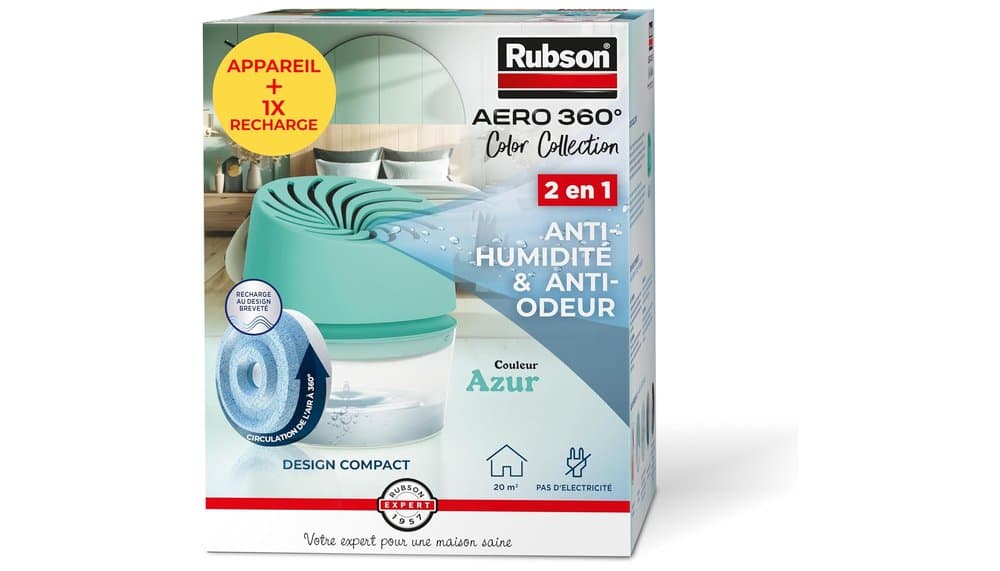
Rubson Moisture Absorber Aero 360° Azure Review
Review of the Rubson Aero 360° dehumidifier. A passive, chemical, cordless unit for combating household damp and excess moisture in small spaces.
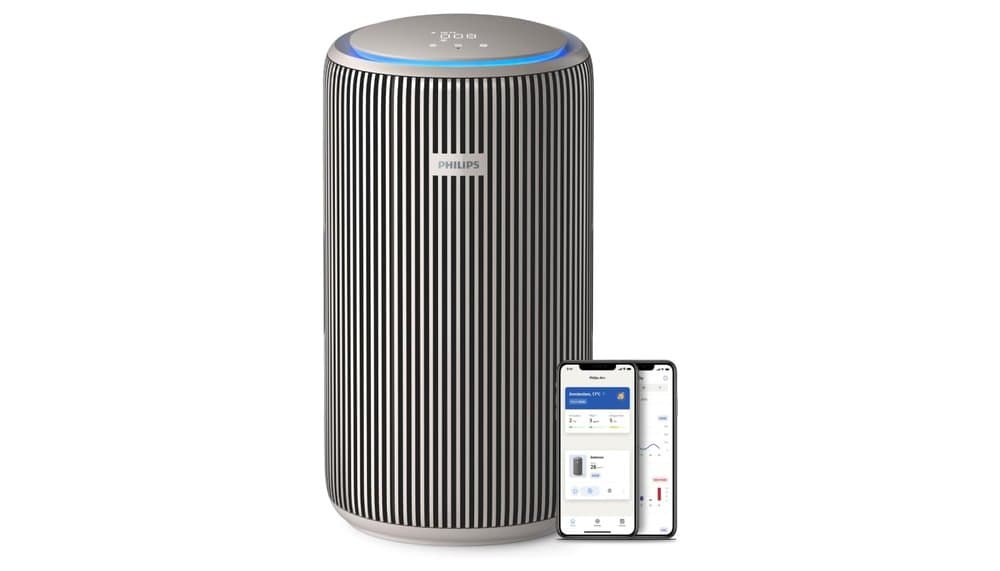
Philips PureProtect 3200 Series AC3210 Air Purifier Review
Discover how the Philips air purifier tackles dust, pollen, VOCs & odors, creating a cleaner, healthier indoor environment for your well-being.
Luxiabed Memoryvex Memory Foam Mattress Review
Luxiabed Memoryvex review: Analyzing memory foam mattress comfort, VOC emissions, allergens & sleep hygiene for a healthy night's rest.