Guide to the best steam cleaner
Tired of seeing surfaces shine after cleaning, but wondering what's left in the air? A steam cleaner can be the solution to purify your home without chemicals. Imagine: a single machine that dissolves stubborn dirt, eliminates invisible allergens, and gives you a real feeling of freshness. Frankly, choosing the right model makes all the difference between a bulky gadget and a daily health ally.
Key Points to Remember
- Steam cleans deeply, eliminates allergens, and replaces a multitude of chemicals.
- Choose a model offering a balance between pressure (ideally 3.5-4.5 bars) and continuous runtime for frustration-free use.
- Not all surfaces can handle steam: always test it discreetly and avoid using it on fragile parquet floors, wallpaper, or porous surfaces.
- Use exclusively demineralized water and empty the device after each use to make it last.
- The quality of accessories and ergonomics are just as important as power for effective and pleasant cleaning.
Why Choose Steam Over Chemical Products
You open your cleaning cupboard. An army of bottles: one for the floor, one for windows, another for the bathroom. They promise disinfection, shine, and a fresh scent. But the next day, a fine sticky film is already there, and a slight irritation lingers in your child's throat. What if the solution were simpler? Replace this battery of products with a single ingredient: water, transformed into high-temperature steam.
A Simple and Radical Action Against Allergens
The magic – well, science – happens around 100°C. At this temperature, the steam generated by a good steam cleaner doesn't just lift grease or spilled sugar. It denatures proteins. That's a technical term meaning it destroys the structure of dust mites, their droppings (the real allergen), pollen trapped in your carpet fibers, and mold spores in tile grout. You're not just moving them around with a cloth; you're eliminating them. That's the whole difference for a sensitive person. You run the appliance over a mattress or a sofa, and breathing is immediately easier the next night. It's tangible.
Goodbye to VOCs and Questionable Residues
Conventional cleaning products, even those labeled "natural," often leave residues. Worse, many release Volatile Organic Compounds (VOCs) like formaldehyde or limonene, which pollute indoor air for hours. With steam, zero residue. The water evaporates. All that's left is a clean, dry, and... inert surface. You can let your child play on the floor immediately after using the appliance. You clean the kitchen table without having to frantically rinse it before putting down bread. Peace of mind is priceless, especially when you know indoor air is often more polluted than outdoor air.
A Move for the Planet and Your Wallet
Let's do a quick calculation. A bottle of multi-surface cleaner at €5, a disinfectant spray at €6, a carpet shampoo at €15... The list is long, and the purchases repeat every two or three months. A good steam cleaner represents an initial investment, yes. But afterward, your only consumable is tap water (ideally filtered or demineralized for limescale, costing a few cents per use). No more plastic packaging to throw away, no more chemical substances to produce and transport. Your ecological footprint plummets dramatically. And frankly, what a relief to get rid of that cluttered and potentially toxic cupboard!
So, does steam replace absolutely everything? To be honest, no. A three-year-old red wine stain on a light-colored rug might need pretreatment. But for 95% of common uses – floors, bathrooms, kitchen, windows, textiles – it is formidably effective. It cleans in depth, not just on the surface. And that is a total game changer for your routine.
How to Interpret the Technical Sheet: Pressure, Runtime, Flow Rate
You've decided to take the plunge. Perfect! But when faced with technical specifications, it's confusing: "4.2 bars", "flow rate 120 g/min", "continuous runtime". These numbers seem to come from an engineer's manual. Let's demystify it all, because this is where the real choice is made between a device that frustrates and one that becomes your ally.
Pressure (in bar): The Power to Lift
Imagine an old piece of gum stuck on tile. A weak jet of steam will moisten it. A high-pressure jet will lift it off. That's exactly it. Pressure, measured in bars, indicates the force with which the steam is expelled. It's the number one criterion for efficiency.
- Less than 3 bars: Sufficient for windows and delicate surfaces, but often too weak for dirty floors or old grout. It stays on the surface.
- Between 3.5 and 4.5 bars: The sweet spot for regular family use. This pressure cuts through the layer of grease in the kitchen, dislodges ingrained dirt in balcony grooves, and cleans deeply. This is what I would recommend to most people.
- Above 5 bars: Professional power. Excellent, but sometimes excessive for daily domestic use on sensitive surfaces. At this level, maneuverability and safety (weight, steam management) become just as important.
My advice? Beware of models that advertise astronomical pressure but seem lightly built. Stable, well-managed pressure is better than a marketing number.
Flow Rate (g/min) and Runtime: The Comfort of Use
Pressure is the force. Flow rate is the volume. Expressed in grams of steam per minute (g/min), it tells you how much "clean fuel" you have available. A flow rate of 100 g/min is a good standard. Below 80 g/min, you might have to go over stubborn stains more slowly.
But flow rate is closely linked to runtime, and that's where it becomes crucial. Two systems compete:
| Runtime Type | How does it work? | The pro... | The con... |
|---|---|---|---|
| Pressurized Tank | A single tank (1L to 1.5L) is heated. Once empty, you must wait for it to cool, refill it, and start a new heating cycle. | Often more compact and lightweight devices. | Mandatory breaks. Very frustrating for cleaning 50m² in one go. |
| Continuous Runtime (with regeneration) | An ingenious system allows you to refill a small tank with cold water at any time, without stopping steam production. | Uninterrupted cleaning. Ideal for large surfaces (entire house, large tiled areas). | Often slightly heavier and more complex devices. |
Frankly, if you have more than 30m² to clean regularly, continuous runtime is a game-changer. You don't realize how much these constant stops break your rhythm and are discouraging.
The Other Numbers That Really Matter
The technical sheet isn't limited to these three elements. Take a look at:
- Heat-up time: More than 3 minutes? That's long when you just want to clean a spot quickly.
- Cord length: A cord shorter than 5 meters is a curse. You'll spend more time unplugging and replugging than cleaning. Also check for practical cord storage.
- Weight: A device weighing 4 kg seems light. But after ten minutes of pushing and pulling it with wrist motion, you'll feel it. A chassis with good wheels is as important as the raw weight.
The trick? Don't focus on a single record-breaking number. Look for balance. A device with 4 bars, 100 g/min, continuous runtime, and a 6-meter cord will be much more pleasant for daily use than a 5-bar monster that stops every ten minutes.
Our Selection
Steam cleaning is increasingly appealing for its chemical-free effectiveness. In this selection, we have scrutinized three popular portable and multifunctional models. We rely on their technical specifications and user feedback to provide a clear comparison and help you find the one that best matches your maintenance needs.
Here is a comparison table highlighting their main characteristics:
| Product | Max. Temperature / Pressure | Heat-up Time / Runtime | Tank Capacity | Key Strengths (according to specs and reviews) |
|---|---|---|---|---|
| Rolipo | 135°C | 3 min / 8-12 min | 440 ml (280 ml recommended) | High temperature, very complete accessory kit (12 pieces) |
| Eave | 110°C / 3 bar | Time not specified / ~10 min | 450 ml (350 ml recommended) | Very long cable (5m), continuous steam system, lightweight |
| Fippesax | 110°C | 15 seconds / up to 14 min | 400 ml | Ultra-fast heating, lockable safety button |
Rolipo steam cleaner
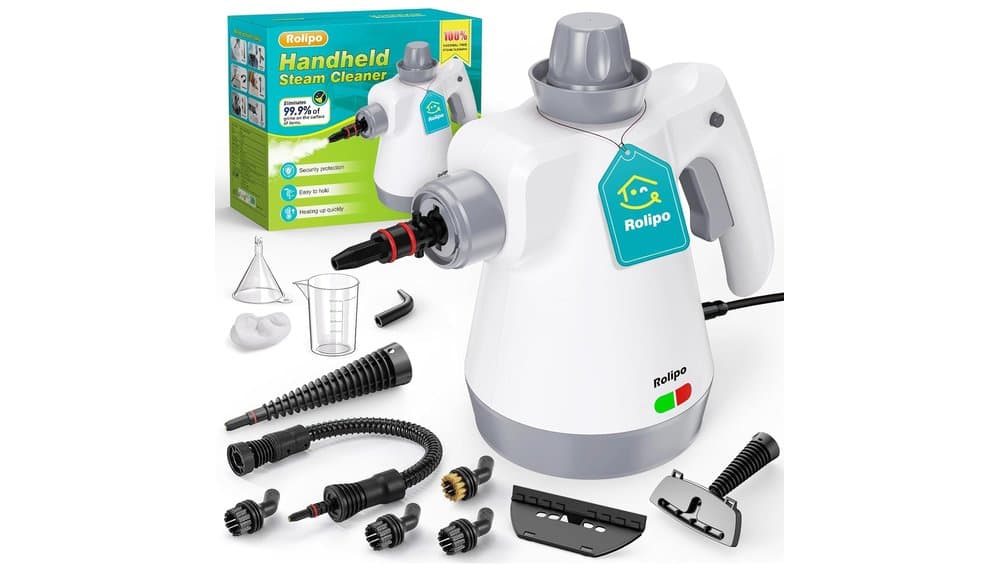
The Rolipo steam cleaner stands out on paper due to its high steam temperature of 135°C, the highest in our selection. According to the specifications, this thermal power is designed to dissolve stubborn grease and ingrained dirt more effectively. The user community generally appreciates its very complete accessory kit (12 pieces including a brass brush and a telescopic hose), which allows tackling a wide variety of surfaces, from tile grout to textiles.
However, feedback highlights some compromises. Steam runtime is mentioned as a point to note: with a 440 ml tank (of which it is recommended to fill only 280 ml), the effective cleaning duration is about 8 to 12 minutes. This may require refill breaks during extended cleaning sessions. Furthermore, although its weight is reasonable (1.8 kg), some users note that having to continuously hold the steam trigger during use can become tiring for the hand over time. Finally, the warranty and availability of spare parts are not clearly communicated by the manufacturer, which can be a factor to consider for the longevity of the device.
In summary, this model seems to be a good choice for those seeking maximum thermal power and versatility ensured by numerous accessories, for targeted cleaning sessions rather than cleaning the entire house in one go.
Eave Portable Steam Cleaner
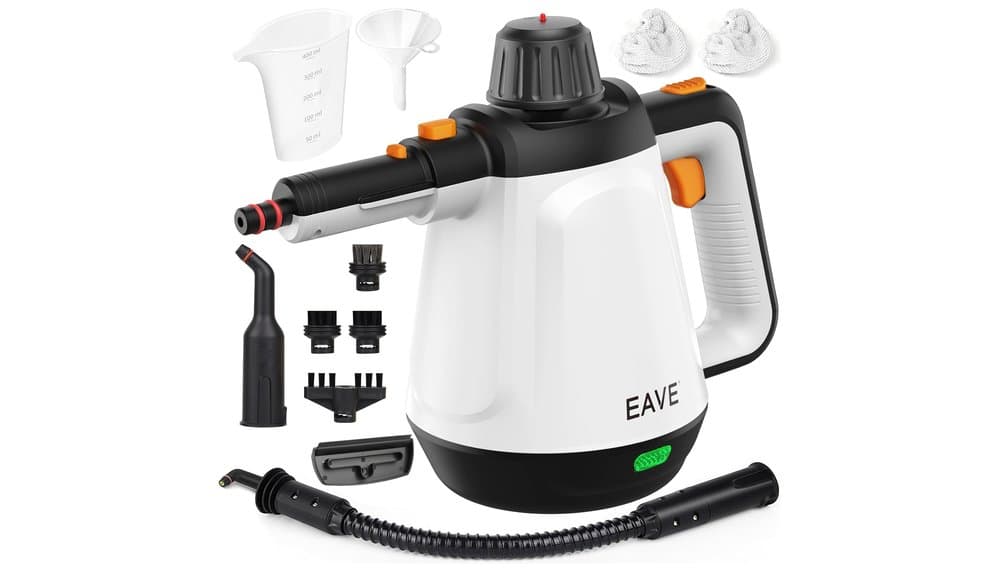
The Eave Portable Steam Cleaner focuses on ergonomics and ease of use. Its most notable technical feature is its 5-meter power cable, praised in reviews for the freedom of movement it provides, eliminating the constant need to change outlets. The specifications also highlight a continuous steam system: once activated, the device delivers steam without requiring constant pressure on the trigger, thereby reducing hand fatigue. With a stated weight of 2.24 kg and a 450 ml tank, it promises good runtime.
Regarding limitations reported by users, it is noted that the steam temperature (110°C) is lower than that of the Rolipo model, which could potentially affect its effectiveness on greasier or more ingrained dirt, even though reviews remain generally positive about its cleaning power. The accessory kit, although complete (10 pieces), is sometimes considered a bit less sturdy or finished than that of other models. Finally, information regarding the initial heat-up time is not specified by the manufacturer, a missing piece of data for assessing the device's responsiveness upon startup.
This steam cleaner therefore seems tailored for people who prioritize comfort during use (long cable, hands-free system) and who need to cover a large area without being hindered by a cord that is too short.
Fippesax Portable Steam Cleaner
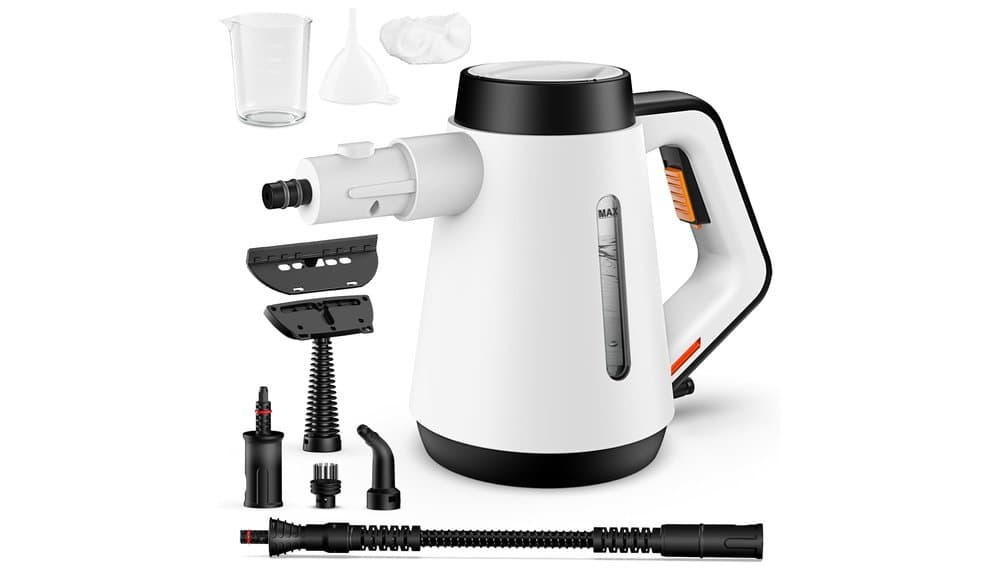
The main asset of the Fippesax Portable Steam Cleaner, according to its specifications, is its exceptional heating speed. The device promises to be ready for use in just 15 seconds, a time significantly lower than its competitors. This makes it an interesting candidate for quick, occasional cleaning jobs. It also boasts an advertised runtime of up to 14 minutes with its 400 ml tank. Another ergonomic point highlighted is its lockable safety button, which allows locking the steam continuously without hand strain.
Feedback from the community, although less abundant than for the other models, allows for a more nuanced picture. Some users report that the steam pressure can seem a bit lower than their expectations, which might require a bit more patience on certain stains. As with other models, long-term maintenance (availability of parts) is not detailed. It is also worth noting that the manufacturer specifies that residual water marks from factory tests may be present upon receipt, which is normal but can be surprising.
This model clearly positions itself on immediacy. It is perfectly suited for those who hate waiting and want a responsive device for quick, frequent interventions on everyday dirt, with attention to handling comfort.
Surface Compatibility and Device Limitations
Steam is great, but it's not magic. It's a powerful tool that, if misused, can damage sensitive surfaces. The classic mistake? Believing a steam cleaner is universal. Think again. The key to not damaging anything and achieving perfect results is understanding precisely where you can use it, and where you absolutely must avoid it.
Allied Surfaces: Where Steam Excels
These materials love steam. They are non-porous, heat-resistant, and steam cleans them deeply without residue.
- Tiles, glazed ceramics, and sealed natural stone: This is the ideal playground. Steam degreases grout, cleans the pores of the stone, and makes it shine. For dark grout, use the brush attachment or the concentrated flat nozzle: high-temperature steam removes embedded dirt much better than a brush and soapy water.
- Windows and mirrors: With a dedicated squeegee attachment, it's amazing. Steam removes fingerprints and the film of grease without leaving streaks. A bonus: it doesn't freeze in winter like a classic cleaning method with product.
- PVC vinyl and linoleum floors: Generally compatible, but a test in a discreet corner is wise. Use medium pressure and don't linger on the same spot. Steam does a remarkable job of removing footprints and restoring shine.
- Stainless steel and kitchen ceramics: Perfect for degreasing cooktops, range hoods, and sinks. The grease literally melts away.
For these surfaces, you can go for it. Steam is in its element here.
Risk Zones: Requiring Great Caution
Here, you need to switch to "careful pilot" mode. The golden rule: always do a test in a discreet, inconspicuous corner.
- Hardwood and wood floors: This is the big debate. The answer is never yes or no, but "it depends." An old, well-oiled or varnished solid wood floor might withstand dry, quick steam with the appropriate brush, without leaving a mark. On the other hand, a laminate floor or a low-quality varnished wood risks swelling and warping at the slightest infiltration. My opinion? If you're not 200% sure, don't do it. The risk is too great.
- Unsealed marble, travertine, or granite: These are porous stones. Steam, combined with heat, can force moisture and impurities deep into the stone, creating stains or altering the finish.
- Delicate textiles: Thick carpet or natural wool rugs can often be treated with a suitable brush to kill dust mites. But on silk, fragile velvet, or a sofa with delicate fabric, steam can leave irreversible watermarks or damage the fibers.
Forbidden Surfaces: Full Stop
For these, put the device away. Period.
- Limewash paint or wall plasters: Steam will simply dissolve them and create blisters.
- Electronic devices (TV screens, computers): Moisture is the sworn enemy of circuits. Even with a microfiber attachment, the risk of condensation is real.
- Wallpaper, especially vinyl: Heat can loosen seams or cause panels to bubble.
- Waxed surfaces (like an old waxed wood floor): The wax will melt. You'll get a nice mess.
The best steam cleaner isn't the one that cleans everything, but the one you use intelligently, knowing its limits. This will save you from very bad surprises and ensure the longevity of your floors and surfaces. When in doubt, a microfiber cloth and a bit of soapy water remain the safest option.
Assessing Ergonomics and Accessories for Your Use
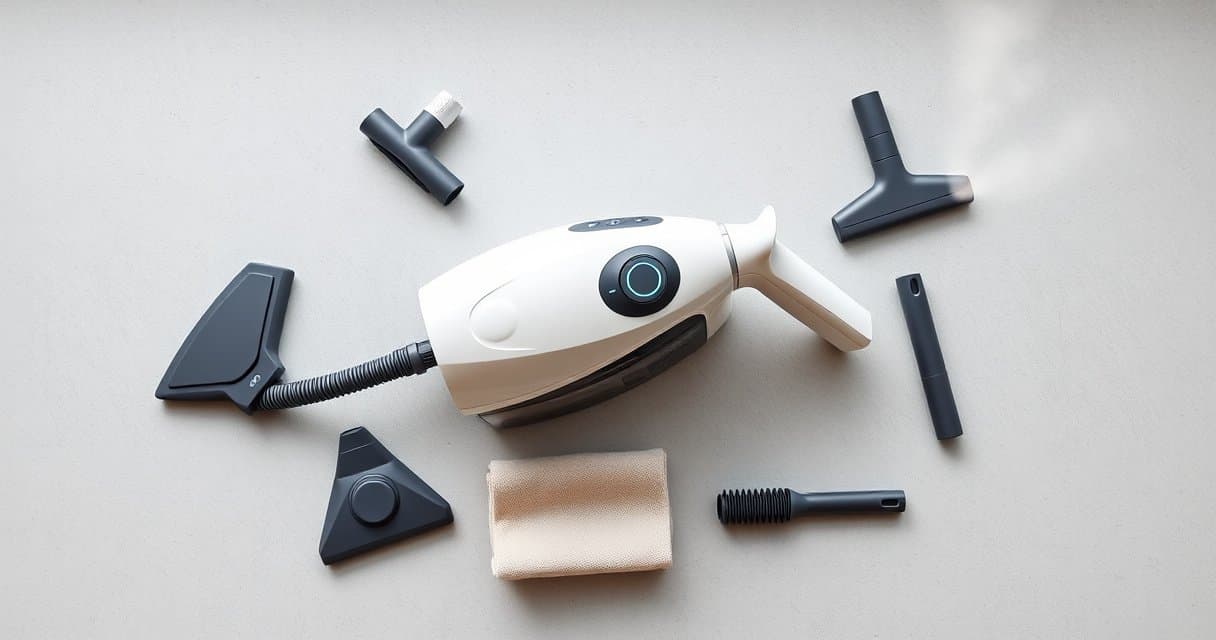
This is where theory meets daily life. A steam cleaner with impressive specs can become your worst enemy if it's heavy, poorly designed, and its accessories make you want to store the device for good. Let's review the elements that turn a chore into an efficient routine.
Weight and Maneuverability: A Question of Back Health
You will carry it, pull it, lift it. A 5 kg device may seem acceptable, but after ten minutes of handling it to clean stairs, you'll curse it. The most maneuverable models often weigh between 3 and 4 kg when filled. Also check the cord length: less than 5 meters is a constant handicap forcing you to change outlets constantly. The best ergonomics, frankly, is a stable chassis with wheels that turn well, not ones that lock up at the first turn.
Accessories: True Versatility in Action
The accessory box isn't a bonus, it's the survival kit. Here's what really matters:
- The wide floor brush (at least 25 cm): This is the main tool. Ensure it has a good removable and washable microfiber pad. A narrow brush will triple your time on tiled floors.
- The window/glass tool with squeegee: Non-negotiable. A good tool has a quality rubber blade that doesn't leave streaks. It's the accessory that saves you the most time.
- The carpet/rug brush: It shouldn't just sit on the fabric. Look for a model with bristles or rollers that agitate the fibers so the steam penetrates deeply and kills dust mites.
- The concentrated steam gun: Perfect for grout, faucets, or bathroom corners. It should be light and have a precise control trigger.
The Tank and Refilling: The Practical Test
There are two philosophies, and your choice determines your experience. Pressurized boiler models have a small integrated tank (often 1 liter). You must wait for it to heat, use it until empty, let it cool, refill it, and start over. This is cumbersome for a large area. Continuous-fill models (or "unlimited autonomy") have a larger removable tank, often 1.5 to 2 liters. You can refill it at any time, even with cold water, without interrupting your session. This is a game-changing comfort for cleaning an entire house in one go.
Daily Maintenance: The Hidden Truth
A good friend doesn't hide the downsides. After use, you must empty the tank to prevent bacteria growth or bad odors. The limescale filters (if any) need to be rinsed. And the microfiber pads? They are machine washable, but they wear out. Plan to buy extra ones after a few months. A device whose accessories are unavailable for purchase is a future paperweight.
The best steam cleaner for you is not necessarily the most powerful on the market. It's the one whose weight and balance suit you, whose accessories match your surfaces, and whose maintenance doesn't discourage you after the third use. Try it virtually: read reviews on maneuverability, not just on pressure.
Maintaining Your Steam Cleaner to Make It Last
It's the best-kept secret: an excellent steam cleaner can fail you in two years if you neglect it, while a more modest model can last you a decade with the right care. Maintenance is not an optional chore; it's the guarantee that your investment stays effective and safe. Let's get down to business.
The Water Question: Limescale, Your Number One Enemy
The boiler in your appliance is a kettle on steroids. And like a kettle, it gets scaled. Tap water, especially in the Paris region or the southeast of France, is often rich in minerals. These deposits reduce efficiency, increase heating time, and eventually clog the orifices.
The solution is simple but crucial: use demineralized water. You can find it in supermarkets for a few cents per liter. It's the most important gesture for longevity. If you use tap water, expect to need descaling every three to six months, depending on your water hardness. Water filtered by a pitcher like Brita is a good compromise, but less safe than demineralized water.
The Routine After Each Use: 5 Minutes That Save Everything
Never store your appliance "hot and humid." That's a recipe for mold and corrosion.
- Turn it off and unplug it. Let it cool down completely.
- Empty the tank completely. Turn it upside down, shake it gently to remove the last drops. A bit of stagnant water is a breeding ground for bacteria and increases the risk of limescale.
- Leave it open. Do not screw the tank cap back on immediately. Let everything air dry, lid open if possible, for an hour or two before storing it. This prevents bad odors.
Periodic Descaling: The Essential Procedure
Even with demineralized water, a light annual descaling is good practice. With tap water, do it more frequently, as soon as you notice a drop in steam pressure or an abnormal whistling sound.
- The product: Use only a descaler for small household appliances (often based on citric acid) or diluted white vinegar (1/3 vinegar to 2/3 water). Never use aggressive chemicals like drain cleaner.
- The method: Fill the tank with the solution, let it act according to the instructions (often 15-30 minutes without turning it on), then operate the appliance to eject everything into a bucket. Always finish with at least two tanks of clear water to rinse thoroughly. Honestly, never skip this rinsing step, or the next steam will smell like vinegar or worse, damage your surfaces.
Storage and Gasket Inspection
Store your steam cleaner in a dry place, protected from frost. Coil the cord loosely, without twisting it. Once a year, visually inspect the cables, the power cord, and the sealing gaskets around the tank and boiler. A cracked or deformed gasket can cause leaks or a loss of pressure. Most manufacturers sell replacement kits.
The best steam cleaner is the one you treat with a little respect. These simple habits not only preserve the machine but also the quality of your steam and, ultimately, the effectiveness of your cleaning. A well-maintained appliance means consistent pressure and pure steam, month after month.
Conclusion
There you have it, all the keys to make the right choice. Choosing a steam cleaner is much more than just buying an appliance.
It's choosing a healthy cleaning partner for your home. An ally that cleans deeply, without chemicals.
Take the time to review your needs. Think about your floors, your health, your routine. A good purchase is made with full awareness.
Cleaning differently is possible. And honestly, once you try it, you'll never go back.
Frequently Asked Questions
Does a steam cleaner really eliminate dust mites?
Yes, high-temperature steam (around 100°C) destroys dust mites and their allergenic droppings by denaturing their proteins, eliminating them rather than just moving them around like traditional cleaning.
What pressure is needed for an effective steam cleaner?
A pressure between 3.5 and 4.5 bars is the right compromise for regular household use, as it is powerful enough to lift ingrained dirt without being excessive for most domestic surfaces.
Can a steam cleaner be used on hardwood floors?
It depends on the type of flooring: well-oiled solid hardwood can withstand it with dry, quick steam, but it is essential to avoid using it on laminate flooring or low-quality varnished wood due to the risk of causing it to swell.
Should demineralized water be used in a steam cleaner?
It is crucial to use demineralized water to preserve your appliance, as the limescale present in tap water causes scaling in the boiler, reduces its efficiency, and can clog the openings.
What is the advantage of a continuous autonomy steam cleaner?
A system with continuous autonomy (or regeneration) allows you to refill the water tank at any time without stopping the steam production, which is essential for cleaning large areas in one go without frustrating pauses.
Independent and transparent — Our articles are based on in-depth research and real user reviews. No brand sponsors our content. Affiliate links help fund the site, at no extra cost to you.
Guides you might like
Air Purifier Buying Guide
Indoor air can be more polluted than outside. Learn how to choose the right air purifier to combat dust, VOCs, and allergens.
Allergen Fighter Dehumidifier Buying Guide
Combat allergies from dust mites and mold caused by high humidity at home. A good dehumidifier protects your family's health.
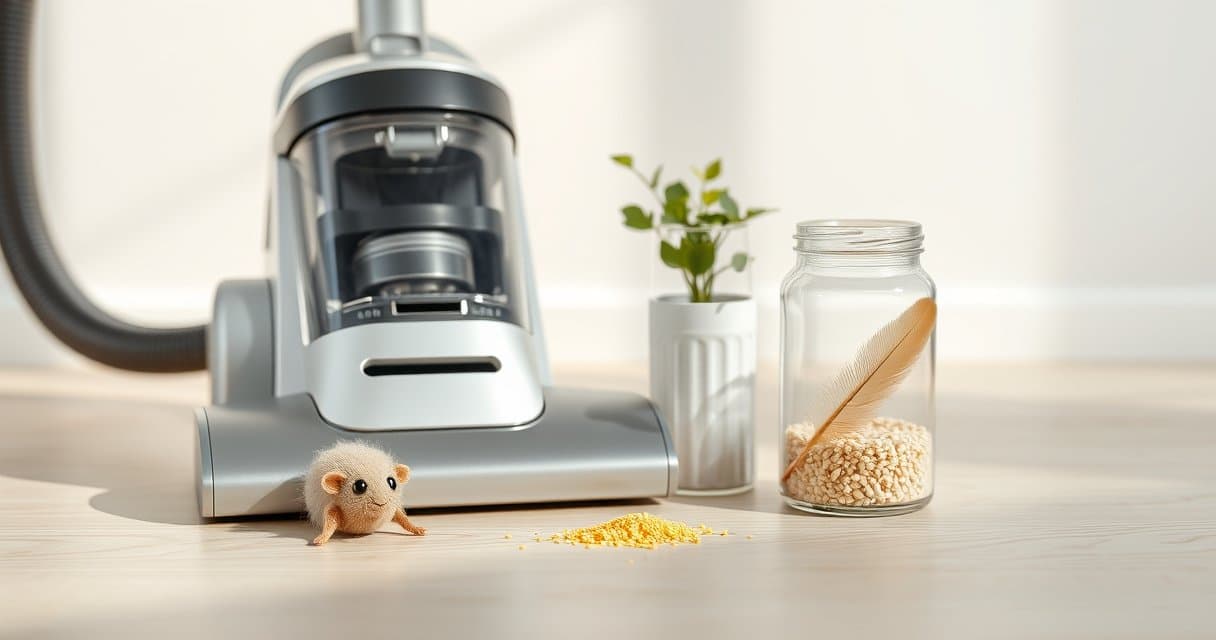
Anti-allergen vacuum cleaner
Does vacuuming worsen allergies? Yes, with a poor filter. Choose the right vacuum to trap allergens and protect your health.
Articles you might like
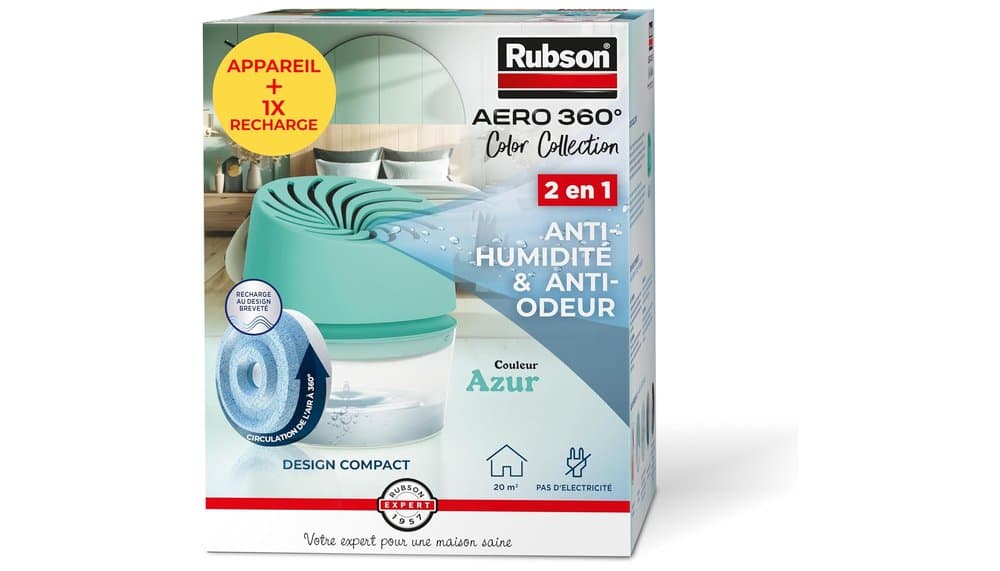
Rubson Moisture Absorber Aero 360° Azure Review
Review of the Rubson Aero 360° dehumidifier. A passive, chemical, cordless unit for combating household damp and excess moisture in small spaces.
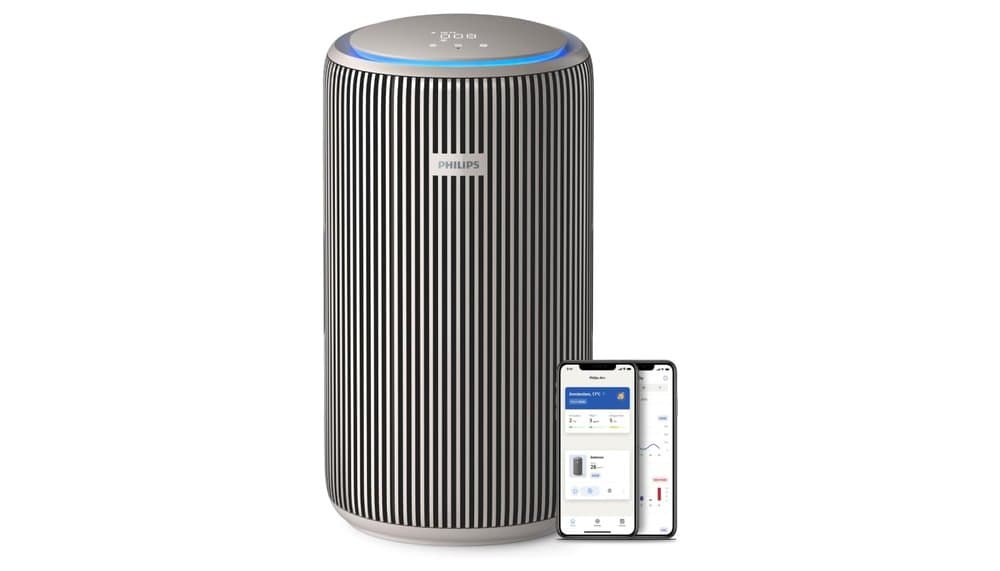
Philips PureProtect 3200 Series AC3210 Air Purifier Review
Discover how the Philips air purifier tackles dust, pollen, VOCs & odors, creating a cleaner, healthier indoor environment for your well-being.
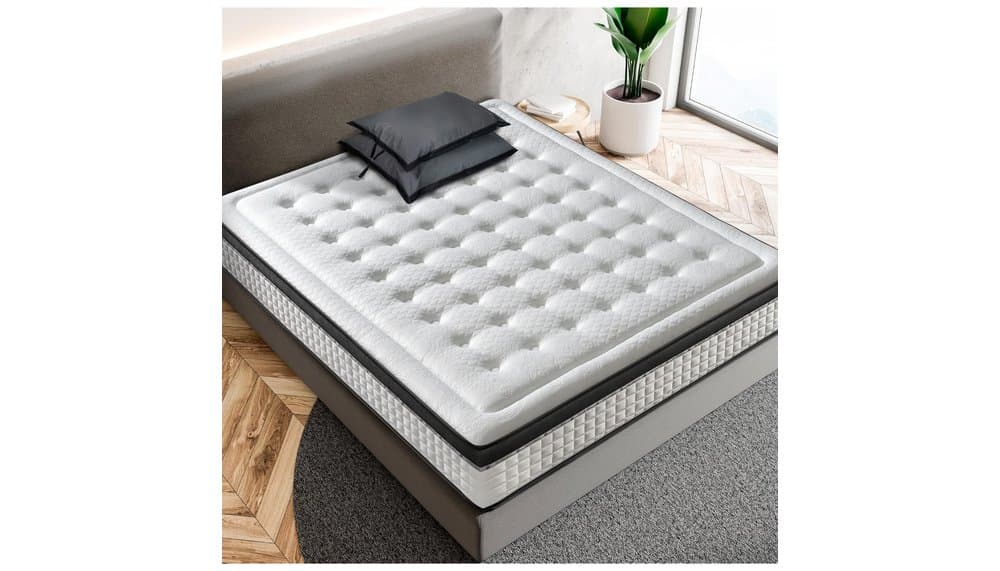
Luxiabed Memoryvex Memory Foam Mattress Review
Luxiabed Memoryvex review: Analyzing memory foam mattress comfort, VOC emissions, allergens & sleep hygiene for a healthy night's rest.