Allergen Fighter Dehumidifier Buying Guide
If you battle a stuffy nose and itchy eyes every day at home, the culprit might simply be excessively humid air. Because too much humidity transforms your interior into a true paradise for dust mites and mold, triggering allergies that could be avoided. Frankly, opening the window isn't always enough, especially in autumn or in a well-insulated house. That's where a good dehumidifier, chosen carefully, becomes a valuable ally for protecting the health of the whole family.
Key Points to Remember
• A dehumidifier fights allergies by creating an environment hostile to dust mites and mold, maintaining an ideal humidity level between 40% and 50%. • To choose correctly, calculate the volume of your room and oversize the power if the humidity is high (above 65%) or if mold is present. • Prefer a compressor dehumidifier for heated rooms and an absorption model for cold spaces like cellars. • Essential functions are a precise hygrostat for automatic regulation and, ideally, a HEPA filter to capture airborne allergens. • Regular maintenance, notably weekly cleaning of the tank and vacuuming the filters, is essential to guarantee the appliance's effectiveness and longevity.
How a Dehumidifier Fights Allergens in Your Home
It is often mistakenly thought that a dehumidifier only dries the air. In reality, it is a key piece in the war against household allergens. Its action is indirect but terribly effective: it tackles the root of the problem by removing the essential condition for pest proliferation. Understanding this mechanism is understanding why choosing the right one makes all the difference.
It Starves Dust Mites, Your Main Enemies
These microscopic creatures love warm, damp conditions. They proliferate when the relative humidity level exceeds 60%. This is exactly the climate of your bedding, your fabric sofas, or carpets. Their primary food source? Your skin flakes. Their droppings? A powerful allergen responsible for rhinitis, eczema, and asthma attacks. By maintaining a humidity level between 40% and 50%, an effective dehumidifier makes their environment unlivable. Their populations literally collapse, and with them, the amount of allergens in the air you breathe. This is a much more radical strategy than simply vacuuming.
It Dries Out the Terrain for Mold
You may have already noticed those black or greenish spots in the corner of a poorly ventilated bathroom, or that characteristic musty smell in a basement. These are colonies of fungi that constantly release spores into the air. These spores are formidable irritants for the respiratory tract. Like dust mites, they need moisture to germinate and grow. A dehumidifier, by drying the air and surfaces, halts their progress in its tracks and prevents new colonies from appearing. This is particularly crucial in cool rooms like cellars, where certain absorption models are, by the way, more effective.
It Improves the Effectiveness of Your Cleaning
Dry air is simply healthier air. Excessive humidity causes dust and pollen to "stick" to surfaces, walls, and textiles. When you wipe up this damp dust with a cloth, it doesn't fly away. Conversely, air with balanced humidity allows particles to remain suspended so they can be more easily captured by an air purifier with a HEPA filter or by your vacuum cleaner. The dehumidifier does not directly filter airborne allergens like a purifier would, but it creates the conditions for your chemical-free cleaning routine (with a steam cleaner, for example) to be much more effective. Frankly, it's the winning combo.
The trick lies in regulation. A good appliance equipped with a precise hygrostat automatically maintains this ideal humidity level, without excessively drying the air (which could also be irritating). It is this constant regulation, and not a sporadic and brutal extraction, that provides lasting protection. In my opinion, this is where its true "anti-allergen" interest lies: in daily, automatic prevention.
Calculating the Power Required for Your Space and Climate
This is the number one mistake, and it's costly: choosing an appliance that's too weak. It will run at full capacity without ever reaching the ideal humidity level, wasting electricity for no result. Conversely, a model that's too powerful for a small room will dry the air too quickly, then stop, creating inefficient and wearing humidity cycles. To find the right balance, two parameters are crucial: the volume of air to treat and the severity of the problem.
Area, a First Indication, but Insufficient
Most manufacturers indicate a reference area in m². It's a good starting point, but it remains very approximate. Because a 20 m² room with 2.20 m ceilings does not have the same volume as the same area under a 4 m high attic! To be precise, think in volume (area x ceiling height). A simple calculation: for a 25 m² room with 2.50 m ceilings, you have 62.5 m³ to treat. This data is much more reliable.
Here is a general guideline based on extraction capacity (in litres/24h), but to be taken with a grain of salt:
| Approximate Air Volume (m³) | Indicative Capacity (L/24h) | Example Rooms |
|---|---|---|
| Up to 50 m³ | 6 to 10 L/24h | Small bedroom, office, damp dressing room. |
| 50 to 100 m³ | 10 to 16 L/24h | Average master bedroom, standard-sized living room. |
| 100 to 150 m³ | 16 to 25 L/24h | Large living room, studio apartment, open-plan living area. |
| More than 150 m³ | 25 L/24h and above | Whole house (with moving), basement, conservatory. |
Ambient Humidity, the Decisive Factor
This is where everything is decided. A slightly damp apartment (around 60%) does not have the same needs as a constantly saturated cellar (80% and above) where the walls are dripping. Ask yourself honestly: do you feel a constant damp coolness? Is there condensation on the windows in winter? Musty smells?
- Mild Situation (60-65% relative humidity): for comfort and prevention of dust mites. You can base yourself on the values in the table.
- Moderate to Severe Situation (65-75% and above): you see mold stains, laundry dries poorly indoors. You absolutely must oversize the capacity from the table by at least 30%. For an 80 m³ living room, aim for a 20 L/day model instead of 16 L.
- For a very damp cellar or a flooded room, you should aim squarely for the top of the range, even opting for a professional model. Don't skimp, your health is at stake.
My personal advice? Invest in a small digital hygrometer (around ten euros). Measure the humidity level in problematic rooms over several days. This objective figure will guide you much better than an estimate. And frankly, for a better anti-allergen dehumidifier, it's better to aim a bit more powerful than not enough: an appliance that quickly reaches 50% and goes into standby mode is more efficient and more economical in the long run than a weak model struggling unsuccessfully. Think of it as a work partner: you want it to do the job effectively, not exhaust itself for a mediocre result.
Our Selection
When faced with a humidity problem in a small space, one often turns to simple and discreet solutions. We have selected two passive, non-electric moisture absorbers that are very popular. On one hand, the disposable packet bundle from ANSIO, ideal for a multitude of small nooks; on the other, the reusable pouches from joeji's Kitchen, designed for larger volumes like cars. An analysis, based on specifications and community feedback.
| Product | Capacity / Weight | Effective Duration | Recommended Use Points | Key Strengths |
|---|---|---|---|---|
| ANSIO Dehumidifier | 12 x 36 g | 3 to 6 weeks (single use) | Closets, drawers, wardrobes, small cabinets | Multiplicity, ease of use, discreet disposal |
| joeji's Kitchen Anti-Humidity Bags | 2 x 500 g | Approximately 1 month (rechargeable) | Car, bathrooms, closets, sports bags | High capacity, reusable, versatile |
ANSIO Dehumidifier
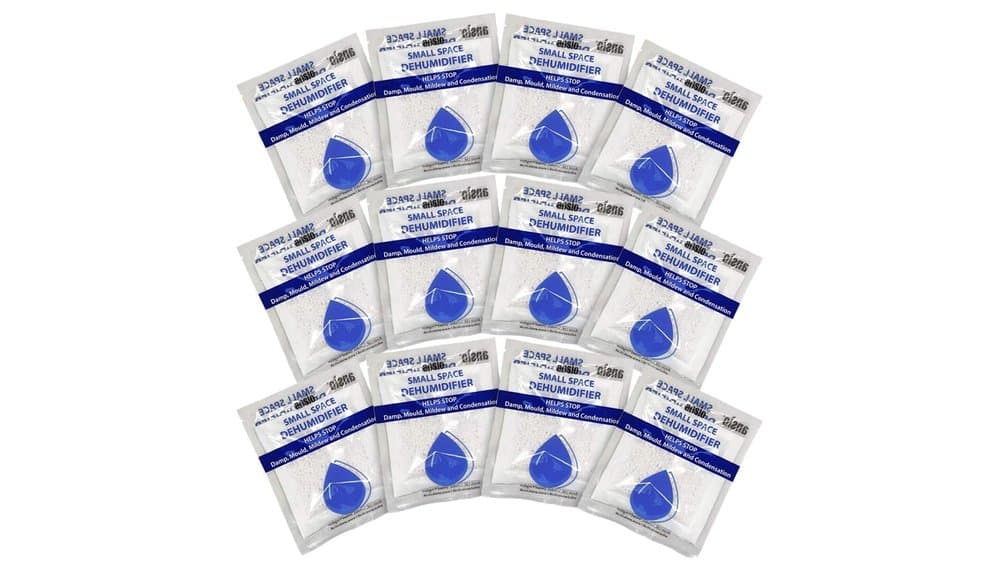
On paper, the ANSIO product relies on a simple and proven principle: packets of silica gel crystals that absorb up to three times their weight in moisture. The bundle of 12 units of 36 grams each promises broad coverage to protect several small spaces simultaneously, like a wardrobe, a walk-in closet, or a linen cabinet.
What interests us here is the absolute simplicity of use, confirmed by user reviews: you remove the protective film, place the packet, and forget it. Discretion is a major asset. Community feedback highlights tangible effectiveness in small enclosed volumes, with a notable reduction in the feeling of dampness on clothes or in drawers. The advertised lifespan (3 to 6 weeks depending on ambient humidity) seems generally respected according to testimonials, and the visual indicator – the crystals turning into gel – is appreciated for knowing when to replace the packet.
However, the analysis of reviews also highlights some concrete limitations. Firstly, the range of action is very localized. This product is clearly not designed to treat an entire room, even a small one. The manufacturer even advises against using it in bathrooms. Secondly, its disposable nature implies a recurring cost and a renewal logistics. Finally, some users note that in extremely humid environments, the lifespan can be less than 3 weeks. It is therefore a practical and discreet supplementary solution for keeping confined storage spaces dry, but not an answer to a structural humidity problem.
joeji's Kitchen Anti-Humidity Bags

The joeji's Kitchen product takes a different approach with two pouches of 500 grams each, offering a much higher absorption capacity. Its particularity and main selling point lie in its reusability: once saturated with moisture (after about a month, according to specifications), the pouches can be regenerated in a microwave oven or on a radiator.
From a technical standpoint, this makes it a potentially more economical and ecological solution in the long term. User feedback confirms its effectiveness in larger volumes, particularly inside cars, where it helps fight window condensation and musty odors. Its versatility is also praised: the community notes positive uses in gyms, damp basements, or large closets, where the small ANSIO packets would quickly become saturated.
Nevertheless, customer reviews paint a more mixed picture than for the ANSIO, reflected in a lower average rating. Several points of caution emerge. The microwave recharge process is often described as delicate: some users report strong odors, or even risks of burning the bag if the power or time is set incorrectly, despite the manufacturer's recommendations. Others point out that the effectiveness seems to diminish after a few recharge cycles. Finally, the format (19 x 14 x 5 cm) and black aesthetics are less discreet than the small white packets, which can be a drawback for use in an open wardrobe or storage unit. It is therefore a more powerful and versatile product, but one that requires a bit more handling and has a recharge reliability that is sometimes questioned.
Choosing Between Compressor, Absorption, or Peltier Effect
This is the big technical question. Each technology has its playing field, and making the wrong choice can lead to a resounding failure. You don't combat the humidity of a cold cellar with the same tool as that of a child's room. Let's break it down simply.
The Compressor Dehumidifier: The Versatile Performer
This is the most common type, and for good reasons. It works like a refrigerator: a compressor cools a plate, the moisture in the air condenses on it, and the water is collected. Its strength? Efficiency. It extracts a lot of water, relatively quickly, and for an energy cost that is often reasonable under "normal" temperature conditions (let's say between 15°C and 35°C). It is your ally for a large living room, a laundry room, or an entire apartment where humidity is a comfort and health issue. It is generally a bit bulkier and may emit a slight background noise (like a fridge), making it less suitable for a bedroom if you are very sensitive to noise. For most people, it is the sweet spot for a best anti-allergen dehumidifier in temperate environments.
The Absorption Dehumidifier (or Silica Gel): The Cold Specialist
Its principle is different: a fan passes humid air through a wheel impregnated with silica gel, which captures water molecules. The big advantage? It works very well, and sometimes even better, in cold environments (from 1°C). Perfect for a cellar, an unheated garage, or a storage room where a compressor would be ineffective. It is also often more discreet acoustically. On the other hand, it is generally less powerful in terms of liters extracted per day for an equivalent size, and its operation can be a bit more expensive in electricity. It's a niche tool, but indispensable if your problem is located in an unheated room where mold proliferates.
The Peltier Effect Dehumidifier: The Newcomer, for Small Spaces
Here, no compressor or gel, but an electronic module that creates a cold zone to condense moisture. The main asset? Its almost absolute silence, its compact size, and its very attractive purchase price. The drawback is significant: its extraction capacity is very limited. We're talking about 2 to 5 liters per 24 hours maximum. It's perfect for a small damp closet, a poorly ventilated shower cubicle, or a van. But for a living room, even a small one, it will be completely overwhelmed. Many disappointments come from buying a Peltier for a 15m² room... frankly, at that price, it's money thrown out the window.
So, which one is for you? Ask yourself two questions: What is the temperature of the problematic room? And what is the volume to be treated? If it's a heated room of more than 20m³, the compressor route is the safest. If it's a cellar at 12°C, seriously consider absorption. And reserve Peltier for very small enclosed spaces. Don't be seduced by the lowest price without understanding this logic; it's the best way to be disappointed.
Key Functions for Healthy Air and Peace of Mind
Once the technology and power are chosen, it's in these details that the real difference is made. A good appliance doesn't just extract water from the air; it works intelligently for your comfort and, above all, for your health.
The Hygrostat: The Brain of the Appliance
This is the non-negotiable function. A dehumidifier without a hygrostat is like a heater without a thermostat: it will run continuously, waste energy, and excessively dry out the air. The ideal range to nip mites and mold in the bud? Maintain a humidity level between 45% and 55%. Set your hygrostat to this value, and the appliance will stop and restart automatically to maintain it. This is what makes it a true best anti-allergen dehumidifier: it creates and preserves an environment hostile to allergens, without you having to think about it.
Air Filtration: A Bonus Protection
While the main action is to reduce humidity, some models add a real layer of protection with a filtration system. The air drawn in to be dehumidified then passes through one or more filters. Particularly look for models integrating a HEPA filter. This captures airborne particles like mold spores, pollen, or existing mite droppings, preventing them from simply being redistributed in the room. An activated carbon filter is a significant plus for trapping odors (musty odors, precisely) and certain VOCs. Check the frequency and cost of replacing these filters, as a saturated filter loses all its effectiveness.
Noise Level and Mobility: The Pillars of Daily Use
This is too often forgotten. A dehumidifier at 40 dB (a light whisper) is tolerable in a living room but can become unbearable in a bedroom, especially at night. For a living space, aim for a maximum of 45 dB. For a bedroom, demand 40 dB or less – this information must be clearly indicated in the technical specifications. Another crucial practical point: sturdy wheels and reasonable weight. You will need to move it to empty it, clean it, or change its room. An appliance that is too heavy or lacks wheels will quickly end up relegated to a corner, and its effectiveness will suffer.
Water Management: Tank, Hose, and Automatic Shut-off
The permanent chore is draining. A 2-liter tank will force you to empty it twice a day in a very humid room. Opt for a model with a tank of at least 4 to 5 liters, or better yet, with the ability to connect a continuous drain hose directly to a drain or floor drain. It's liberation! The automatic shut-off when the tank is full is a basic safety feature, but still avoid models where the tank is poorly designed, difficult to remove or clean. A little breeding ground for bacteria is the exact opposite of the desired effect.
Regular Maintenance: The Key to Preserving Its Effectiveness
You chose it carefully for its promises. But without a minimum of attention, a dehumidifier can quickly become a breeding ground for bacteria or lose its power. The secret to a long-lasting appliance that remains effective against allergens? A simple and uncompromising routine.
The Reservoir: Clean It More Often Than You Think
Stagnant water is a breeding ground for bacteria. Draining the water is good. But scrubbing the inside of the tank is essential. Once a week, empty it and wash it with hot soapy water. An old grandmother's tip that works: a rinse with diluted white vinegar (one part vinegar to nine parts water) disinfects and dissolves limescale deposits without harsh chemicals. Let it air dry completely before putting it back. If you notice a musty smell coming from the appliance, it's almost always the reservoir that is the cause. Don't neglect this, otherwise you are spreading unwanted particles into the air you are precisely trying to purify.
The Filters: The Lungs of Your Appliance
If your model is equipped with a filter (HEPA, carbon, or a simple dust pre-filter), its maintenance is crucial. A clogged filter drastically reduces airflow, strains the compressor, and lets allergens through. For a washable pre-filter, vacuum it once a week and wash it with water every month. For a HEPA filter or a specific "anti-allergen" filter, follow the manufacturer's recommendations scrupulously. Some are washable, others are not. If it is not washable, replace it without delay every 6 to 12 months under normal use. It is a cost to anticipate, but it is what guarantees your appliance remains a health ally. A new filter makes a noticeable difference, often audible (less fan noise) and perceptible (the air feels lighter).
The Housing and Grilles: A Matter of Dusting
All the dust in the room is drawn towards the appliance's air intake and exhaust grilles. A layer of dust acts as thermal insulation and prevents exchange. Every two weeks, turn off and unplug the appliance, then carefully vacuum all the grilles with the soft brush attachment. Wipe the external housing with a slightly damp microfiber cloth. Avoid polishing products that attract dust. It's quick, but so effective for maintaining performance.
Seasonal Storage
If you only use it in winter or during the humid season, don't pack it away haphazardly. Drain and clean the reservoir one last time. Let it dry completely with the lid open. Remove and clean the filters. Coil the cord and store the appliance in a dry place, protected from dust. This little fifteen-minute care session before storage will ensure a startup without bad odors or panic next season. Regular maintenance is what turns a good dehumidifier into a better anti-allergen dehumidifier in the long run.
Conclusion
Choosing the right anti-allergen dehumidifier is much more than a technical purchase. It is an act for your daily health.
Take the time to assess your real needs. Invest in simplicity of maintenance and the regularity of care.
With air at a balanced humidity level, you can finally breathe easier. Your home becomes a true refuge, far from allergens.
Frequently Asked Questions
How does a dehumidifier reduce allergies?
A dehumidifier indirectly combats allergens by maintaining a humidity level between 40% and 50%, which makes the environment uninhabitable for dust mites and stops mold development.
What humidity level prevents dust mites?
To eliminate dust mites, you must maintain a relative humidity level between 40% and 50%, as they thrive above 60%.
How to choose the power of a dehumidifier?
First calculate the room's volume (area x height), then oversize the indicated capacity by 30% if humidity is high (over 65%) or if mold is present.
Which dehumidifier for a damp cellar?
For a cellar or a cold room, an absorption dehumidifier (silica gel) is the most effective, as it works well at low temperatures, starting from 1°C.
What features for an anti-allergen dehumidifier?
A precise hygrostat to automatically maintain 45-55% humidity and a HEPA filter to capture airborne spores and allergens are key features.
How often should you maintain your dehumidifier?
The water tank should be cleaned once a week with soapy water or vinegar, and the dust filters should be vacuumed weekly.
Independent and transparent — Our articles are based on in-depth research and real user reviews. No brand sponsors our content. Affiliate links help fund the site, at no extra cost to you.
Guides you might like
Air Purifier Buying Guide
Indoor air can be more polluted than outside. Learn how to choose the right air purifier to combat dust, VOCs, and allergens.
Anti-allergen vacuum cleaner
Does vacuuming worsen allergies? Yes, with a poor filter. Choose the right vacuum to trap allergens and protect your health.
Choosing Your Effective Steam Mop
Ditch harsh chemicals. Clean and disinfect floors with just water using an effective steam mop. A guide to pressure, performance, and a healthier home.
Articles you might like
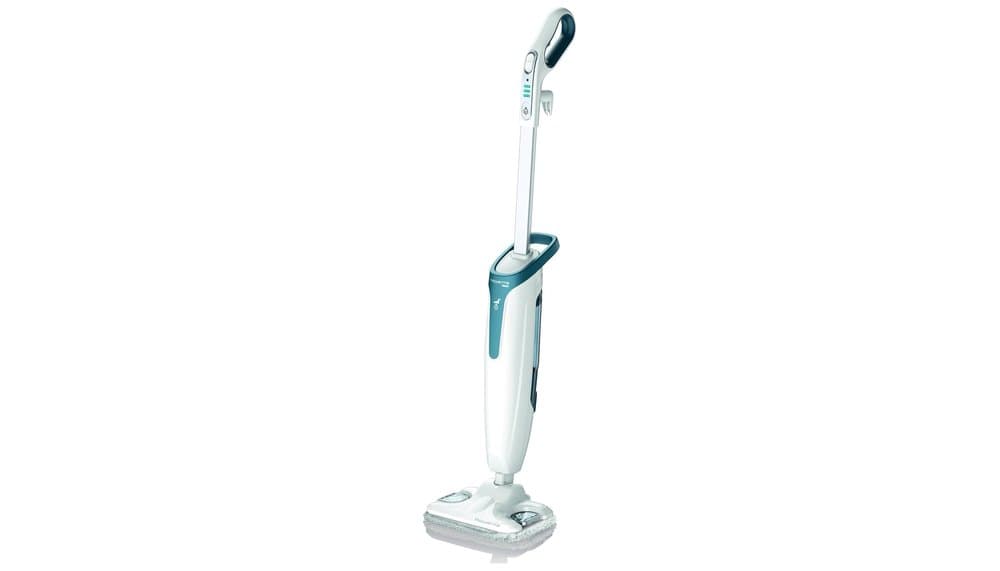
Rowenta Steam Power RY6597WH Steam Cleaner Review
Review: Rowenta Steam Power All Floors cleaner. Chemical-free deep cleaning & disinfection for hard floors & textiles via high-temperature steam.
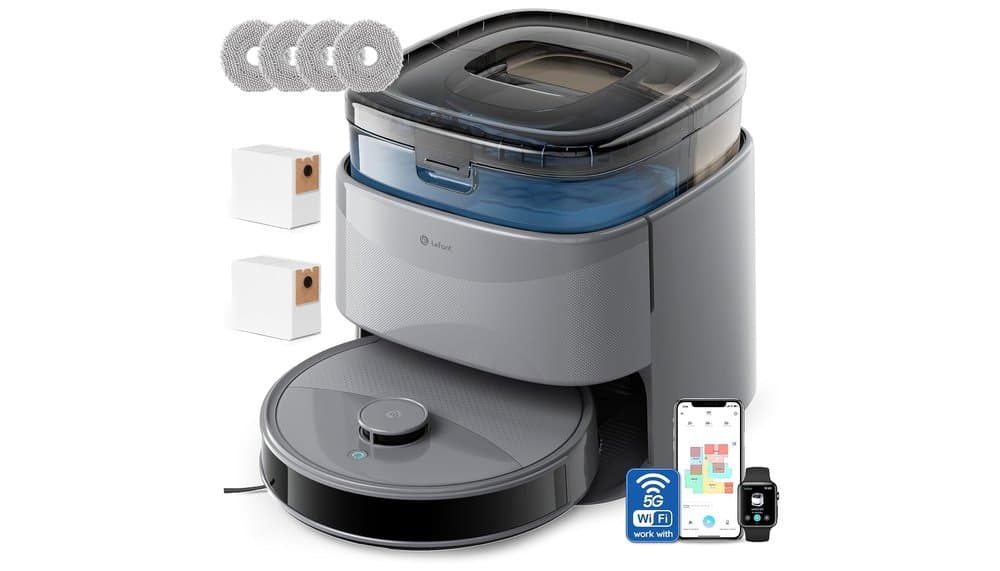
Lefant M3 Max Review: Ultimate Robot Vacuum & Mop
Lefant M3 Max: A robot vacuum and mop duo with a self-cleaning station for a powerful, hands-free clean. Promises efficiency for a dust-free home.
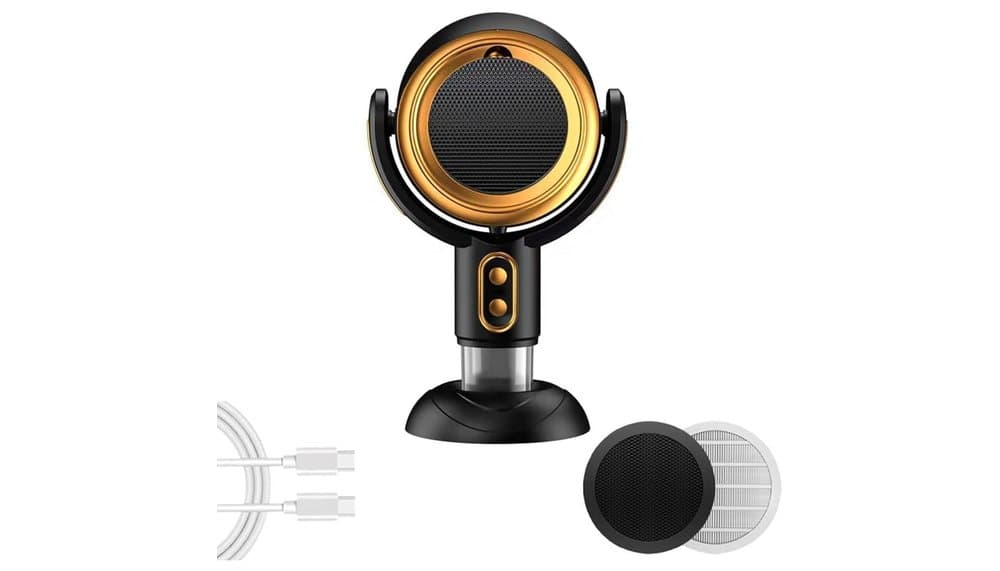
NNOVAT Puff Chill Smoking Fan Portable Air Purifier Review
Compact portable air purifier for smoke & odors. Filters air in real-time like a table fan.