Haofy 5-in-1 Portable Air Quality Monitor Review
Introduction: Awareness, the First Tool for Healthy Air
On our site dedicated to healthy and natural living, we know one essential thing: you cannot improve what you do not measure. This is the fundamental principle behind the growing interest in air quality monitors. Before investing in a HEPA purifier or a dehumidifier, it makes sense to understand what is hidden in our indoor air. The Haofy 5-in-1 Portable Air Quality Monitor presents itself as a compact and multifunctional tool for this mission of enlightenment. In this comprehensive analysis, we will dissect its promises, its specifications, and what early users are saying, to determine if this device can become your ally in scientifically assessing the air you breathe at home.
Strengths of the Haofy 5-in-1
Based on its advertised technical features, several strengths immediately stand out for anyone wishing to monitor their environment.
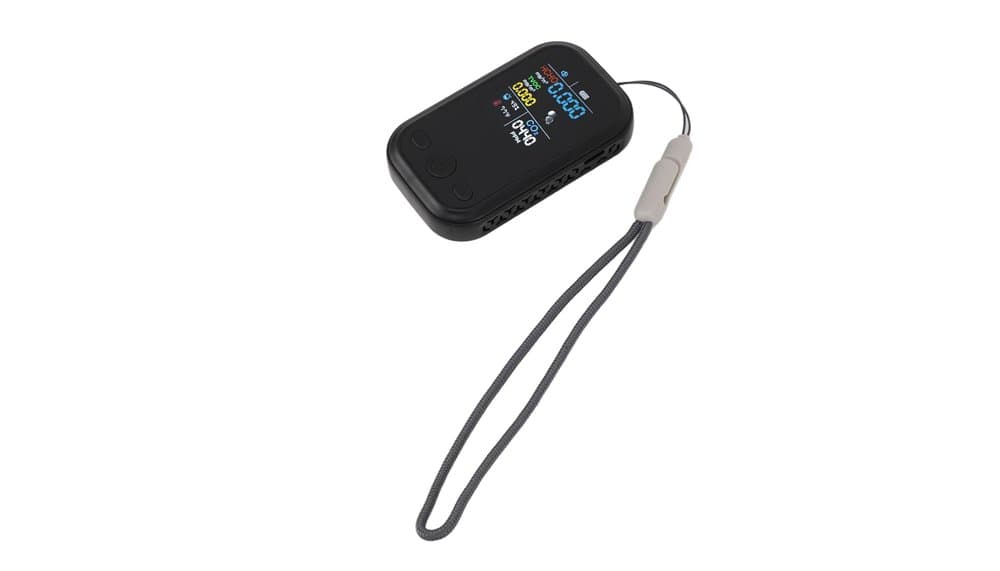
Portability and battery life. Its compact design and featherweight (approximately 105g) make it a truly nomadic device. Combined with its USB-rechargeable lithium-polymer battery, it allows for air audits in different rooms (bedroom, office, classroom) without the constraint of a power cord. You can easily take it to check air quality after cleaning, near a window open to a busy street, or in a newly furnished room.
Integrated multi-sensors. This is its main selling point. The "5-in-1" means it consolidates five measurements into one device:
- CO2 (carbon dioxide) concentration, a key indicator of air renewal and ventilation. A high level can cause drowsiness, headaches, and impair concentration.
- VOC (Volatile Organic Compounds) concentration, these emissions from furniture, cleaning products, paints, air fresheners, etc.
- Harmful gases concentration (likely a general measurement of gaseous pollutants like formaldehyde, although the specification remains broad).
- Ambient Temperature.
- Relative Humidity.
This versatility is a real plus, as it offers a complete dashboard of the indoor atmosphere.
Real-time data display. Unlike some dosimeters that require laboratory analysis, the Haofy provides instant readings. This allows for an immediate reaction, such as ventilating a room when CO2 rises, or identifying a VOC source.
Weaknesses and Limitations to Know
No product is perfect, and it is crucial to understand the limits of this tool to use it well.
Lack of fine particle (PM2.5/PM10) detection. This is the main gap for comprehensive health use. This monitor does not detect dust, suspended allergens (dust mites, pollen), or mold. To assess the effectiveness of a HEPA purifier or allergen risk, a particle sensor is essential. The Haofy does not have one.
Sensor accuracy and calibration. The electrochemical and semiconductor sensors (NDIR for CO2) used in this type of consumer device are less precise than laboratory instruments. The technical sheet mentions an accuracy of ± (0.001 mg/m³+5%) for harmful gases, which is acceptable for spotting trends but may not be precise enough for absolute regulatory measurement. No information is provided on the need for or frequency of recalibration, an often overlooked but critical point for long-term reliability.
Data interpretation without guidance. The device displays numbers, but their interpretation remains the user's responsibility. Knowing that the VOC level is 1.200 mg/m³ only makes sense if you know the thresholds of concern (which vary by substance and country). The manual will need to be consulted for reference ranges.
Detailed Analysis of Health Features
Let's now dive into the details of what each sensor tells us about our air, and how this fits into a healthy home approach.
The CO2 sensor: Your ventilation gauge. This is often the most revealing sensor in a modern, well-insulated home. A level above 1,000-1,200 ppm indicates insufficient ventilation. In a bedroom at night, or an office occupied by several people, this sensor will tell you when and for how long to ventilate to renew the air and also expel some of the other pollutants. Its range up to 5000 ppm is sufficient for domestic and small office uses.
The VOC and harmful gases sensor: The alert for chemical pollutants. This is where the monitor becomes valuable for our "chemical-free" philosophy. It can help you:
- Identify a strong emission after purchasing new furniture or installing a carpet.
- Evaluate the effectiveness of a purifier equipped with an activated carbon filter by measuring the drop in VOCs after activation.
- Alert you if using a conventional cleaning product (air freshener spray, scented multi-surface cleaner) suddenly degrades air quality. It will reinforce your choice of alternative methods like steam cleaning (which adds no VOCs) or natural products.
Humidity and temperature sensors: The basic comfort duo. A relative humidity maintained between 40% and 60% is ideal for respiratory health, limiting the proliferation of dust mites and mold (even if their spores are not detected here). Combining this data with that from a dehumidifier allows for optimal adjustment of the latter.
What the Haofy does NOT do: It is essential to repeat this, this device does not purify the air. It is a diagnostic tool. It does not replace a purifier with a HEPA filter for allergens, nor a dehumidifier for humidity, nor a mechanical ventilation system for CO2. It tells you where, when, and why to act.
Table of Technical Specifications
Here is a clear summary of the capabilities advertised by the manufacturer for the Haofy 5-in-1:
| Parameter Measured | Detection Range | Advertised Accuracy / Details |
|---|---|---|
| Harmful Gases | 0 - 9.999 mg/m³ | Accuracy: ± (0.001 mg/m³ + 5%) |
| Carbon Dioxide (CO2) | 400 - 5,000 ppm | Not specified. Typical NDIR sensor for this range. |
| Volatile Organic Compounds (VOC) | 0 - 9.999 mg/m³ | Not specified. |
| Temperature | Indicated, but range not specified | Not specified. |
| Relative Humidity | Indicated, but range not specified | Not specified. |
| Battery & Power | 1000mAh Li-Po battery, USB recharge | Continuous use time not communicated. |
| Portability | Weight: ~105 g | Compact design for nomadic use. |
| Display | Built-in screen for real-time reading | Data for all 5 parameters. |
What Users and the Community Say
Available feedback, although limited in volume at this stage, reveals interesting trends that confirm and nuance the technical analysis.
Recurring positive points revolve around the satisfaction of basic expectations. Users praise the device's compactness and ease of use. The ability to move it freely and get instant readings is seen as very practical. The clarity of the display for all five parameters simultaneously is also appreciated. One user even calls it "top of the top" in terms of perceived technical quality and considers it a necessary everyday object.
Questions and criticisms mainly concern two aspects, one of which is directly expressed by a user:
- Battery life. One comment explicitly notes the wish for a "larger built-in battery capacity." This suggests that continuous use battery life could be a weak point, requiring frequent charging for those wanting permanent monitoring in a room.
- The learning curve. The same user adds a pertinent warning: "Buy it if you understand how it works and if you need it." This highlights a crucial point: this device is not a gadget. It provides raw data that requires a minimum of knowledge to be interpreted correctly and to derive useful actions (ventilating, identifying a source, checking a purifier's effectiveness). Without this, it risks generating unfounded worry or, conversely, a false sense of security.
The notable absence of negative feedback on accuracy at this stage is encouraging, but the low number of reviews requires caution. The community of technical testers generally emphasizes that for this type of affordable device, the primary value lies in detecting trends and peaks rather than absolute metrological accuracy.
Conclusion: A Good First Step Towards Indoor Air Awareness
The Haofy 5-in-1 Portable Air Quality Monitor positions itself as an intelligent and accessible diagnostic tool for anyone who wants to take the measure of their indoor environment, literally. Its strengths lie in its versatility (CO2, VOCs, temperature, humidity), its mobility, and its ease of use.
For our community focused on a healthy, chemical-free home, it represents a valuable ally in two ways. First, it scientifically validates the benefit of natural alternatives by showing the impact of chemical pollutants. Second, it guides action: it will tell you if your new activated carbon purifier is doing its job on VOCs, if your bedroom needs more ventilation, or if humidity is rising in the bathroom.
However, it must be considered with realism and clarity about its limits. It is not a laboratory instrument, and above all, it does not see fine particles. For a household concerned with allergies (dust mites, pollen), it must be complemented by a monitor with a PM2.5/PM10 sensor, or by trust in a well-used HEPA purifier.
Our verdict: If you are looking for a portable device to assess the ventilation (CO2) and chemical load (VOCs) of your interior, and you are ready to learn to interpret its data, the Haofy 5-in-1 is a serious option. It transforms invisible air into visible data, an essential first step to acting knowledgeably and creating a truly healthy home. Consider it your vigilance indicator and your guide for ventilating at the right time, much more than an absolute certification of air purity.
Independent and transparent — Our articles are based on in-depth research and real user reviews. No brand sponsors our content. Affiliate links help fund the site, at no extra cost to you.
Articles you might like
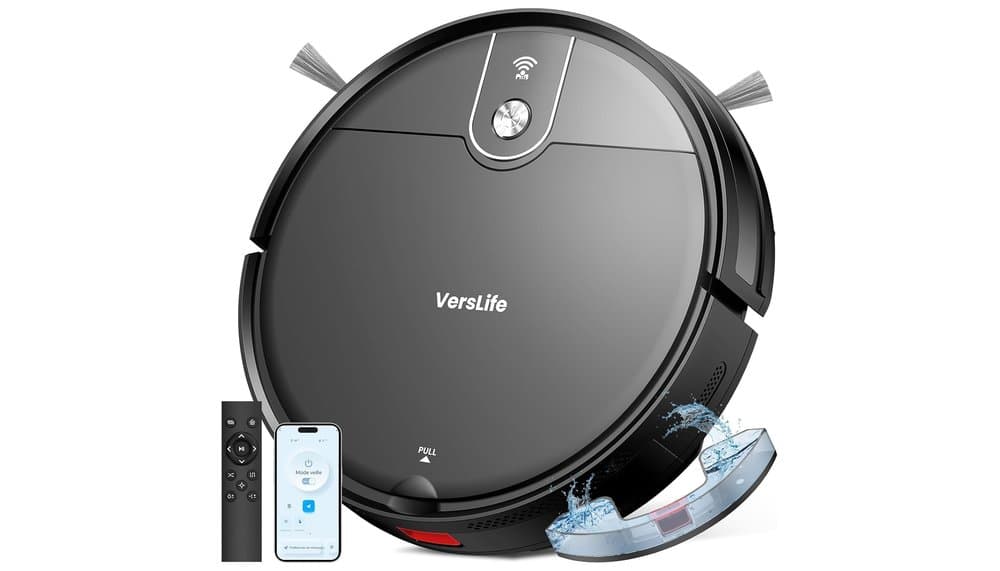
VersLife L6 Robot Vacuum and Mop Review
VersLife L6 robot vacuum & mop review: Can this smart cleaner improve home hygiene without harsh chemicals? Analysis of its health benefits.
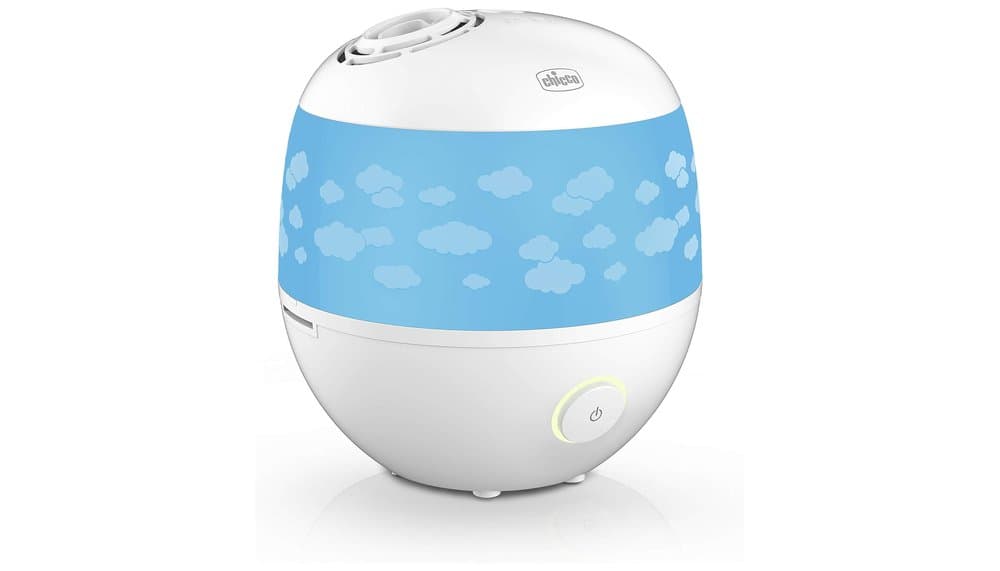
Chicco Humi Hot Advance Air Humidifier Review
Chicco Humi Hot Advance Air humidifier review for kids: warm steam relief for seasonal discomforts in a chemical-free home.

Veegreen White Sage and Palo Santo Incense Set Review
Review the traditional ritual of smudging with white sage and palo santo for cleansing air naturally, as an alternative to modern air purifiers.
Guides you might like
Air Purifier Buying Guide
Indoor air can be more polluted than outside. Learn how to choose the right air purifier to combat dust, VOCs, and allergens.
Allergen Fighter Dehumidifier Buying Guide
Combat allergies from dust mites and mold caused by high humidity at home. A good dehumidifier protects your family's health.

Anti-allergen vacuum cleaner
Does vacuuming worsen allergies? Yes, with a poor filter. Choose the right vacuum to trap allergens and protect your health.