Nastopee MC3-1 Smart Weather Station Review
Introduction: A Weather Station at the Service of Your Indoor Air
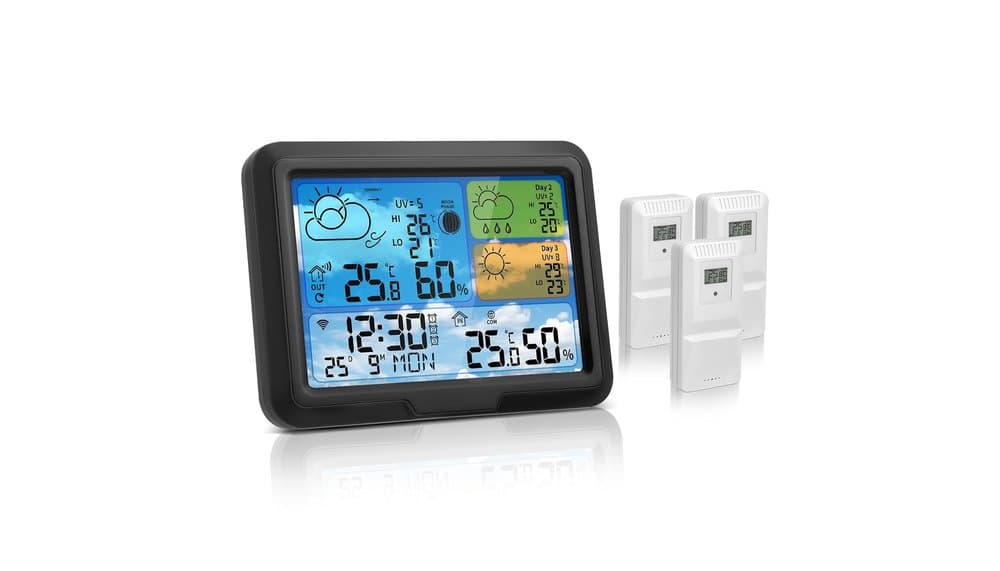
In our quest for a healthy home, we often focus on eliminating dust, allergens, or VOCs. But even before taking action, it is crucial to understand the environment in which we live. Optimal indoor air quality relies on a precise balance of temperature and humidity. Excess humidity promotes the development of dust mites and mold, while overly dry air irritates the respiratory tract and favors the spread of viruses. This is where the Nastopee MC3-1 Smart Wireless Weather Station comes into play. It is not a purifier, but an intelligent monitoring tool that gives you the necessary data to act in an informed way. Let's see if this connected station can become the first link in your defense chain for healthy indoor air.
Strengths and Weaknesses: A First Assessment
Before delving into the details, let's summarize what stands out from the specifications and user feedback.
Strengths:
- Multi-point Monitoring: The inclusion of three outdoor sensors is a major asset for comparing different zones (garden, balcony, garage).
- Connection and History: Integration with Tuya/Smart Life apps allows for remote monitoring and, most importantly, data export for tracking over time, which is valuable for identifying problematic humidity trends.
- Versatile Power Supply: The AC power or battery option offers appreciable installation flexibility.
- Practical Functions: The indoor comfort assessment and extreme temperature alerts are features directly linked to well-being.
Weaknesses:
- Uncertain Metrological Reliability: This is the main point of caution. Several users report measurement drift, especially on the main indoor sensor.
- Build Quality: The materials are described as basic and somewhat "plastic" by some reviewers.
- Sensor Resistance: The IPX4 rating (protection against splashes) is considered insufficient for prolonged outdoor exposure to the elements by the community.
- App Interface: Although intuitive, the app could offer more options for customizing graphs and sensor names.
Detailed Analysis: The MC3-1 Under the Magnifying Glass of Home Health
The Key Role of Monitoring in Allergen Management
Let's start with the heart of the matter: how does a weather station relate to air quality? The answer lies in the data. Dust mites, one of the main domestic allergens, proliferate when relative humidity (RH) exceeds 60-65%. Conversely, an RH below 40% dries out mucous membranes. The Nastopee MC3-1, by displaying this data in real-time and logging it, allows you to verify if your dehumidifier (or humidifier) is working correctly and maintaining the ideal humidity level (between 40% and 60%). It is a validation and control tool for your other air purification devices.
Technical Specifications and What They Mean for You
| Aspect | Specification | Our Analysis for Home Health |
|---|---|---|
| Announced Accuracy | Temperature: +/-0.5°C, Humidity: +/-1% | On paper, this accuracy is more than sufficient for domestic use and reliable trend tracking. |
| Included Sensors | 1 main unit + 3 wireless outdoor sensors | A real plus for monitoring at-risk rooms (damp cellar, laundry room) or comparing outdoors and indoors. |
| Sensor Protection | IPX4 (splash resistant) | Critical point. This protection is light. For a truly rain-exposed installation, shelter will need to be provided. |
| Connection | Wi-Fi 2.4 GHz, Tuya/Smart Life Apps | Remote access and data history are key functions for a scientific tracking of your environment. |
| Alerts | Customizable alerts for temperature and humidity | You can program an alert if the humidity in the baby's room exceeds 55%, triggering an action (ventilation, activating the dehumidifier). |
| Comfort Assessment | Integrated indicator | A simple but useful function that synthesizes Temp/RH measurements to give an overall appreciation (Comfortable/Too dry/Too humid). |
| Power Supply | AC power or 3x AAA batteries (not included) | The dual option is practical for placing the main unit anywhere, even far from an outlet. |
Smart Functions: Your Environmental Logbook
The connection via Tuya or Smart Life apps transforms this device into a diagnostic tool. Being able to export hourly data to a spreadsheet, as mentioned by a user, is invaluable. This allows you to correlate, for example, a humidity spike with your habits (cooking, showering) or outdoor weather conditions. You will thus identify potential sources of problems in your home. The visual trend graphs in the app also help quickly visualize the effectiveness of your actions (ventilation, using a dehumidifier).
Noise Level and Integration in the Home
The Nastopee MC3-1 weather station is, by nature, a silent device during normal operation. Only programmed alarms (alarm clock, alerts) emit sound. This makes it a discreet companion perfect for a bedroom, office, or nursery, where it can monitor the environment without any nuisance. Its colorful, readable screen provides instant and reassuring information at a glance.
What Users and Reviewers Say: Real-World Experience
The reviews, although few in number, paint a consistent profile of the product and raise an essential point of caution.
Recurrent Positive Points:
- Installation and Connection: The vast majority of users find the installation and app connection easy and intuitive. "Einrichten war ganz Easy!" (The setup was very easy!) sums up this feeling well.
- Features/Price Ratio: Many highlight an excellent price/performance ratio, especially thanks to the inclusion of three sensors and complete Smart functions.
- Usefulness of Connected Functions: The ability to monitor remotely and especially to download historical data (to create Excel charts) is highly appreciated and considered an "exceptional" feature by some.
- Accuracy of External Sensors: Users generally note a good agreement between the three outdoor sensors, with minimal discrepancies (0.5°C), which is perfectly acceptable.
Negative Points and Reservations:
- Internal Sensor Reliability Issue: This is the main complaint. One user had to return the device because the internal sensor displayed completely erroneous and unstable temperatures (34°C, 42°C for a room at 21°C), even showing an "Hh" error. This raises a serious question about the quality control of certain batches.
- Build and Durability: The materials are perceived as cheap and "plastic". The IPX4 protection of outdoor sensors is considered insufficient for long-term direct exposure to the elements. "Il minimo richiesto sarebbe IP65" (The minimum required would be IP65), notes a reviewer.
- Desired Software Improvements: The app interface, although intuitive, could gain in customization (renaming sensors, improving graph contrast).
General Trend: The product is appealing for its concept and functions at an accessible price, but its main challenge is the reliability and consistency of measurements over the long term, as well as the robustness of its outdoor sensors.
Conclusion: A Good Diagnostic Tool, Subject to Caution
The Nastopee MC3-1 Smart Wireless Weather Station is an ambitious product. Its offering of three sensors and its advanced connected functions (history, export) make it a very comprehensive monitoring tool on paper, perfectly aligned with a proactive approach to managing indoor air quality. For those who want to understand humidity variations in their home and optimize the use of their devices (dehumidifier, MVHR), it offers relevant features.
However, our analysis must be nuanced. User feedback points to a real risk of failure or inaccuracy of the main internal sensor, which would be a deal-breaker for a measuring tool. Furthermore, the limited resistance (IPX4) of the outdoor sensors requires placing them under shelter, under an eave for example, which limits their universality.
Our Recommendation: If you are looking for an affordable, connected weather station to get a general trend and monitor multiple zones, the MC3-1 deserves consideration, especially for its data logging functions. On the other hand, if you need impeccable and constant metrological precision for, for example, managing a respiratory condition sensitive to humidity, or if you plan a very exposed outdoor installation, it would be prudent to consider this option as a first step to potentially confirm with more specialized and robust measuring instruments. Start by carefully checking the accuracy of the main unit's measurements upon receipt, comparing it with a trusted thermometer/hygrometer.
Independent and transparent — Our articles are based on in-depth research and real user reviews. No brand sponsors our content. Affiliate links help fund the site, at no extra cost to you.
Articles you might like

Veegreen White Sage and Palo Santo Incense Set Review
Review the traditional ritual of smudging with white sage and palo santo for cleansing air naturally, as an alternative to modern air purifiers.
NOVEMBER Sirius Mattress Review: Complete Test Analysis
A deep analysis of the NOVEMBER Sirius mattress for healthy sleep. We test its materials and construction for allergens, VOCs, and overall sleep hygiene.
Pro Breeze OmniDry D 12L Dehumidifier Review
Eliminate humidity, allergens, and mold with the Pro Breeze OmniDry Dehumidifier. Discover how it improves air quality for a healthier, chemical-free home.
Guides you might like
Air Purifier Buying Guide
Indoor air can be more polluted than outside. Learn how to choose the right air purifier to combat dust, VOCs, and allergens.

Allergen Fighter Dehumidifier Buying Guide
Combat allergies from dust mites and mold caused by high humidity at home. A good dehumidifier protects your family's health.

Anti-allergen vacuum cleaner
Does vacuuming worsen allergies? Yes, with a poor filter. Choose the right vacuum to trap allergens and protect your health.