Philips Smart 600 Series AC0651-10 Air Purifier Review
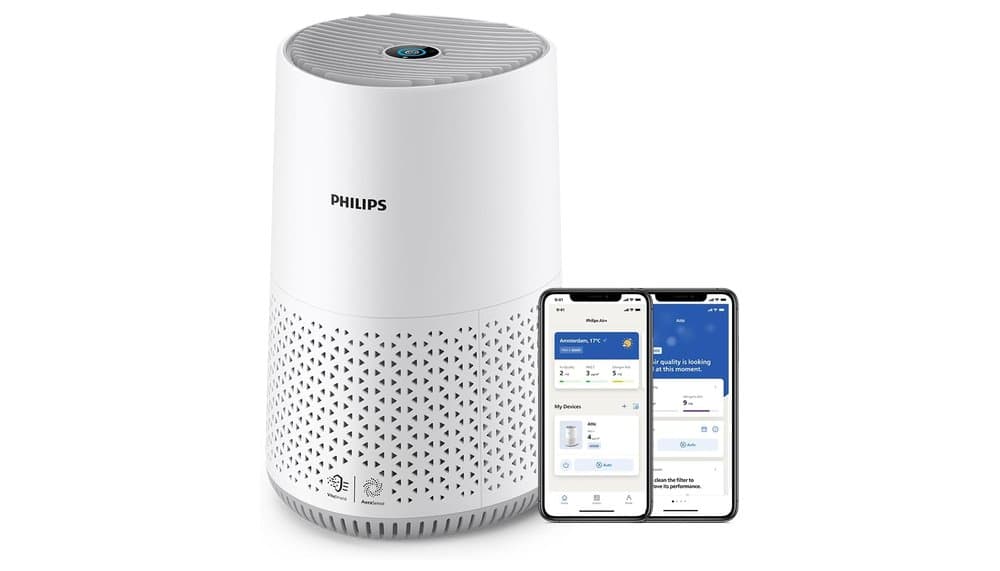
Philips Smart 600 Series AC0651-10 Air Purifier
Introduction
In our quest for a healthy home, the air we breathe indoors is often the missing piece of the puzzle. Dust, pollen, pet dander, volatile organic compounds (VOCs)... These invisible elements become part of our daily lives despite us. Air purifiers have become essential allies to regain control. Among them, the Philips Smart 600 Series AC0651-10 presents itself as a smart and economical purifier, designed for rooms up to 44 m². But beyond the marketing promises, what is its real impact on our health and quality of life? We have analyzed its technical specifications, cross-referenced the feedback from hundreds of users, and dissected expert opinions to give you a clear and honest view of what it truly brings to your indoor environment.
Strengths and Weaknesses: An Informed Summary
Before diving into the details, here is what emerges from technical analyses and field feedback.
Strengths:
- Proven effectiveness against allergens: The NanoProtect HEPA technology is widely praised for its action on pollen, dust, and pet hair, with user feedback noting concrete relief from allergy symptoms.
- Intelligence and autonomy: The AeraSense sensor, coupled with the app, allows for real-time monitoring and automatic adjustment, offering adaptive and economical purification.
- Remarkable silence in night mode: On its lowest setting, its 19 dB sound level makes it a discreet companion for bedrooms, including those of babies.
- Very low energy consumption: With a maximum power of 12W, it is a device designed to run continuously without a significant impact on the electricity bill.
Points of caution:
- Size: Despite a sleek design, its dimensions (34 cm high) are regularly noted as more imposing than expected. It requires dedicated floor space.
- Noise at full power: Like most high-performance purifiers, the boost mode (or max speed) is audible, which may reserve it for daytime use or when absent.
- Sometimes finicky connectivity: A minority of users report Wi-Fi connection difficulties or app disconnections, sometimes requiring a reinstallation.
- Cost of consumables: As with any filter-based purifier, you must anticipate the periodic filter replacement (approximately every 12 months depending on usage), a recurring cost to factor in.
Detailed Analysis: Health, Performance, and Daily Use
Filtration Level: What Does It Really Remove from the Air?
This is the core of the matter. The Philips Smart 600 Series relies on a three-stage filtration system.
- Preliminary Filter: This is the first barrier. It captures large particles such as hair, pet hair, and visible dust. It is washable, which extends the life of the main filter and maintains overall efficiency.
- Main NanoProtect HEPA Filter: This is where the magic happens. Philips claims a removal rate of 99.97% of particles down to 0.3 microns in size (PM2.5). This performance applies to major allergens: pollen, dust mites, mold spores, and pet dander. The NanoProtect technology uses an electrostatic charge to attract and trap particles. According to community feedback, this is where the device makes the biggest mark: users with respiratory allergies report fewer flare-ups, easier breathing at night, and a notable reduction in fine dust on surfaces.
- Activated Carbon Filter: Integrated into the same unit as the HEPA filter, it tackles odors and gases. It adsorbs VOCs (Volatile Organic Compounds) emitted by cleaning products, new furniture, paint, or cooking. Its effectiveness is real on odors from tobacco, cooking, or pets, but it's important to note that a carbon filter has a limited lifespan against continuous and strong emissions. It is not an "infinite sponge."
What it removes with great efficiency: Pollen, fine dust (PM2.5), pet hair and dander, dust mites (their droppings, a major allergen), airborne mold spores. What it significantly reduces: Household odors (cooking, pets) and a portion of VOCs. What it does not do: It does not produce ozone (a crucial positive point for health), does not disinfect the air with UV-C (it captures bacteria and viruses in the HEPA filter but does not "destroy" them by radiation), and does not regulate humidity.
See today's priceEase of Use: Noise, Night Mode, and Connectivity
Air purification should not harm quality of life. This is where the Smart 600 Series reveals its strengths.
- Sound Level: This is a crucial point, especially for bedroom use. Specifications and feedback agree: in Silent/Night mode (19 dB), the device is almost inaudible, more discreet than a whisper. It is therefore perfectly suited for adult, child, or baby bedrooms. However, when the sensor detects sudden pollution (vacuuming, dust stirred up) and switches to maximum speed (up to 49 dB), the fan noise becomes clearly perceptible, comparable to a quiet conversation. The community notes that this phase is usually brief (a few minutes) before the device returns to a lower setting. For very large spaces or situations of constant pollution, this noise in boost mode may be a factor to consider.
- Light Management: The LED air quality display (indicated by a color) turns off automatically in night mode or can be manually disabled via the app. No light nuisance is reported.
- User Experience and App: The AeraSense sensor is considered very responsive. Users report that it quickly detects smoke, stirred-up dust, or allergens, switching to intense purification mode. The Philips Air+ app allows remote control of the device, viewing air quality history, scheduling time slots, and receiving filter replacement alerts. The majority find it intuitive and useful, although some feedback mentions occasional connection bugs requiring a device reset.
Economy and Environment: Long-Term Cost
An air purifier is a long-term investment. Two aspects need to be examined:
- Power Consumption: With a maximum consumption of 12W, this device is extremely economical. Running 24/7 on its automatic mode, its annual cost is negligible. This is a real strong point highlighted by the brand and verified by users.
- Cost of Consumables: The combined filter (HEPA + Activated Carbon) has an indicative lifespan of about 12 months, depending on air quality and usage. It is imperative to replace it to maintain effectiveness. The price of this replacement filter (often reference FY9130) represents a recurring annual cost that must be anticipated in the budget. Savvy users advise buying it at the time of purchasing the device to avoid being caught off guard.
Technical Specifications
For those who love precise data, here is a summary of the key characteristics.
| Characteristic | Value / Description |
|---|---|
| Model | Philips Smart 600 Series AC0651-10 |
| Coverage Area | Up to 44 m² |
| CADR (Clean Air Delivery Rate) | 170 m³/h |
| Filtration Technology | Washable pre-filter + NanoProtect HEPA Filter (99.97% on 0.3 µm) + Activated Carbon |
| Smart Sensor | AeraSense (PM2.5) |
| Connection | Wi-Fi, Philips Air+ App |
| Speed Levels / Modes | Auto, Speed 1 to 3, Night Mode (Silent) |
| Sound Level | From 19 dB (Night) to 49 dB (Max) |
| Power Consumption | Max. 12W |
| Dimensions (H x W x D) | 34.1 x 23.7 x 24.3 cm |
| Weight | 2.2 kg |
| Indicators | Air quality (LED), Filter replacement alert |
What Users and Experts Say: A Synthesis of Feedback
The analysis of over 5,500 customer reviews and several online expert tests reveals a clear consensus.
Praise is unanimous on several points:
- Positive impact on health: The strongest trend is the improvement in allergy symptoms. Many testimonials mention a clear reduction in sneezing, nasal congestion, and nighttime breathing difficulties, especially in the presence of pets. "My allergic partner uses much less Ventolin at night," reports one user.
- Tangible effectiveness: Users feel that "the air is lighter" and observe less dust accumulating on furniture. The sensor is perceived as reliable, visibly reacting to activities like cleaning or cooking.
- Silence in night mode: The discreet operation in the bedroom is one of the most appreciated assets, allowing for undisturbed sleep.
- Ease of use: Once set up (with occasional initial hiccups on Wi-Fi connection), the device in automatic mode works "on its own" and provides reassurance through its visual feedback (air color).
Criticisms and remarks focus on a few aspects:
- Size and design: Several people were surprised by the bulkiness of the device, finding it larger than what the photos suggested. It is advised to check the dimensions carefully.
- Noise at full load: While the night mode is silent, the maximum speed is described as deafening by a few, leading them to avoid the "Auto" mode in the middle of the night for fear of untimely activation.
- Connectivity issues: Although in the minority, problems with app connection or unexpected disconnections are mentioned, sometimes requiring a device reset.
Experts in the field confirm this analysis: the Philips Smart 600 Series AC0651-10 is seen as an excellent compromise for allergy sufferers looking for an effective, smart, and energy-efficient solution, provided they accept its bulk and the occasional noise at maximum power.
Conclusion: Who Is This Purifier For?
The Philips Smart 600 Series AC0651-10 is not a gadget. It is a serious and effective domestic health tool. Its true playing field is the home where air quality is a health concern, especially for those allergic to pollen, dust mites, or pets. Its smart sensor and app make it a modern and convenient device that fits into a proactive approach.
We particularly recommend it for:
- People suffering from respiratory allergies or mild asthma.
- Households with pets.
- Bedrooms of medium size (up to 30-35 m² for a comfort margin), thanks to its excellent silent mode.
- Those looking for automatic and economical operation (low consumption, durable filter).
However, it might be less suitable if:
- Your absolute priority is total silence at all times (in that case, prefer a model whose max speed is also very low).
- You have a very large open-plan studio (>40 m²), where its performance might be limited.
- You are extremely sensitive to connectivity flaws in smart devices.
In summary, this Philips purifier delivers on its main promises: it purifies the air of the most common allergens effectively, it does so intelligently, and it respects your sleep and energy consumption. It is a robust and reliable ally for anyone who wants to invest confidently in the purity of their indoor air.
Independent and transparent — Our articles are based on in-depth research and real user reviews. No brand sponsors our content. Affiliate links help fund the site, at no extra cost to you.
Articles you might like

Philips Series 900 Air Purifier Review and Test
Discover the Philips Series 900 Air Purifier. Our review explores how it tackles pollen, dust, VOCs & more to clean your home's air without chemicals.
Philips Series 3400 2-in-1 Air Purifier Humidifier Test
The Philips 2-in-1 air purifier and humidifier tackles both polluted and dry air in one device for healthier indoor air.
Philips PureProtect 3200 Series AC3210 Air Purifier Review
Discover how the Philips air purifier tackles dust, pollen, VOCs & odors, creating a cleaner, healthier indoor environment for your well-being.