RISOON 5-in-1 Indoor Air Quality Monitor Review
Introduction: Your Indoor Air Watchdog
In our quest for a healthy and clean home, we often equip ourselves with weapons to fight pollution: HEPA air purifiers, dehumidifiers, steam cleaners. But before treating a problem, we must first measure it accurately. That is the role of a good air quality monitor. Today, we analyze in detail the RISOON 5-in-1 Indoor Air Quality Monitor, a portable device that promises to give us an instant overview of what we are really breathing at home. Between the manufacturer's promises and the real-world experience of users, where does it really stand? Is it a reliable tool for making informed decisions about ventilation or using our purifiers?
Key Strengths of the RISOON 5-in-1
This monitor stands out due to several strengths that explain its appeal to households concerned about their environment.
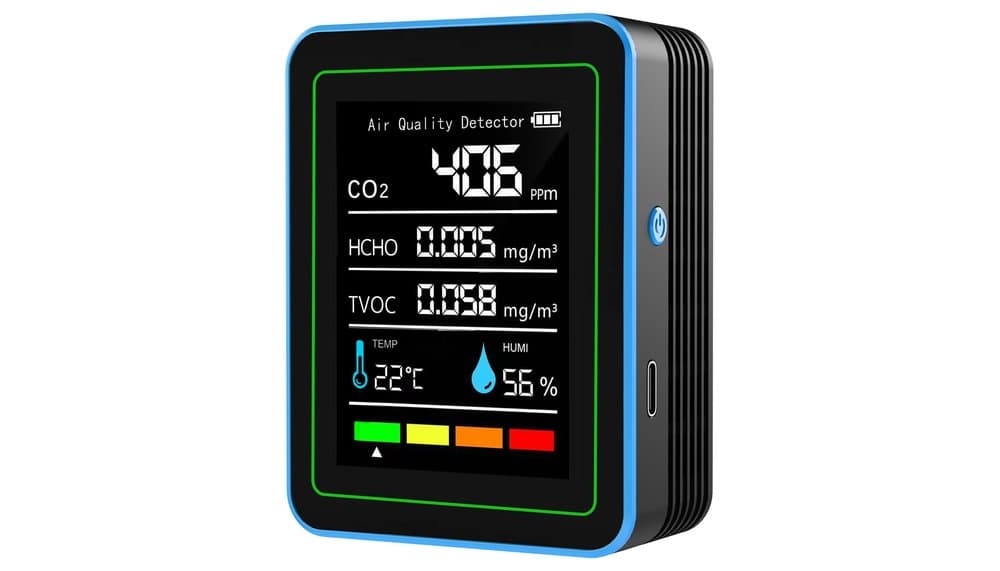
A comprehensive panorama in a single device. The main strength of the RISOON is its ability to measure five critical parameters simultaneously. We often tend to focus on fine particles (PM2.5), but here it monitors CO2 (an excellent indicator of air renewal and productivity/cognition), TVOCs (Total Volatile Organic Compounds, emitted by furniture, cleaning products, paints), and formaldehyde (HCHO), a particularly concerning VOC. Complemented by temperature and relative humidity, these five data points offer a very relevant overall picture.
A simple and intuitive interface. According to user feedback, the color LCD screen is appreciated for its readability. The color code system (green/orange/red) for the overall assessment allows for immediate understanding, even without being an expert. This is a crucial point for a tool intended for the whole family.
A portable and versatile design. Its compact format and integrated rechargeable battery (via USB-C) allow it to easily travel from the baby's room to the living room, and even to the car or office. This mobility is valuable for mapping air quality variations in different areas of your home.
Weaknesses and Limitations to Know
No device is perfect, and community feedback allows for a clear identification of pitfalls to anticipate.
Accuracy to be interpreted with nuance. This is the point most often highlighted by experienced testers. The specifications announce ±1% accuracy for certain parameters, but in practice, users note that the device gives a trend rather than a laboratory measurement. The temperature may show a difference of a few degrees, and for TVOCs or HCHO, verification is difficult without a reference device. It should be seen as a reliable indicator of variations and spikes rather than an instrument of absolute metrology.
Limited battery life and sometimes finicky alarms. The 1200 mAh battery is pointed out by several users. While the manufacturer claims up to 8 hours, some feedback mentions a battery life considered too short for fully nomadic use, forcing frequent charging. Furthermore, the audible alarms are described as sometimes unpredictable or not customizable, which can cause confusion.
A brief manual and demanding calibration. The manual, often in English, is considered lacking in detail. More importantly: for reliable CO2 measurements, an initial manual calibration in outdoor air is recommended (as with most consumer-grade NDIR sensors). This process, which involves letting the device calibrate its baseline to ~400 ppm CO2 outside, is not always well explained and is essential for obtaining usable values. Some users who neglected this step question the validity of the measurements.
Detailed Analysis: What Does It Really Measure and For What Purpose?
Let's dive into the technical heart of this device to understand what it brings to our healthy home approach.
CO2: Your indicator of air "freshness." The NDIR (Non-Dispersive Infrared) sensor used for CO2 is a technology known for its reliability and good lifespan. A high CO2 level (above 1000-1200 ppm) is a clear sign of stale air, conducive to headaches, drowsiness, and poorer recovery. For us, it's the perfect signal to ventilate a room, especially a bedroom after a night's sleep. The RISOON then becomes a coach for our ventilation habits.
TVOCs and Formaldehyde: The invisible chemical pollutants. The presence of electrochemical sensors for total TVOCs and HCHO is a real plus. They can alert you after using a chemical cleaning product, when buying new furniture, or during cooking. This allows you to validate the effectiveness of your air purifier equipped with an activated carbon filter, by observing the drop in concentrations after its activation. Note: these sensors are sensitive to a wide family of compounds and do not distinguish individual molecules. A rise is a warning signal, not a medical diagnosis.
Temperature and Humidity: Comfort and prevention. These measurements seem basic but are fundamental. A relative humidity maintained between 40% and 60% helps limit the development of dust mites and mold, two major causes of allergies. Conversely, air that is too dry irritates the respiratory tract. This data helps you set your dehumidifier or humidifier precisely.
What it does NOT do (and this is important). The RISOON 5-in-1 does not measure fine particles (PM2.5/PM10). Therefore, it does not inform you about the effectiveness of your HEPA vacuum in trapping allergens nor about the need to run your HEPA filtration air purifier. For a complete view of the air, it would need to be paired with a particle detector.
Technical Specifications
Here is a recap of the product's key features as communicated by the manufacturer.
| Parameter | Detail |
|---|---|
| Sensors | CO2 (NDIR technology), Formaldehyde (HCHO) electrochemical, Total TVOCs electrochemical, Temperature, Humidity |
| Screen | Color LCD with backlight, real-time display |
| Alarms | Visual (screen color change) and audible |
| Power | Integrated 1200 mAh Li-ion battery, USB rechargeable |
| Battery Life | Up to 8 hours (varies with usage) |
| Connectivity | None (analyzed version) |
| Portability | Compact format (approx. 5 x 5 x 5 cm), light weight (approx. 91g) |
| Construction | ABS plastic casing |
| Features | Overall color-coded assessment, average value memory |
| Announced Accuracy | ±1% for certain parameters (to be interpreted with user feedback) |
What Users Say: Trends and Feedback
The synthesis of customer reviews, particularly on major sales platforms, gives a balanced and instructive picture of the product.
The recurring positive points revolve around ease of use and data readability. Phrases like "simple, readable, and easy to use" or "handy device" come up often. Users appreciate the quick overview and compact design that allows it to be moved anywhere. An experienced comparative tester even notes that its measurements are "generally consistent" with other more expensive detectors, thus validating its usefulness as a home monitoring tool.
Criticisms and frustrations mainly focus on three aspects:
- Battery life: It is frequently deemed insufficient for fully portable use, forcing users to keep it plugged in.
- Perceived accuracy: Some question the reliability, especially for parameters that are impossible to verify simply (TVOCs, HCHO). The remark "we have to trust it" sums up this doubt. Others note sometimes significant temperature variations (±2 to 4°C).
- Usability: The succinct manual, the single button that is not intuitive for all functions, and the lack of clear explanations on calibration are sources of confusion for new users. The non-customizable alarms can also be surprising.
The consensus that emerges is that the RISOON 5-in-1 is perceived as an excellent alert and trend indicator. It is not considered a high-precision scientific measuring instrument, but as a very useful tool for becoming aware of the air dynamics in one's home and adapting behaviors accordingly.
Conclusion: A Useful Companion for a Healthier Home
So, does the RISOON 5-in-1 Indoor Air Quality Monitor deserve a place in your approach to cleaner indoor air?
Our analysis leads us to conclude that yes, for a well-understood use. This device is a valuable awareness and monitoring tool. It teaches you about your environment: when CO2 rises during a family gathering, when TVOCs increase after cleaning, or when humidity exceeds the threshold favorable to dust mites. It validates the effectiveness of your simple actions like ventilation or using a dehumidifier.
On the other hand, you should not expect laboratory-grade accuracy from it. Consider it your well-informed and benevolent neighbor who taps you on the shoulder to say "watch out, maybe it's time to open the window" or "the air is particularly laden today, let's turn on the purifier." For people with severe allergies or respiratory conditions requiring medical monitoring, it cannot replace professional equipment.
Its great strength is making invisible pollutants visible and tangible, allowing you to act in a reasoned manner. Paired with a fine particle detector, it becomes a cornerstone of your healthy home ecosystem. By understanding its limitations (battery life, need for careful calibration), you will make this monitor an everyday ally for breathing better at home.
Independent and transparent — Our articles are based on in-depth research and real user reviews. No brand sponsors our content. Affiliate links help fund the site, at no extra cost to you.
Articles you might like
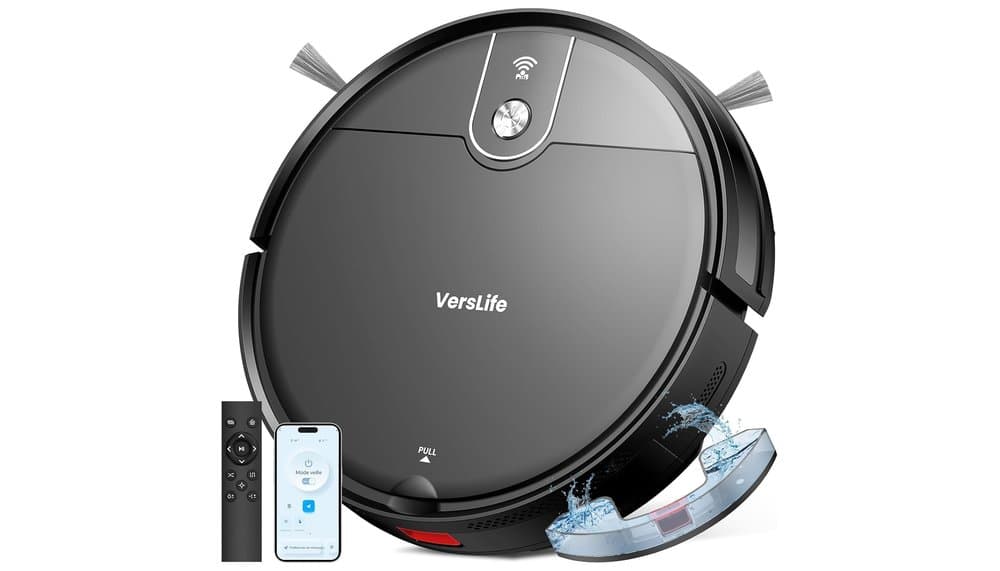
VersLife L6 Robot Vacuum and Mop Review
VersLife L6 robot vacuum & mop review: Can this smart cleaner improve home hygiene without harsh chemicals? Analysis of its health benefits.
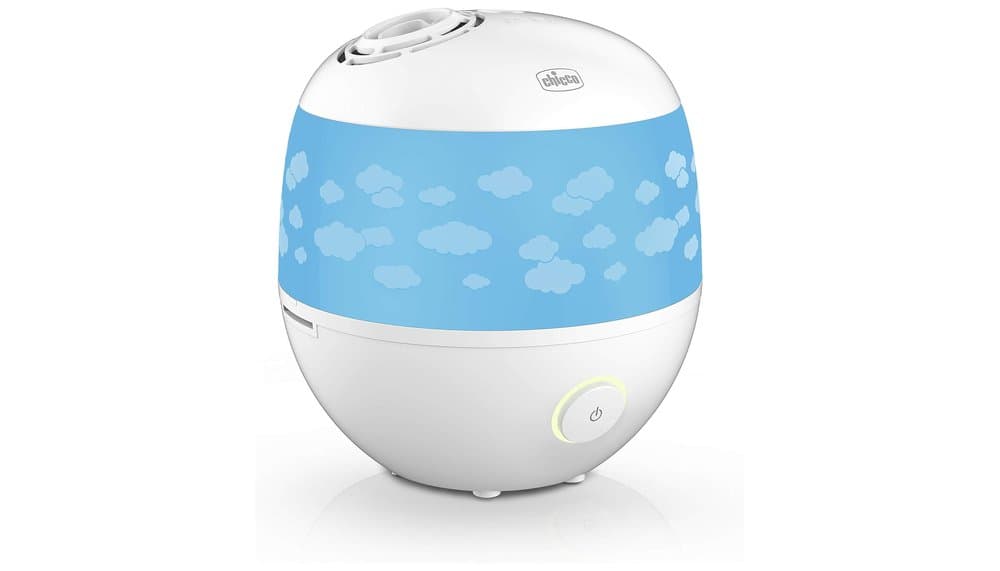
Chicco Humi Hot Advance Air Humidifier Review
Chicco Humi Hot Advance Air humidifier review for kids: warm steam relief for seasonal discomforts in a chemical-free home.

Veegreen White Sage and Palo Santo Incense Set Review
Review the traditional ritual of smudging with white sage and palo santo for cleansing air naturally, as an alternative to modern air purifiers.
Guides you might like
Air Purifier Buying Guide
Indoor air can be more polluted than outside. Learn how to choose the right air purifier to combat dust, VOCs, and allergens.
Allergen Fighter Dehumidifier Buying Guide
Combat allergies from dust mites and mold caused by high humidity at home. A good dehumidifier protects your family's health.

Anti-allergen vacuum cleaner
Does vacuuming worsen allergies? Yes, with a poor filter. Choose the right vacuum to trap allergens and protect your health.