SOHYGGE WH06295 Tempered Duvet Review & Test
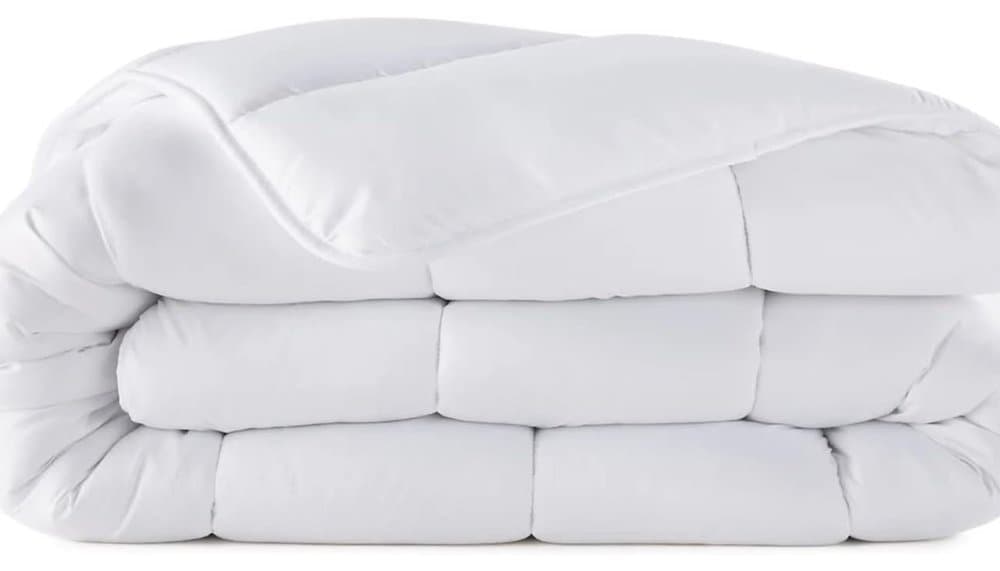
SOHYGGE WH06295 Tempered Duvet Review &
Introduction
In our perpetual quest for a healthy home environment, we often focus our attention on the air we breathe, sometimes forgetting what surrounds us for nearly a third of our lives: our bedding. The duvet is a potential nest for dust mites, skin flakes, and other household allergens, directly influencing the quality of our sleep and health. Today's analysis focuses on the SOHYGGE WH06295 Tempered Duvet for Double Bed, a product presented not only as a comfort solution but also as an ally for a healthier sleep environment. We will dissect its promises, notably its anti-dust mite properties and OEKO-TEX certification, to understand how it can (or cannot) contribute to a detoxified habitat. Our approach, as always, relies on a rigorous analysis of technical specifications and a synthesis of user feedback, without having tested the product in real conditions.
Strong Points
Based on manufacturer data and community feedback, several major strengths emerge for this SOHYGGE duvet.
A construction focused on health and ecology is its first selling point. The OEKO-TEX Standard 100 certification is a serious guarantee. It ensures the absence of harmful substances (azo dyes, formaldehyde, heavy metals, pesticides) in the finished product. For a household concerned with reducing VOCs (Volatile Organic Compounds) and chemical irritants in bed, this label is an essential point of trust. The filling made of 100% recycled polyester microfiber (from plastic bottles) aligns with this virtuous approach, reducing the environmental footprint from the design stage.
Its so-called "anti-dust mite" character is a central argument for allergy sufferers. Dust mites thrive in warm, humid environments, feeding on human skin flakes. Although this duvet is not a HEPA filter, its tight microfiber construction and purported treatment aim to create a physical barrier limiting the penetration and proliferation of these allergens in the filling. It's a passive preventive approach, different from active elimination, but crucial for allergy management.
Finally, the balance between warmth and lightness stands out massively in reviews. Users unanimously highlight its feather-light weight (2.3 kg for the 220x240 cm size) coupled with quickly perceptible warmth. This thermal performance, despite a modest 300 GSM weight, seems linked to the technology of siliconized hollow fibers that trap air, an excellent insulator.
Weak Points
The analysis also highlights certain limitations or questions about the product.
The main point of attention concerns its true "4 season" effectiveness. A review from the Netherlands describes it as "super thin" and insufficient for year-round use, with the user having returned it. This remark, although isolated in the analyzed panel, questions the universality of the promise. The notion of "tempered" is subjective and depends heavily on bedroom temperature and personal sleep preferences. For a poorly heated room in severe winter, it might prove too light.
Its lightness can be a double-edged sword. Several users note that, when placed inside a microfiber duvet cover (a smooth material), it has a tendency to slip and bunch up. This phenomenon, although corrected by using a cotton cover, can hinder comfort and the uniform distribution of warmth, requiring nighttime readjustments.
Finally, regarding environmental health, while recycling bottles is a clear step forward, it's important to remember that the product remains made of polyester. Machine washing inevitably releases plastic microfibers into wastewater. This impact, common to all synthetic bedding, is not neutralized by the recycled origin of the fibers.
Detailed Analysis from a Health and Air Quality Perspective
Combating Allergens and Dust Mites: Physical Barrier Rather Than Elimination
Unlike an air purifier that captures airborne allergens or a steam cleaner that eliminates them with heat, a duvet acts as a defensive barrier. The specifications of the SOHYGGE WH06295 mention protection against dust mites, bacteria, and odors. Concretely, this means the dense microfiber shell is designed to be too tight for the passage of dust mite droppings (the main allergens) and to prevent the mites from infiltrating the core of the duvet to colonize it. It is effective protection if combined with good hygiene: regular washing of the duvet and the cover at 60°C (a temperature that kills dust mites). Testers do not report aggravated allergies, which is a good indicator, but it should not be seen as a healing tool, rather a prevention tool.
See today's priceAbsence of Chemical Pollutants: The Strength of OEKO-TEX Certification
This is the most tangible and verifiable health asset of this product. In a field where textiles are often treated with flame retardants, chemical finishes, or aggressive dyes, the OEKO-TEX Standard 100 certification is a safety net. It assures us that the duvet will not release formaldehyde or other irritating VOCs during our sleep, thus avoiding risks of headaches, respiratory or skin irritations. For baby rooms or sensitive individuals, this argument is decisive. It's a "cleaning without chemicals" approach applied to textiles.
Thermal Comfort and Impact on Sleep
Quality sleep is a pillar of health. A duvet that poorly regulates temperature can cause wake-ups from sweating or, conversely, from cold. The user community is unanimous: this duvet provides a quick and enveloping feeling of warmth despite its lightness. This performance is due to the structure of the siliconized hollow fibers. The air trapped in these fibers acts as an insulator, while the silicone adds resilience and limits flattening. The result, according to feedback, is a stable microclimate under the duvet, promoting continuous sleep.
Care and Durability: The Key to Maintaining the "Healthy" Effect
The "anti-dust mite" and "anti-odor" promise is conditional on rigorous maintenance. Fortunately, the duvet being made of 100% polyester microfiber, it is machine washable. This is a major sanitary advantage compared to a feather or down duvet, which is more delicate to clean. Regular washing at 60°C effectively removes dust mites, skin flakes, and sweat. However, as mentioned, each wash releases microplastics. Using a specific washing bag to capture microfibers is a recommended complementary practice to minimize this ecological impact.
Technical Specifications
For clarity, here is a summary of the key characteristics of the SOHYGGE WH06295.
| Characteristic | Detail |
|---|---|
| Dimensions | 220 x 240 cm (standard double size) |
| Weight | 2.3 kg |
| Grammage (GSM) | 300 g/m² |
| Filling | 100% recycled polyester microfiber (siliconized hollow fibers) |
| Shell/Fabric | 100% microfiber |
| Advertised Use | 4 seasons / Tempered |
| Health Labels | OEKO-TEX Standard 100 |
| Claims | Anti-dust mite, anti-bacterial, anti-odor protection |
| Care | Machine washable (check label for temperature) |
| Manufacturing Origin | Europe |
What Users and the Community Say
The analysis of over 2,300 reviews, showing a very high average rating of 4.6/5, gives us a precise snapshot of the customer experience.
The recurring positive points are extremely clear:
- Lightness and warmth: This is the most frequently cited winning duo. Phrases like "light but warm", "neither too hot nor too heavy", "it gets warm quickly" come back as a leitmotif. Users appreciate not feeling weighed down while being well covered.
- Comfort and softness: The feel on the skin is described as "pleasant", "soft", "plush". Several note the quality of the fabric, perceived as silky.
- Value for money: Many consider the product offers excellent performance for its cost.
- Quick warmth: A specific point is the speed with which the duvet stores and returns body heat, an asset for night owls or cold bedrooms.
The points of caution or negatives are fewer but instructive:
- Slippage issue: Several users report that the duvet slips inside the cover, especially with smooth microfiber covers. The commonly provided solution is to use a cotton cover, which offers more grip.
- Subjective thickness: A few reviews, including one explicitly negative one from the Netherlands, find it too thin for truly four-season use, especially in winter. This confirms that the notion of warmth is personal.
- Logistics: One review mentions a damaged package upon receipt, but this seems to be an isolated incident.
The overall trend is therefore very favorable, with satisfaction centered on perceived thermal comfort and lightness. Criticism focuses essentially on aspects of use (slippage) or a mismatch with warmth expectations.
Conclusion
The SOHYGGE WH06295 Tempered Duvet positions itself as a serious product for those wishing to combine sleep comfort with a move towards a healthier indoor environment. Its undeniable asset is the OEKO-TEX certification, making it a trustworthy bedding, free from irritating chemical pollutants. Its anti-dust mite action relies on a physical barrier and easy maintenance, making it a preventive ally for allergy sufferers, provided rigorous hygiene is maintained.
User feedback makes it a highly praised product for its warmth/lightness ratio, offering an enveloping feeling without heaviness. However, its "4 season" character may be debatable for chilly sleepers or in very harsh climates, and its tendency to slip in certain covers requires choosing suitable bed linen.
In short, if you are looking for a synthetic duvet that is ecologically responsible in its design, healthy through its certifications, and offering light thermal comfort, this model deserves your full attention. It will not eliminate allergens from your room like a HEPA purifier would, but it constitutes an excellent first line of defense, directly on your bed, for more peaceful and breathable nights.
Independent and transparent — Our articles are based on in-depth research and real user reviews. No brand sponsors our content. Affiliate links help fund the site, at no extra cost to you.
Articles you might like

HOMESCAPES Warm Natural Wool Duvet Review
Discover the health benefits of the HOMESCAPES wool duvet for your bedroom sanctuary. Breathable, natural, and perfect for wellbeing.

Amazon Basics 4 Seasons Duvet 300 GSM Review
Hypoallergenic synthetic duvet review: Learn how the Amazon Basics 4-Seasons Duvet can improve your sleep air quality and reduce allergen exposure.

Abeil Acaristop Lightweight Summer Duvet Review & Test
Healthy bedding acts as a barrier against allergens like dust mites, offering a chemical-free path to a cleaner, healthier sleep sanctuary.