Temtop LKC-1000S+ 2nd Generation Air Quality Monitor Review
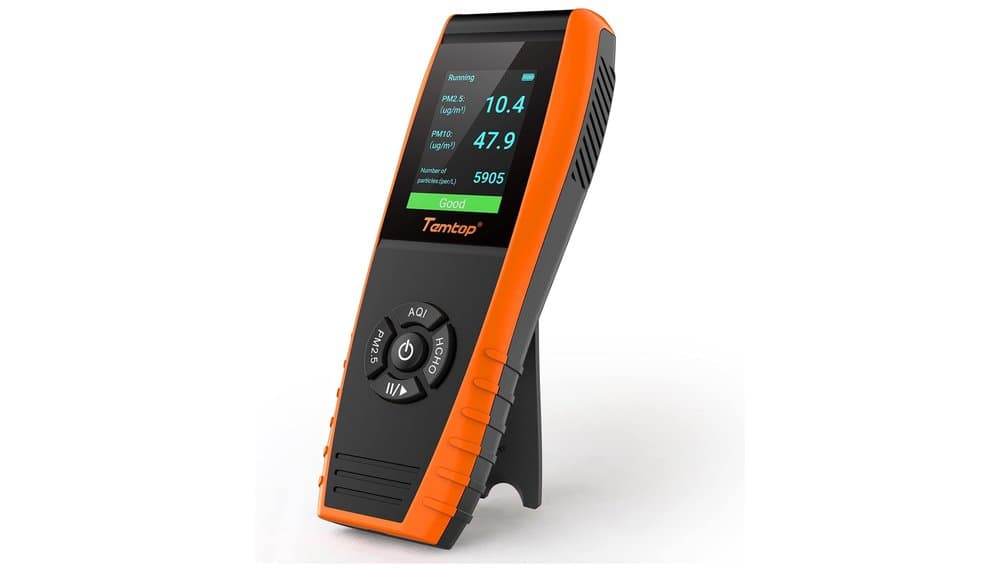
Temtop LKC-1000S+ 2nd Generation Air Quality Monitor
Introduction
In our quest for a healthy interior preserved from pollutants, knowledge is the first step. You cannot improve what you do not measure. This is where air quality monitors like the Temtop LKC-1000S+ 2nd Generation come into play. It is not a purifier, but a diagnostic tool. It gives us eyes to see the invisible: the fine particles that irritate our bronchi, the volatile organic compounds (VOCs) emanating from new furniture, or the humidity that fosters dust mites. In this article, we analyze this multifunctional sensor to understand if it lives up to its promises and how it can help us take control of the air we breathe at home.
Key Strengths of the Monitor
Analyzing the specifications and feedback highlights several major assets of this model.
A Very Comprehensive Set of Measurements: The LKC-1000S+ 2nd Gen stands out for its ability to measure six critical parameters simultaneously. It is this versatility that makes it a powerful diagnostic tool for a comprehensive assessment. It does not stop at particles; it also scrutinizes the chemistry of the air.
Professional-Quality Sensors: Temtop highlights a third-generation laser sensor for particles (PM2.5 and PM10), with an optimization algorithm and an announced lifespan of 20,000 hours. For formaldehyde (HCHO) and VOCs, the device uses factory-calibrated electrochemical sensors, a technology known for its accuracy for this type of gas. On paper, these specifications aim for reliability superior to low-end sensors.
A Clear Interface and Advanced Features: According to users, the large color TFT screen is an undeniable asset for immediate and intuitive reading, with color codes. The functions of history in histogram form (over 12 hours for PM2.5) and especially data export via USB position it as a serious tool for those who want to analyze trends and objectify the effectiveness of their actions (ventilation, use of a purifier).
Weak Points and Limitations
No product is perfect, and feedback from the community allows us to identify certain limitations.
Battery Life: Several users note that battery life is limited to about 6-7 hours in portable use. This makes it more of a device for spot measurements or to be used plugged in for continuous monitoring at a fixed point. It is not a deal-breaking flaw, but a constraint to be aware of.
The Formaldehyde (HCHO) Measurement Questioned: This is the point that sparks the most technical debate. Some feedback, corroborated by expert analysis, suggests that the HCHO measurement is not entirely independent. The device might estimate the formaldehyde concentration from part of the VOC signal, rather than measuring it with a specific dedicated sensor. One user reports that an alcohol-based disinfectant (a VOC but without formaldehyde) caused the HCHO index to rise, which confirms this suspicion.
Screen Durability to Watch: At least one review notes that the screen scratches easily. It is therefore advisable to handle it with care if you plan to transport it often.
See today's priceDetailed Analysis: What Is It Really Useful for Our Health?
Let's get to the heart of the matter: how does this device concretely help us purify our air without chemicals?
Mapping Pollution Sources: The great advantage is being able to identify where problems come from. By moving it around, you can see if the kitchen (cooking fumes, PM2.5), the living room with its new furniture (VOCs, HCHO), or the damp basement are the critical rooms. This is the first step to take targeted action.
Validating the Effectiveness of Our Actions: This is perhaps its most rewarding use. You ventilate for 10 minutes? Observe the vertiginous drop in VOCs and particles on the screen. You invested in a HEPA purifier? Measure how quickly the PM2.5 level drops after shaking a rug. This real-time feedback is valuable and motivating. Users emphasize it: seeing the impact of good ventilation is impressive and makes the device indispensable.
Monitoring Relative Humidity: An often underestimated parameter. Excessively high humidity (above 60-65%) promotes the development of mold and dust mites, two major allergens. Conversely, air that is too dry (below 40%) can irritate the respiratory tract. Being able to monitor it helps regulate with a dehumidifier or humidifier, as needed.
Understanding the Limits of Each Measurement:
- PM2.5 / PM10: Laser measurement is generally reliable and responsive, as shown by user tests with smoke. It is crucial for assessing exposure to airborne allergens (very fine pollen, dust, dust mite residues).
- TVOC (Total VOCs): The sensor provides a general indication of the "chemical load" in the air. A value that decreases after ventilation is a good sign. It does not differentiate between benzene (harmful) and the ethanol from a natural cleaning product (less problematic), but a high value indicates a need to investigate and ventilate.
- HCHO (Formaldehyde): As mentioned, this data must be interpreted with caution. It can serve as a trend indicator (an abnormally high value in a room with new particleboard furniture is a signal), but it should not be considered a laboratory-grade measurement. For reliable detection of formaldehyde alone, a dedicated device is necessary.
Technical Specifications
Here is a clear summary of the device's key features:
| Parameter | Detail |
|---|---|
| Measured Pollutants | PM2.5, PM10, HCHO (Formaldehyde), TVOC (Total VOCs), AQI Index |
| Environmental Parameters | Temperature, Relative Humidity |
| Sensor Technology | 3rd Generation Laser Sensor (particles) / Electrochemical Sensors (HCHO, VOCs) |
| Screen | Color TFT, large size for good readability |
| Special Functions | PM2.5 Histogram (12h), Data Export via USB, Battery Indicator |
| Battery Life | Approximately 6 to 7 hours (according to user feedback) |
| Power Supply | Integrated Lithium-ion battery, charging via Micro-USB cable |
| Dimensions (HxWxD) | 17.5 x 6.6 x 3 cm |
| Weight | 408 g |
| Target Audience | Knowledgeable individuals, diagnostic professionals, sensitive/allergic people |
What Users Say
Synthesizing nearly 500 overall reviews and detailed feedback gives us a very concrete picture of the experience with this monitor.
Recurring Positive Points:
- Perceived Reliability and Responsiveness: The majority of users trust the measurements, which evolve in a logical and coherent manner with events (cooking, ventilation, presence of smoke). Many note the rapid response to changes.
- Proven Usefulness: For allergic individuals, it becomes a decision-making tool ("can I go out?", "should I ventilate?"). Owners of fireplaces or wood stoves appreciate it for controlling indoor particle emissions.
- Build and Screen: The device is generally described as solid, well-finished, and its color screen is highly appreciated for its clarity.
- Data Export Function: Users who use it find the function practical once the CSV file is correctly retrieved and converted.
Negative Points or Criticisms:
- Battery Life: This is the most frequent criticism. A 6-7 hour battery life is considered insufficient for prolonged mobile use.
- The Formaldehyde Measurement: Several technical comments question its independence and absolute accuracy, sometimes calling it an "estimation" rather than a direct measurement.
- Calibration/Malfunction Issues: Although rare given the ratings, a few reviews report inexplicable drifts in measurements after some time (values stuck very low despite obvious pollution), potentially requiring customer service.
- Manual and Software: The absence of a French manual in the box (downloadable online) and sometimes tricky data connectivity on certain PCs are mentioned as minor constraints.
Conclusion
The Temtop LKC-1000S+ 2nd Generation Indoor Air Quality Monitor establishes itself as a serious, comprehensive, and generally reliable diagnostic tool for those who wish to become aware of and control their indoor air quality. Its strengths lie in its wide range of measurements, its good-level sensors, and its analysis features (history, export) that go beyond a simple gadget.
For our community focused on health and cleaning without aggressive chemicals, it is particularly useful. It allows us to scientifically assess the effectiveness of ventilation, to detect sources of particles and VOCs, and to monitor humidity levels to fight allergens. It makes us actors in our environment.
However, we must remain clear-eyed about its limitations: consider the HCHO measurement as an alert indicator and not as a certified value, and plan to leave it plugged in for long-term monitoring. If your main need is ultra-reliable and specific detection of formaldehyde after renovations, a specialized device will be more suitable. But for a comprehensive, reliable, and actionable overview of indoor pollution, the Temtop LKC-1000S+ 2nd Generation constitutes a valuable ally, a well-informed neighbor that gives you the data to breathe with peace of mind.
Independent and transparent — Our articles are based on in-depth research and real user reviews. No brand sponsors our content. Affiliate links help fund the site, at no extra cost to you.
Articles you might like
Temtop P600 Air Quality Monitor Review
Discover the invisible indoor air pollutants PM2.5 & PM10. Learn why monitoring these fine particles is the crucial first step for a healthier home.

Temtop C1+ Bluetooth CO2 Monitor Test & Review
Monitor CO2 & air quality for a healthier home. The Temtop C1+ provides essential data before choosing air purifiers or cleaners.
Temtop C1 CO2 Monitor Review: In-Depth Test
Review the Temtop C1 CO2 monitor, a discreet diagnostic tool measuring CO2, temperature, and humidity for healthier indoor air.