zAlps eCO2 Air Quality Monitor Review & Test
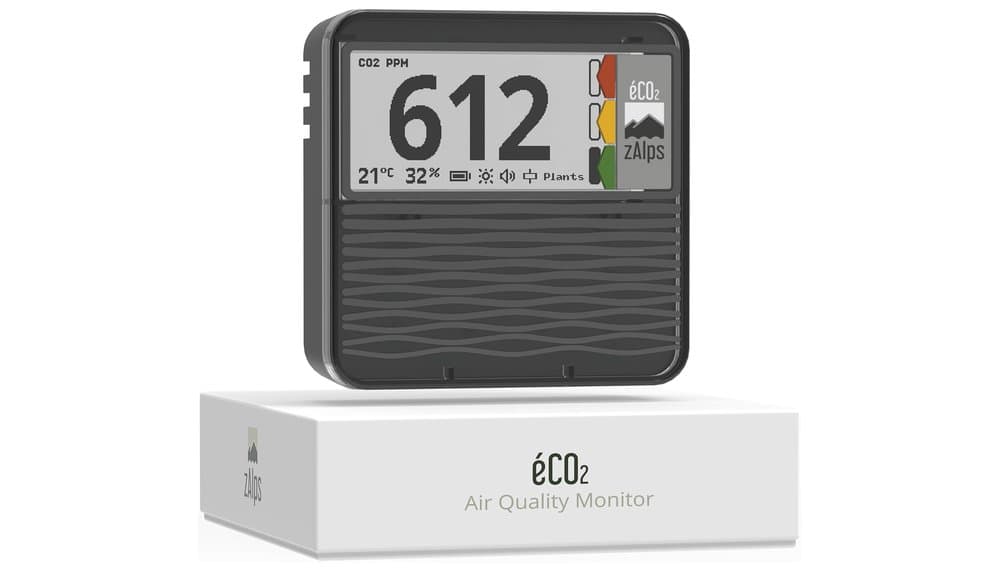
Introduction
On our journey towards a healthier indoor environment, we know that good ventilation is as important as good cleaning. Yet, how do you know when to air out a room? When does the air in a bedroom become stale, potentially laden with CO2, which can affect our sleep, concentration, and overall well-being? This is the precise question the zAlps eCO2 Air Quality Monitor aims to answer. This standalone monitor doesn't clean the air, it assesses it, giving you the data you need to take action.
In the realm of indoor air quality, CO2 is a key indicator, often overlooked in favor of fine particles or VOCs. A high concentration of carbon dioxide is the telltale sign of insufficient air renewal. It signals that we are re-using our own exhaled air, air that may also be enriched with other pollutants. The zAlps eCO2 positions itself as a discreet guardian, a tool for measurement and awareness for health-conscious families, attentive parents, or anyone working from home. Let's take an in-depth look at what it really offers, without claiming to have tested it ourselves, but by scrutinizing its technical promises and the feedback from those who use it.
Key Strengths
- Reliable and Recognized Measurement: The heart of the device is based on a Swedish Senseair NDIR sensor, the reference technology for precise CO2 measurement, far from less reliable electrochemical sensors.
- Radical Autonomy and Simplicity: With no Wi-Fi, Bluetooth, or app, it is a fully autonomous device. It runs on batteries with an autonomy of up to several years, eliminating any worry about recharging or connectivity.
- Perfectly Readable E-Ink Display: Its electronic ink screen is visible from all angles and in full light, consumes very little power, and requires no harsh backlighting, making it ideal for a bedroom.
- A French Company and Local Customer Service: Designed by a French company based in Haute-Savoie, the product benefits from documentation in French and responsive customer support, a significant asset for after-sales service or technical questions.
- Total Portability: Compact and lightweight (110g), it moves effortlessly from the child's room to the office, meeting room, or car, for spot or continuous monitoring.
Weaknesses
- Risk of Screen Malfunction: Several user reports mention a frozen screen, displaying static values for hours. This issue, while not systematic, seems recurrent and affects perceived reliability.
- Basic Design and Functions: For some, its lack of connectivity is an advantage; for others, it's a shortcoming. It does not allow for remote data consultation or the creation of detailed histories on a smartphone.
- Limited Accuracy of Auxiliary Sensors: While the CO2 sensor is high-end, the humidity sensor displays a resolution of only 1% (no decimals), and its measurement range (0-85% RH) excludes very humid environments (like a laundry room or a heavily saturated bathroom).
- An Investment for a Single Parameter: It detects neither fine particles (PM2.5) nor VOCs (volatile organic compounds). Its role is targeted: CO2, temperature, and humidity. For a comprehensive view of indoor pollution, other devices are necessary.
Detailed Analysis
The zAlps eCO2 is not a purifier, but a diagnostic instrument. Its goal is to make the invisible visible, particularly CO2, a gas directly linked to our presence and activities.
CO2 Sensor: The Choice of Performance The main reason to buy this device lies in its sensor. The Senseair Sunlight (NDIR) is a serious choice. NDIR (Non-Dispersive Infrared) technology is used in professional instruments; it measures the CO2 molecule directly and is much less prone to drift or interference than a low-end electrochemical sensor. The stated accuracy of ±3% up to 5000 ppm is perfectly honorable for domestic use. This means that in the critical range for health (400-1500 ppm), the reading is reliable. Based on feedback, users confirm this sensitivity: simply blowing on or approaching the device makes the value react instantly, proving its responsiveness.
Temperature and Humidity: Contextual Data These sensors, from Sensirion (SHT30), are also of good quality. Their role here is complementary. Relative humidity that is too low (<40%) dries out mucous membranes; too high (>60%) encourages dust mites and mold. Temperature affects comfort and concentration. The zAlps eCO2 therefore gives you a coherent trio of data to assess a room's basic comfort. Note, however, that the 1% resolution for humidity and the absence of decimals for temperature (according to some users) may seem limited for the most demanding, even if absolute accuracy is maintained.
Design and Usage: The "Set and Forget" Philosophy This product's philosophy is robust simplicity. The E-Ink screen is a major asset. Not only does it consume very little, enabling the phenomenal autonomy advertised (up to 4 years with alkaline batteries in eco mode), but it is perfectly readable day and night without emitting blue light. This is a crucial detail for a bedroom or nursery. The device stores a 28-day history of CO2 values, viewable directly on the screen, which allows for visualizing trends (for example, CO2 accumulation during the night).
The audible and visual alerts are configurable. You can set a threshold (e.g., 1000 ppm) beyond which a red light comes on and/or a beep sounds. This is a practical feature for remembering to ventilate without constantly monitoring the screen.
What Place in a "Chemical-Free" Strategy? On our site dedicated to a healthy home, this monitor finds its full place. It is the diagnostic tool that precedes action. It does not replace a HEPA purifier for allergens, nor a dehumidifier for excessive humidity. But it tells you when natural ventilation is necessary – the simplest, most ecological, and most effective method for diluting CO2 and many gaseous pollutants. By managing the CO2 level, you also indirectly manage odors, some of the VOCs emitted by your own presence, and the humidity generated by breathing. It is a first step, based on objective measurement, towards a healthier home.
Technical Specifications
| Parameter | Detail |
|---|---|
| CO2 Sensor | Senseair Sunlight (Sweden), NDIR type |
| CO2 Measurement Range | 0 – 9999 ppm |
| CO2 Accuracy | ±3% of measured value (or ±50 ppm) up to 5000 ppm |
| Temperature/Humidity Sensor | Sensirion SHT30 (Switzerland) |
| Temperature Range/Accuracy | 0 to 50°C / ±0.3°C |
| Humidity Range/Accuracy | 0 to 85% RH / ±3% RH |
| Display | Electronic ink screen (E-Ink) |
| Power Supply | 2 AA batteries (included) |
| Autonomy (est.) | Up to 4 years (eco mode) / ~8 months (active mode) |
| Connectivity | None (autonomous) |
| Data History | 24 hours and 28 days (for CO2) |
| Alerts | Audible and visual (colored LED), configurable |
| Dimensions | 71 x 71 x 24.2 mm |
| Weight | 110 g (with batteries) |
| Warranty & Support | French manufacturer, documentation and after-sales service in French |
What Users Say
A synthesis of available customer reviews (mainly on sales platforms) reveals clear trends, both positive and negative.
Recurring Positive Points:
- Appreciated Accuracy and Responsiveness: Many users highlight the sensitivity of the CO2 sensor, noting rapid variations in the presence of people. Some compared the temperature/humidity measurements with other devices and found them consistent.
- Simplicity and Autonomy Praised: The lack of need for a connection and the long battery life are very frequently cited as major assets. Users like the "plug and play" concept (insert batteries and go).
- Readability of the E-Ink Screen: The large size of the digits and easy reading even from a distance are unanimously praised. Many find the display elegant and discreet.
- Usefulness of Awareness Raising: Several testimonies are telling, like this user shocked to measure 1400 ppm in their bedroom. The monitor directly changed their ventilation habits, which is exactly the intended effect.
- Useful History Function: The ability to visualize trends over several days directly on the device is considered a real plus.
Raised Negative Points:
- Frozen Screen Problem: This is the main black spot. Several reviews report that the screen freezes on a value, no longer updating, sometimes after only a few weeks or months of use. The temporary solution is to remove the batteries to reset it, but the problem can recur. This flaw significantly undermines reliability.
- Price Perceived as High: For a device without connectivity and measuring "only" three parameters, some find the cost relatively high, especially compared to some connected models.
- Display Details: A few users regret that the temperature is displayed without decimals and that the temperature and humidity indications are in small characters compared to the huge CO2 value.
- Durability in Question: Beyond the screen bug, one review mentions a device failing (requiring daily reset) after only one year of use, raising questions about longevity.
Conclusion
The zAlps eCO2 Air Quality Monitor is a specialized tool that fulfills a precise mission seriously. Its technological choices (NDIR sensor, E-Ink screen, battery autonomy) make it a robust, simple, and reliable device on paper, perfect for someone who wants a reliable CO2 measurement without complication. It is ideal for monitoring air quality in bedrooms, closed offices, or classrooms, and its design makes it discreet in any interior.
However, the recurrence of reports about the screen freezing casts a shadow over its medium-term reliability. This is a point that cannot be ignored and should prompt the French manufacturer to react quickly, especially as its local customer service is highlighted as an asset.
Our verdict: If you are looking for an autonomous, precise, and no-frills monitor to become aware of and manage CO2 levels in your home, the zAlps eCO2 is a technically solid option. Its minimalist approach is its strength. But purchase it while being aware of this potential flaw reported by the community, and counting on the manufacturer's warranty and after-sales service if needed. It is an investment in knowing your air, an essential and scientific first step towards a better ventilated and healthier indoor environment.
Independent and transparent — Our articles are based on in-depth research and real user reviews. No brand sponsors our content. Affiliate links help fund the site, at no extra cost to you.
Articles you might like
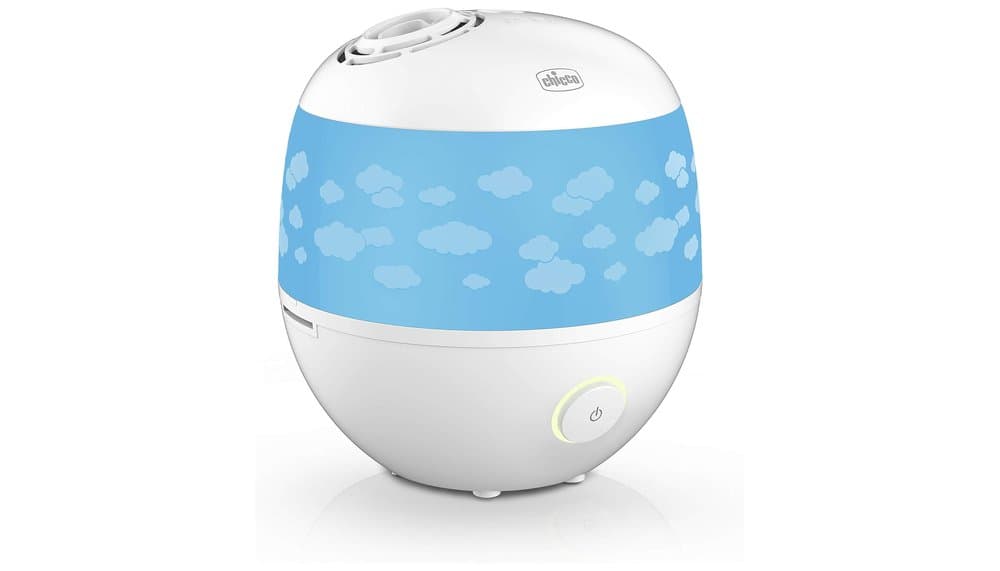
Chicco Humi Hot Advance Air Humidifier Review
Chicco Humi Hot Advance Air humidifier review for kids: warm steam relief for seasonal discomforts in a chemical-free home.

Veegreen White Sage and Palo Santo Incense Set Review
Review the traditional ritual of smudging with white sage and palo santo for cleansing air naturally, as an alternative to modern air purifiers.
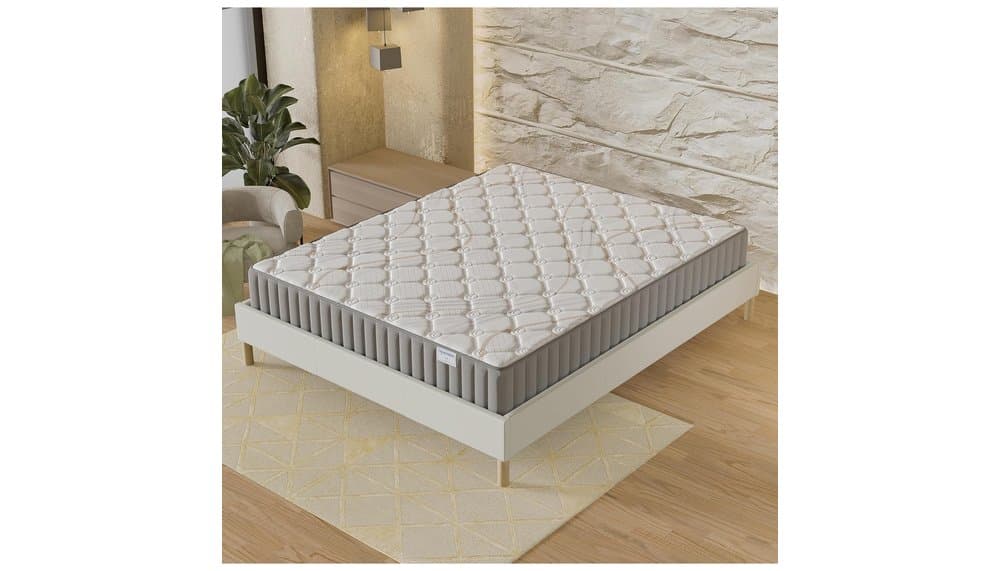
NOVEMBER Sirius Mattress Review: Complete Test Analysis
A deep analysis of the NOVEMBER Sirius mattress for healthy sleep. We test its materials and construction for allergens, VOCs, and overall sleep hygiene.
Guides you might like
Air Purifier Buying Guide
Indoor air can be more polluted than outside. Learn how to choose the right air purifier to combat dust, VOCs, and allergens.

Allergen Fighter Dehumidifier Buying Guide
Combat allergies from dust mites and mold caused by high humidity at home. A good dehumidifier protects your family's health.

Anti-allergen vacuum cleaner
Does vacuuming worsen allergies? Yes, with a poor filter. Choose the right vacuum to trap allergens and protect your health.