Bosch AdvancedVac 20 Wet and Dry Vacuum Review
Introduction
For all those looking to maintain a healthy home without resorting to an army of chemical products, the vacuum cleaner is an essential first line of defense. It's not just about picking up visible dust, but about capturing invisible pollutants that affect our air quality. With this in mind, we are examining a device today that promises versatility and power: the Bosch AdvancedVac 20 Wet and Dry Vacuum Cleaner. At first glance, it is clearly a tool designed for DIY and major projects. But can such an "industrial" vacuum find its place in a healthy home cleaning approach? Can it be an ally against allergens, or on the contrary, does it risk dispersing them? Our analysis will break down its specifications and cross-reference user feedback to assess its real benefit for your indoor air health.
Strengths
- High suction power: With a 1200W motor and an advertised vacuum of 26 kPa, it has significant suction force, capable of dealing with ingrained dirt and bulky debris.
- Extreme versatility: The wet and dry vacuum cleaner function makes it a unique tool for handling liquid accidents (spills, leaks) and dry dirt, without changing the filter between the two modes.
- Large capacity and practical disposal: A 20-liter tank limits the frequency of emptying. The presence of a drain nozzle greatly facilitates the disposal of aspirated water, a real plus compared to models where you have to lift and tilt the tank.
- Practical features for DIY: The automatic on/off function when plugged into a power tool (drill, sander) is a major asset for projects, limiting the dispersion of construction dust. The blower function is also useful for clearing areas.
- Robust construction: Feedback agrees on the build quality of Bosch, with thick plastics and solid closures, promising good durability.
Weaknesses
- Filtration unsuitable for allergen control: Its standard cartridge filter (supplied) and the optional paper bag do not constitute a HEPA system. Fine particles (pollen, dust mites, ultra-fine dust) can be partly released back into the ambient air.
- High noise level: As a construction site vacuum, it is loud. Its use is inconceivable with a sleeping baby or for discreet cleaning in a bedroom. It is a tool for empty rooms or garages.
- Size and weight: At 7.6 kg and with generous dimensions, it is not designed to be easily handled on stairs or stored in a small cupboard. It is a stationary appliance.
- Short power cord: The 4-meter cord length is regularly pointed out as a negative, requiring frequent plug changes to cover a standard area.
- Tedious filter maintenance: Some users note that the filter can clog quickly with fine dust (sawdust, soil) and that cleaning it requires opening the appliance, an operation described as not very practical.
Detailed Analysis from a Health and Air Quality Perspective
Filtration Level and Pollutant Capture
This is the most crucial point for our approach. The Bosch AdvancedVac 20 comes standard with a foam cartridge filter (for liquid mode) and can be used with a disposable paper bag for dry mode. Bosch states that this system allows for vacuuming dry and wet without changing the filter.
However, for the health of your indoor air, this system has a major limitation: it does not guarantee HEPA filtration. HEPA (High Efficiency Particulate Air) filters are the only ones capable of retaining at least 99.95% of particles down to 0.3 microns (the size of major allergens like dust mite feces, mold spores, much of pollen). The cartridge filter of the AdvancedVac 20 is designed to protect the motor from large debris and water, not to purify the exhausted air.
Consequently, if you use it to vacuum fine household dust, a portion of the allergens and fine particles (PM2.5) will likely be released into the room's air via the exhaust. It also does not include an activated carbon filter to adsorb VOCs (Volatile Organic Compounds) or odors. Its primary use should therefore remain heavy-duty cleaning, DIY debris, fireplace ashes, or spilled liquids, and not the fine cleaning of carpets, sofas, or mattresses where dust mites reside.
Cleaning Performance and Disinfection
There is no integrated disinfection function here, such as a UV-C module or a hot steam generator. Its bacterial performance is purely mechanical: it sucks up dirt and microbes with it, but does not sterilize surfaces. For chemical-free disinfection, you will need to pair it with a separate steam cleaner.
Its suction power of 1200W is its indirect health asset. Powerful suction is more effective at extracting dirt and allergens in depth from textiles and crevices, rather than stirring them on the surface. User feedback confirms this raw efficiency, especially on stubborn pet hair.
Ease of Use and Noise Impact
Testers and users are unanimous: the Bosch AdvancedVac 20 is a noisy appliance. This is an inherent characteristic of its powerful motorization and professional/construction site vocation. We strongly advise against its use in rooms occupied by sensitive individuals (infants, people suffering from migraines) or for morning cleaning in an apartment. Its use must be planned and limited to appropriate times.
Its autonomy, being a corded model, is unlimited but constrained by the cord length (4m). Its weight (7.6 kg) and volume destine it for floor use, mainly on hard surfaces (tiles, wood floors) or thick carpets. The presence of casters and the integrated accessory storage system, however, facilitate its movement and storage in a garage or utility room.
Cost and Long-Term Ecology
The appliance is supplied with a washable cartridge filter, which is a positive point for reducing waste and consumable costs. The use of the disposable paper bag (not supplied in large quantity) is optional but recommended for dry mode, as it simplifies tank emptying and better protects the main filter. The cost of these replacement bags should be considered for regular use. The overall robustness suggests a long lifespan, limiting the environmental impact of appliance replacement.
Technical Specifications
| Characteristic | Detail |
|---|---|
| Vacuum Type | Wet & Dry canister vacuum |
| Power | 1200 Watts |
| Tank Capacity | 20 Liters |
| Main Filtration Type | Cartridge filter (washable) |
| HEPA Filtration | No |
| Blower Function | Yes |
| Auto On/Off Function | Yes (with power tool) |
| Power Cord Length | 4 meters |
| Hose Length | 2.2 meters (anti-static) |
| Weight | 7.6 kg |
| Noise Level | High (not specified, typical of a construction site vacuum) |
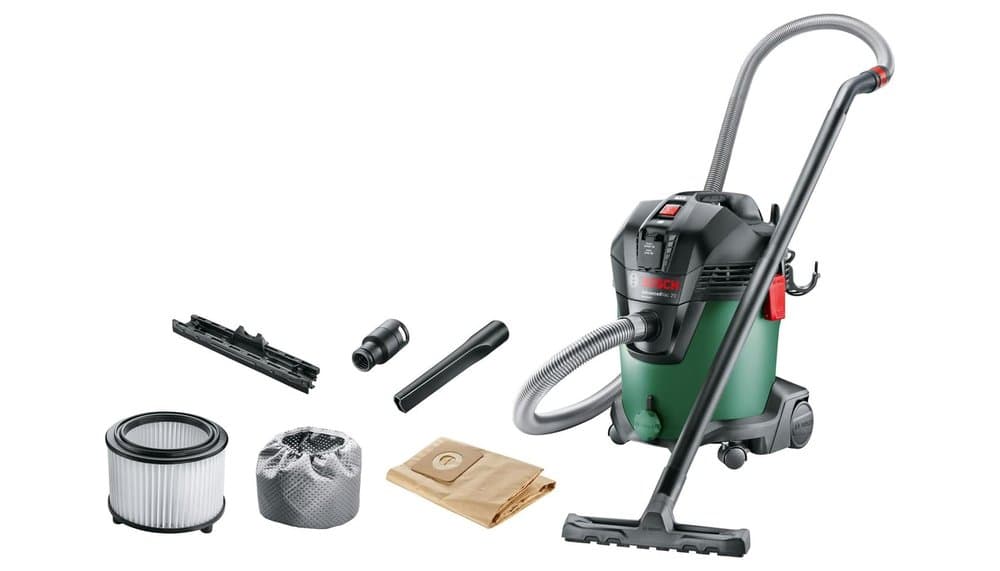
| Supplied Accessories | Anti-static hose, universal adapter, 2 extension tubes, floor nozzle, round brush, handle, cartridge filter, 1 paper bag |
What Users and Testers Say
The analysis of hundreds of available reviews reveals a strong consensus on several points, while raising important nuances for our "health" use.
Praise is abundant and focuses mainly on:
- The exceptional suction power, often described as superior to that of mainstream stick or canister vacuums. Pet owners (cats, dogs, ferrets) are particularly enthusiastic, noting that it removes all hair and litter granules.
- The sturdiness and finish of the appliance, perceived as worthy of the Bosch brand.
- The large tank capacity that avoids constant emptying.
- The effectiveness of the automatic function for DIY, saving a lot of airborne dust during drilling or sanding.
- The ease of draining water thanks to the nozzle designed for this purpose.
Criticisms and reservations regularly come up:
- The noise is the most frequently cited negative point. It is considered normal for this type of machine, but it highlights that it is not suitable for quiet domestic use.
- The power cord length (4m) is deemed insufficient by many, forcing the use of an extension cord or frequent plug changes.
- A few users point out the relatively weak blower function.
- A crucial point for us: no user praises its ability to capture allergens or not release them. None mention an improvement in allergies or a feeling of cleaner air. Its role is perceived as that of a "power vacuum".
- A detailed review points out a design issue: fine dust could bypass the bag and dirty the inside of the tank via a small hole, requiring a manual modification (applying silicone). Others note that the filter clogs quickly with fine dust (sawdust, soil) and that its cleaning is poorly designed, requiring disassembly of the appliance, unlike some direct competitors.
Conclusion: A Power Tool, Not an Air Purifier
The Bosch AdvancedVac 20 Wet and Dry Vacuum Cleaner is undeniably a powerful and well-designed machine for heavy-duty work. If your goal is to clean a workshop, garage, manage water overflows, or vacuum massive amounts of debris after renovation work, it will be a very effective ally. Its automatic function makes it an ideal companion for DIY, helping to contain construction dust, a major indoor pollutant.
However, within the strict framework of seeking optimal indoor air quality and combating domestic allergens, it shows its limits. The lack of HEPA filtration and its high noise level disqualify it for daily use in living spaces. It should not be your main vacuum for bedrooms, sofas, or carpets where dust mites concentrate.
Our verdict is therefore nuanced: This vacuum can perfectly complement your healthy cleaning arsenal, but as a specialized tool for "heavy chores". For the regular and healthy cleaning of your home, you will need to pair it with a vacuum equipped with a certified HEPA filter (ideally H13 or H14) and a sealed system, which will guarantee that what you vacuum does not come out the other side. Consider the Bosch AdvancedVac 20 as the heavy-duty stripper, and your HEPA vacuum as the expert finisher that ensures the quality of the air your family breathes.
Independent and transparent — Our articles are based on in-depth research and real user reviews. No brand sponsors our content. Affiliate links help fund the site, at no extra cost to you.
Articles you might like
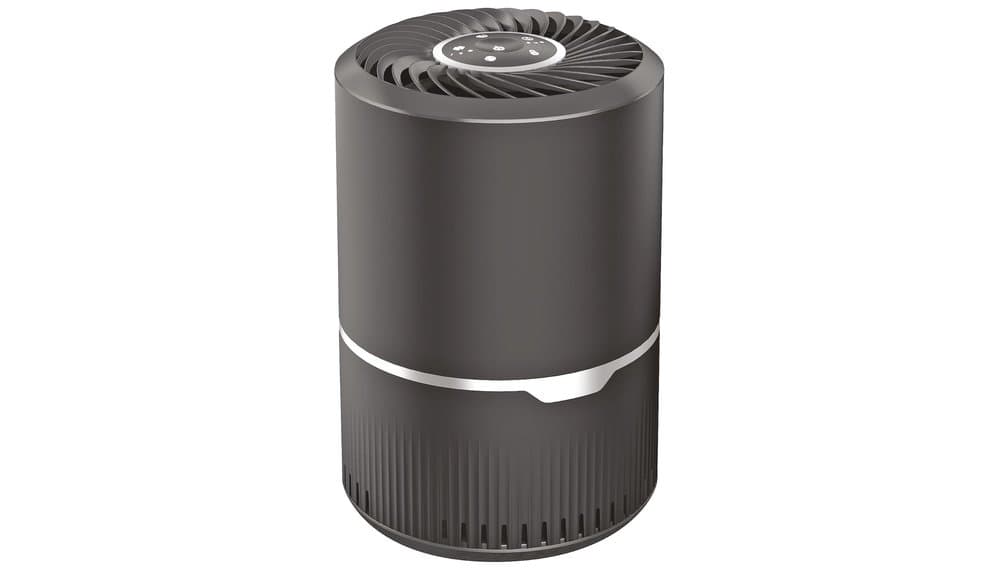
SOMATHERM FOR YOU Air Purifier with HEPA 13 & UV-C
Clean your air with this purifier: HEPA 13 filter, UV-C light, and water wash technology remove dust, pollen, VOCs, and germs.
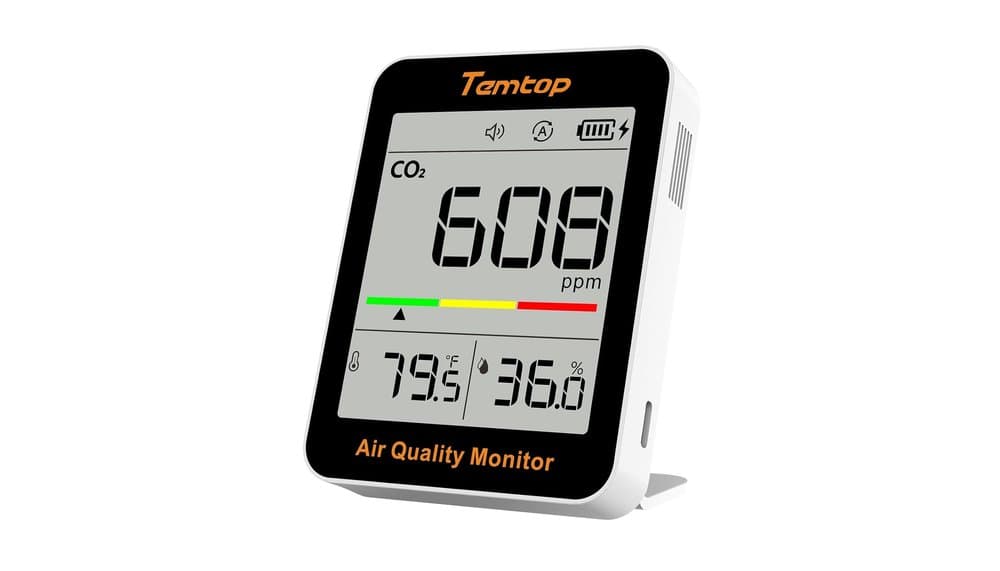
Temtop C1 CO2 Monitor Review: In-Depth Test
Review the Temtop C1 CO2 monitor, a discreet diagnostic tool measuring CO2, temperature, and humidity for healthier indoor air.
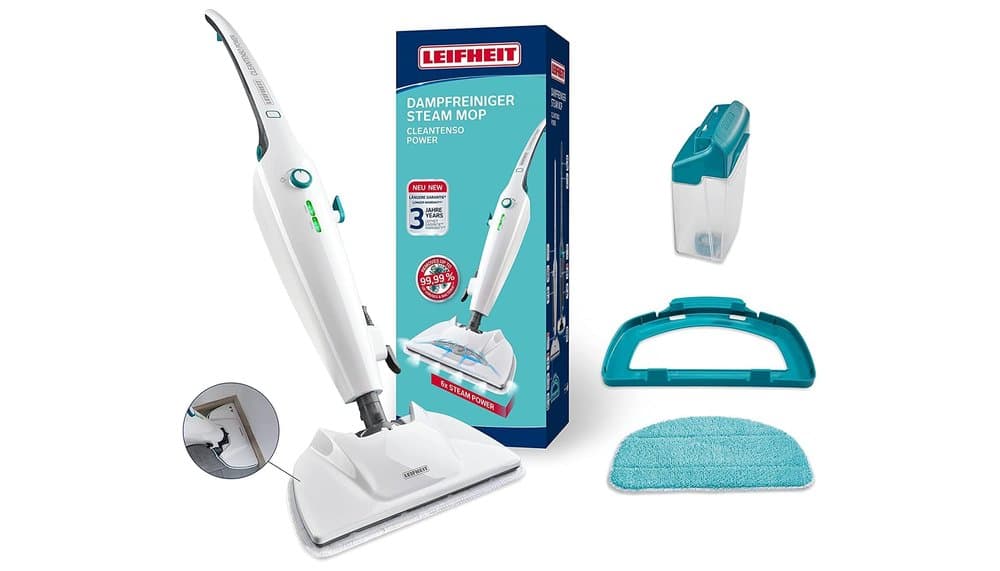
Leifheit CleanTenso Power 2.0 Steam Mop Review & Test
Discover if the Leifheit CleanTenso Power 2.0 Steam Mop truly eliminates allergens and microbes without chemical residues for a healthier home.
Guides you might like
Air Purifier Buying Guide
Indoor air can be more polluted than outside. Learn how to choose the right air purifier to combat dust, VOCs, and allergens.
Allergen Fighter Dehumidifier Buying Guide
Combat allergies from dust mites and mold caused by high humidity at home. A good dehumidifier protects your family's health.
Anti-allergen vacuum cleaner
Does vacuuming worsen allergies? Yes, with a poor filter. Choose the right vacuum to trap allergens and protect your health.