WINIX A332 Air Purifier Review: Allergy & PM2.5 Test
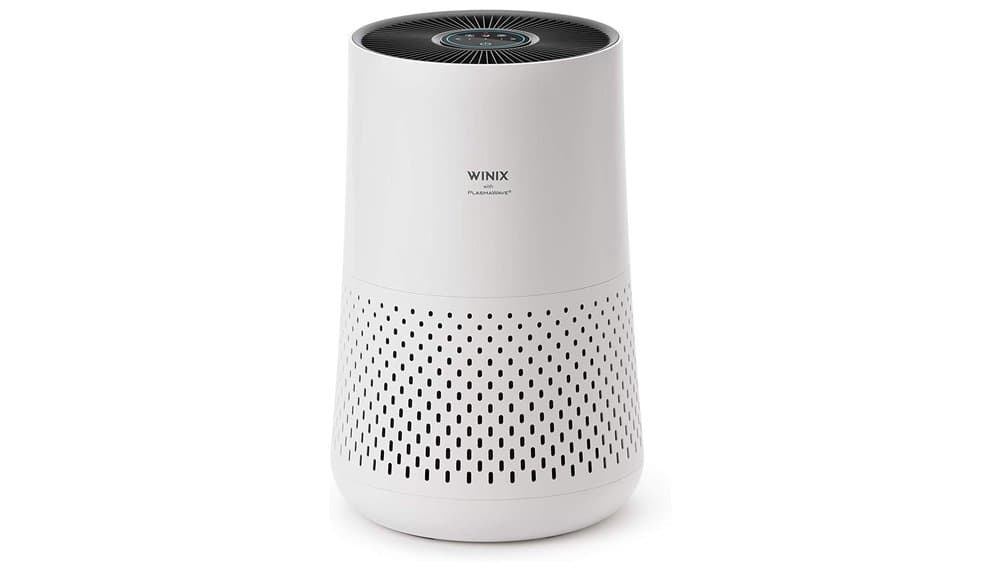
Comprehensive Analysis: The WINIX A332 Air Purifier for Allergies and PM2.5
In our quest for healthier indoor air without resorting to harsh chemicals, the air purifier stands out as a top ally. Among models specifically designed to combat allergens and particulate pollution, the WINIX A332 is often talked about. Designed for rooms up to 45 m², it promises 4-stage filtration, smart operation, and noise discretion suitable for bedrooms. But how does it truly perform to improve our daily environment? Let's dive into a technical and practical analysis of this device, cross-referencing manufacturer specifications with community feedback and expert observations.
Strengths and Weaknesses: A First Look
Before detailing each aspect, here is what emerges from our overall analysis of the WINIX A332.
The strengths:
- Complete and certified filtration: A 4-in-1 system integrating a True HEPA H13 filter (99.97% efficiency on particles down to 0.3 microns), an activated carbon filter, and PlasmaWave technology.
- Remarkable silence in night mode: An official sound level of 26.5 dB in sleep/standby mode, validated by many users for use in bedrooms or with a baby.
- Compact design and practical automations: A reduced size (37 cm high) and an automatic mode driven by an air quality sensor that adjusts the fan speed in real time.
- Recognition by specialized organizations: Certifications from ECARF (European Centre for Allergy Research Foundation) and Allergy UK, signs of credibility for sensitive individuals.
Points to consider:
- Variable effectiveness on stubborn odors: The activated carbon filter, of limited volume, shows its limits according to feedback when facing very pronounced cooking odors (onion, fish, cauliflower).
- Air quality sensor sometimes too optimistic: Several users note that the LED indicator often remains blue ("good air") even when they perceive discomfort, questioning its reactivity to the finest allergens.
- Necessary maintenance: The pre-filter requires regular vacuum cleaning to preserve the efficiency and lifespan of the main filter.
- Rounded design: Its modern aesthetic can make handling less easy when it comes to lifting it or removing the filter.
Detailed Analysis: Performance, Health, and Daily Use
Filtration Under the Microscope: What Does the WINIX A332 Really Capture?
This is the heart of the matter. The WINIX A332's 4-stage system is designed to treat a wide range of pollutants.
- The Pre-filter: This is the first line of defense. It captures pet hair, human hair, and large dust. Its maintenance is crucial: according to feedback, weekly or bi-weekly vacuum cleaning is recommended, especially with pets.
- The True HEPA Filter: This is where effectiveness against airborne allergens comes into play. With a 99.97% rate on 0.3-micron particles, it effectively targets pollen, mold spores, a large part of dust mites (their droppings are about 10 microns, but they are often agglomerated with dust), fine dust, and PM2.5 particles. Expert reviews confirm that this H13 specification is a guarantee of serious performance for reducing the allergenic load in the air.
- The Activated Carbon Filter: Its mission is to adsorb VOCs (Volatile Organic Compounds) and household odors. Its effectiveness is real on diffuse odors (stale tobacco, mustiness, light cooking) and fumes from household products. However, as some users point out, it can be overwhelmed by intense, occasional cooking odors. It is not a kitchen hood.
- The PlasmaWave Technology: Presented as an additional asset, it generates hydroxyl ions (OH) to oxidize and neutralize certain viruses, bacteria, and gaseous pollutants at the molecular level. It is important to note that this technology, although present on many mid-range purifiers, is not a UV-C sterilizer. Its action complements mechanical filtration.
Filtration Verdict: On paper and according to the majority of feedback, the WINIX A332 is very effective against suspended particles responsible for many allergies. Its multi-layer approach is solid. For strong and persistent odors, expectations must remain reasonable.
Noise and Comfort of Use: Can You Sleep Next to It?
This is an essential criterion, especially if the device is intended for a bedroom. Specifications announce 26.5 decibels in night/sleep mode. User feedback is very largely positive on this point. The community describes a discreet device, whose background noise in low-speed or sleep mode resembles a "gentle breeze" and does not disturb sleep. In automatic mode or speed 1, it remains very acceptable for a living room.
The automatic mode, driven by the sensor, is highly praised. Several testimonies report a visible and rapid reaction from the device: it switches to high speed when cooking food (popcorn is mentioned), vacuuming, or during an indoor pollution peak, before returning to a calm setting once the air is cleaned. This intelligence provides real comfort and energy savings.
Design and Maintenance: Day-to-Day
Its compact and lightweight (3 kg) format is an asset for moving it from room to room. The touch control panel and the LED air quality indicator (blue/amber/red) are simple. However, the community notes two small ergonomic drawbacks: its completely round shape can make it a bit slippery to grasp, and the lack of a programmable timer is regretted by some who would like it to run in their absence.
Regarding maintenance, the cycle is standard:
- Pre-filter: Vacuum cleaning every 2 weeks.
- Combined HEPA + Carbon Filter: Replacement about once a year, depending on use and environmental pollution. Replacement filters are widely available. Feedback indicates their cost is around the market average, about thirty euros, representing a moderate annual cost.
What Users Say: Summary of Feedback
Analyzing the hundreds of available reviews reveals very clear trends, going beyond mere technical specifications.
Recurrent praise:
- Positive impact on respiratory allergies: Many users suffering from pollen or dust mite allergies report a tangible improvement in their symptoms (runny nose, sneezing) and a reduction of dust in the air.
- Reactivity of automatic mode: The "popcorn" anecdote triggering max speed comes up often and is taken as tangible proof of the sensor's effectiveness.
- Appreciated silence: Night mode is consistently cited as a strong point, allowing for 24/7 use without disturbance.
- Understated and compact design: It integrates well into interiors without taking up too much space.
Frequent criticisms and reservations:
- Air quality sensor deemed insufficiently sensitive: A notable point of friction. Several users, particularly allergy sufferers, express skepticism when the indicator remains blue while they feel discomfort. This suggests the sensor may be more calibrated for PM2.5 particles and smoke than for specific biological allergens.
- Limited effectiveness on strong odors: As mentioned, the device is not perceived as a miracle eliminator of stubborn cooking odors.
- Long-term durability: While the majority of feedback is positive over several years, there are isolated reports of breakdowns after 2-3 years, highlighting the importance of warranty.
- Lack of impact on certain allergens: A few isolated reviews, including one from a user very sensitive to dust mites, feel the device did not bring the hoped-for improvement. This serves as a reminder that a purifier is a complementary tool to a healthy environment (ventilation, anti-mite bedding, controlled humidity).
Key Technical Specifications
| Characteristic | Detail |
|---|---|
| Recommended Coverage Area | Up to 45 m² |
| Clean Air Delivery Rate (CADR) | 228 m³/h (standardized efficiency measurement) |
| Filtration | 4 stages: Pre-filter, True HEPA H13 Filter (99.97% at 0.3 µm), Activated Carbon Filter, PlasmaWave Technology |
| Sound Level | 26.5 dB in night mode (very quiet) |
| Operating Modes | Manual (4 speeds), Automatic, Night (lights off) |
| Sensor | Particle sensor with LED air quality indicator (Blue/Amber/Red) |
| Dimensions (H x W x D) | 37 x 24 x 24 cm |
| Weight | 3 kg |
| Certifications | ECARF, Allergy UK, AHAM (US standards) |
| Power Consumption | 55 W (max) |
| Replacement Filter | Combined HEPA + Carbon Filter (lifespan ~12 months) |
Conclusion: Who Is the WINIX A332 For?
The WINIX A332 positions itself as a solid, effective air purifier particularly well-suited for people looking to reduce their exposure to common allergens and fine particles in a medium-sized room. Its point of excellence is its operational silence, making it an ideal candidate for the bedroom, baby's room, or office.
Based on the analysis of feedback and specifications, we can conclude that it delivers on its main promises: significantly reducing the amount of dust, pollen, and airborne allergens in the air, thanks to its quality HEPA filter. Its automatic mode works as advertised, bringing real intelligence and facilitating daily use.
However, if your primary goal is eliminating very persistent cooking, pet, or tobacco odors, its performance may seem limited to you. Similarly, for extremely severe allergies, this device should be seen as an important, but not sole, part of an overall air purification strategy.
In the end, the WINIX A332 is a purifier that skillfully combines filtration performance, acoustic discretion, and intelligent automation. It perfectly matches a family wishing to improve their indoor air quality in a simple, quiet, and scientifically sound way, without disproportionate investment or excessive bulk. It's a reasoned and reassuring choice for breathing a little better, every day.
Independent and transparent — Our articles are based on in-depth research and real user reviews. No brand sponsors our content. Affiliate links help fund the site, at no extra cost to you.
Articles you might like
Einhell TC-VC 1812 S Wet and Dry Vacuum Review
Einhell TC-VC 1812 S wet/dry vacuum review for deep cleaning tasks, household accidents, and post-renovation cleanup. A tool for heavy-duty messes.
NOVEMBER Sirius Mattress Review & Test
Discover if the NOVEMBER Sirius hybrid mattress delivers certified healthy materials, comfort, and support for a truly restorative night's sleep.
AIRTOK AP0601 Air Purifier Review and Test
Clean your air at home. See our in-depth review of the AIRTOK AP0601 purifier for combating dust, pollen, pets, and VOCs.
Guides you might like
Air Purifier Buying Guide
Indoor air can be more polluted than outside. Learn how to choose the right air purifier to combat dust, VOCs, and allergens.
Allergen Fighter Dehumidifier Buying Guide
Combat allergies from dust mites and mold caused by high humidity at home. A good dehumidifier protects your family's health.

Anti-allergen vacuum cleaner
Does vacuuming worsen allergies? Yes, with a poor filter. Choose the right vacuum to trap allergens and protect your health.