Einhell TC-VC 1820 S Wet & Dry Vacuum Review

Einhell TC-VC 1820 S Wet & Dry Vacuum
Introduction
Welcome to our detailed analysis of a tool that often raises questions in the field of healthy cleaning: the water and dust vacuum cleaner. Today, we are dissecting the Einhell TC-VC 1820 S Water and Dust Vacuum Cleaner. If you care about your indoor air quality, you are probably wondering what place such an appliance has in a chemical-free cleaning approach. Is it an ally for occasional tasks or a versatile vacuum for daily use? By cross-referencing technical specifications, feedback from the vast user community, and expert analyses, we will objectively evaluate its performance, its impact on health, and its suitability for our goals of a healthy home. Far from alarmism, let's take a scientific and practical look at this product.
Strong Points
According to available data, the Einhell TC-VC 1820 S presents solid assets for specific uses.
- Extreme versatility: Its ability to vacuum both liquids and solid waste (dust, gravel, debris) makes it a unique tool. It can empty a puddle of water, clean up after work, or vacuum sawdust, all with the same appliance.
- Notable suction power: With a 1250-watt motor and an announced airflow of 68 L/s, users confirm powerful and effective suction for large volumes, whether water or construction dust.
- Integrated blower function: A practical asset for clearing debris from a workshop, cleaning tools, or reaching inaccessible corners, transforming the appliance into a two-in-one tool.
- Safety and capacity: The 20-liter stainless steel tank is appreciated for its robustness. The float switch that automatically cuts off the motor when the tank is full (in liquid mode) is an essential safety feature to prevent overflows and protect the appliance.
Weak Points
These strengths come with significant compromises, especially when considering its use in a home.
- Filtration unsuitable for respiratory health: This is the crucial point. The appliance is equipped with a simple foam filter and a paper dust bag (included). It has neither a HEPA filter nor an activated carbon filter. This means it is incapable of trapping fine allergens (dust mites, pollen), ultrafine particles (PM2.5), or mold spores. Worse, many reports mention dust being expelled through the exhaust, contributing to the indoor air pollution we aim to avoid.
- High noise level: With measured 80 decibels, the appliance is very loud. This characteristic makes it unsuitable for use near a sleeping baby, for routine cleaning in a bedroom, or at late hours. Users unanimously describe it as "noisy."
- Limited domestic ergonomics: Designed for construction sites/workshops, it has a short cable (about 2.5m), almost always requiring an extension cord in a house. Its size and maneuverability (basic casters) are less convenient than a classic canister vacuum.
- Perceived quality of accessories: The community notes that the plastic accessories (hose, nozzles) have a simple finish and can seem fragile during intensive or rough use.
Detailed Analysis from a Health and Air Quality Perspective
See today's priceWhat is its real impact on indoor pollutants?
It is essential to state this clearly: the Einhell TC-VC 1820 S is not designed to improve the indoor air quality of a home. Its role is the extraction of large volumes of waste and liquids.
- Allergens and fine particles: The lack of an advanced filtration system is a deal-breaker. The foam filter and paper bag retain large debris but let through the particles most problematic for respiratory systems. Expert tests and user feedback on dust leaks from the exhaust confirm this major flaw. By using it, you risk putting allergens you wanted to eliminate back into suspension in the air.
- Volatile Organic Compounds (VOCs) and odors: Without an activated carbon filter, the appliance has no effect on VOCs or odors. It does not contribute to a strategy for reducing these pollutants.
- Moisture and mold: Its ability to vacuum liquids can be useful for drying a puddle or minor water damage, which indirectly prevents mold development. However, it does not measure residual humidity and does not replace a dehumidifier to restore a healthy humidity level (between 40% and 60%).
- Disinfection: It incorporates neither UV-C nor hot steam. Its cleaning action is purely mechanical (suction). It does not "disinfect" surfaces. For that, you would need to pair it with a separate steam cleaner, whose high temperature eliminates bacteria and dust mites without chemicals.
Maintenance and Cost of Consumables
Maintenance is simple but requires vigilance. For dry use, the disposable dust bag (paper or fabric, depending on the models) is recommended to facilitate emptying. Experienced users note that for fine dust (plaster, sanding), it is imperative to use a specific bag for fine dust, at the risk of quickly clogging the foam filter. The foam filter itself must be cleaned regularly with water and dried completely before being put back into service. Its replacement, if necessary, represents a moderate cost. The large community of users for this appliance makes finding these consumables easier.
Technical Specifications
| Characteristic | Value / Description |
|---|---|
| Appliance Type | Water and dust vacuum cleaner (canister) |
| Motor Power | 1250 Watts |
| Tank Capacity | 20 Liters (stainless steel tank) |
| Noise Level | 80 dB |
| Filtration Type | Foam filter (liquid mode) + Dust bag (dry mode) |
| HEPA Filtration | No |
| Special Functions | Water/dust suction, Blower function |
| Cable Length | ~2.5 meters |
| Hose Length | 150 cm |
| Included Accessories | Hose, 3 extension tubes, combination nozzle (hard floor/carpet), crevice nozzle, adapter, dust bag, foam filter |
| Weight | 4.7 kg |
| Manufacturer Warranty | 2 years |
What Users Say
The synthesis of nearly 30,000 global reviews (average rating 4.1/5) and many detailed feedback gives us a very clear and nuanced picture.
Recurrent praise focuses on:
- Power and efficiency: "It sucks super well, super strong," "emptied 10 liters of water in one minute," "perfect for gravel and sawdust."
- Usefulness of versatility: Appreciated for work (sanding, grooving), car cleaning, or emptying small volumes of water.
- Value for money for these occasional or light professional uses. Many find it "very decent for its price."
Frequent criticisms highlight:
- Noise: The mention "noisy" is almost systematic.
- Filtration/leakage problems: Several accounts report "dust coming out the top" or suction that weakens quickly due to a clogged filter. One user notes: "You have to use a bag... to avoid clogging the filter every two minutes."
- Perceived fragility: "Weak casters," "cheap plastic" accessories, and the "cable too short" are often mentioned for intensive use.
- Early failures: Although in the minority, some reports mention breakdowns (motor failure) on new appliances, pointing to a possible quality control issue.
Real-world use: The community is unanimous: it is a construction site/workshop/DIY vacuum. The phrase "I wouldn't use it as a daily domestic vacuum" summarizes the consensus well. It is purchased for a specific task (vacuuming water, accompanying a sander) and excels in that role, but is not considered a replacement for the main household vacuum cleaner.
Conclusion
The Einhell TC-VC 1820 S Water and Dust Vacuum Cleaner is a specialized and powerful tool that perfectly fits in a garage, workshop, or for renovation work. Its ability to handle liquids and large solid waste makes it a useful companion for very specific situations.
However, from the perspective of health and indoor air quality that concerns us here, it does not meet the essential criteria. Its basic and potentially leaky filtration system makes it counter-productive for fighting allergens and fine particles in your home. Its noise level makes it incompatible with a calm family environment.
Our clear verdict:
- For your home, your health, and your indoor air: This is not the right choice. Look towards a vacuum with a certified sealed HEPA filter (H13 or H14), supplemented if necessary by an air purifier with HEPA and activated carbon filters for allergens and VOCs.
- For your DIY projects, cleaning your car, or managing minor water damage: The Einhell TC-VC 1820 S is an economical and effective option, provided you accept its noise, closely monitor the state of its filter, and use the right bags for fine dust. Consider it a "construction site" tool, and not an appliance for healthy cleaning on a daily basis.
Independent and transparent — Our articles are based on in-depth research and real user reviews. No brand sponsors our content. Affiliate links help fund the site, at no extra cost to you.
Articles you might like
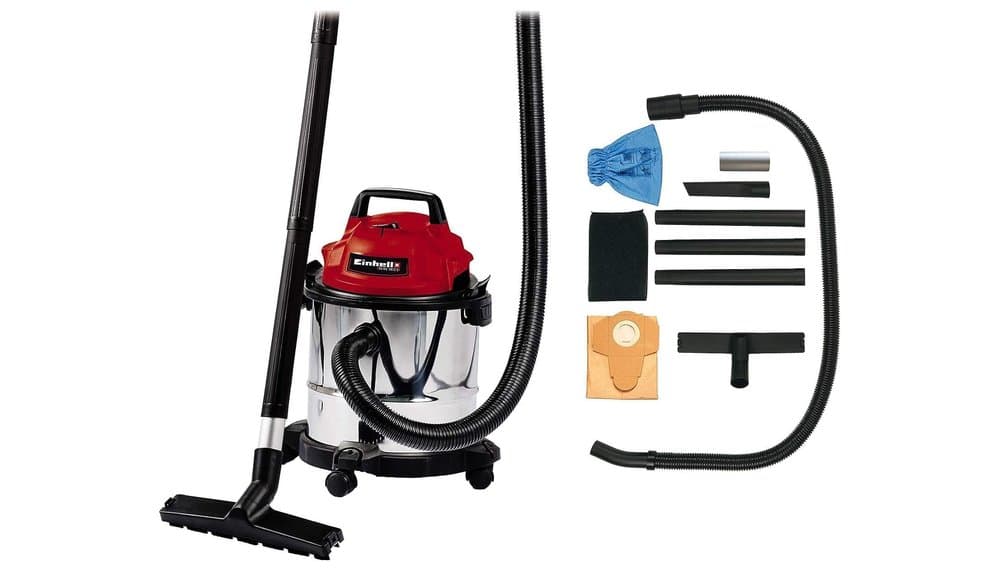
Einhell TC-VC 1812 S Wet and Dry Vacuum Review
Einhell TC-VC 1812 S wet/dry vacuum review for deep cleaning tasks, household accidents, and post-renovation cleanup. A tool for heavy-duty messes.
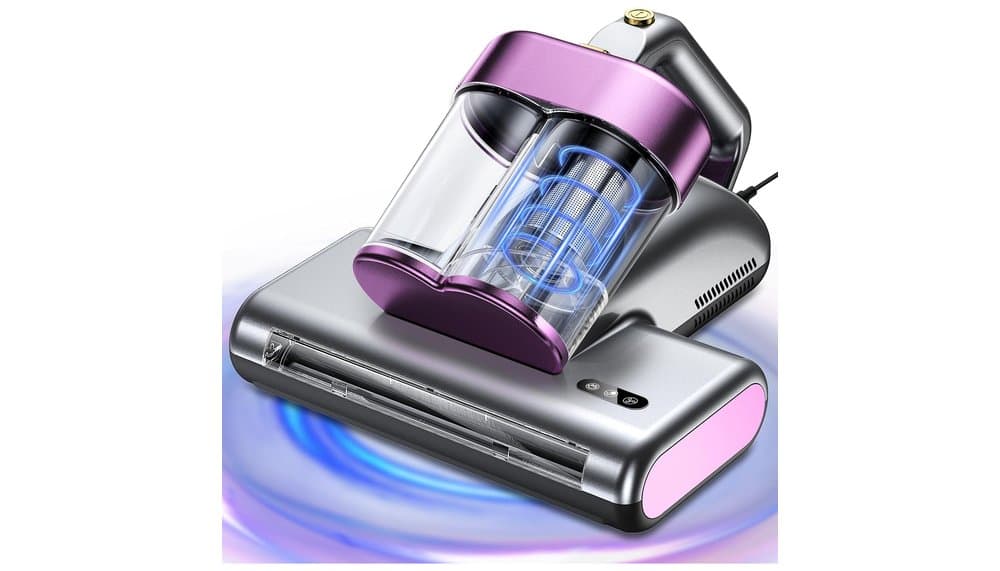
RWSRW Anti Dust Mite Vacuum Cleaner Review
Eliminate mites, dander & allergens from bedding. Discover a dedicated UV-C vacuum cleaner designed for deep, chemical-free cleaning and a healthier sleep.
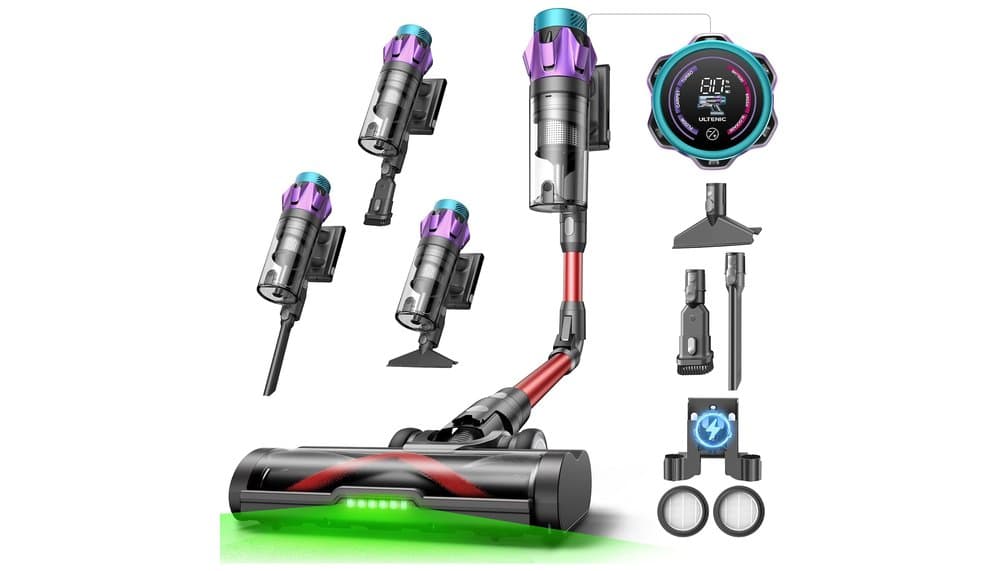
Ultenic U18 Pro Vacuum Mop Review
Explore the Ultenic U18 Pro cordless mop vacuum, balancing its power and practicality for healthier, chemical-free home cleaning.