Firlarm Gas Detector Plug-in Alarm Review
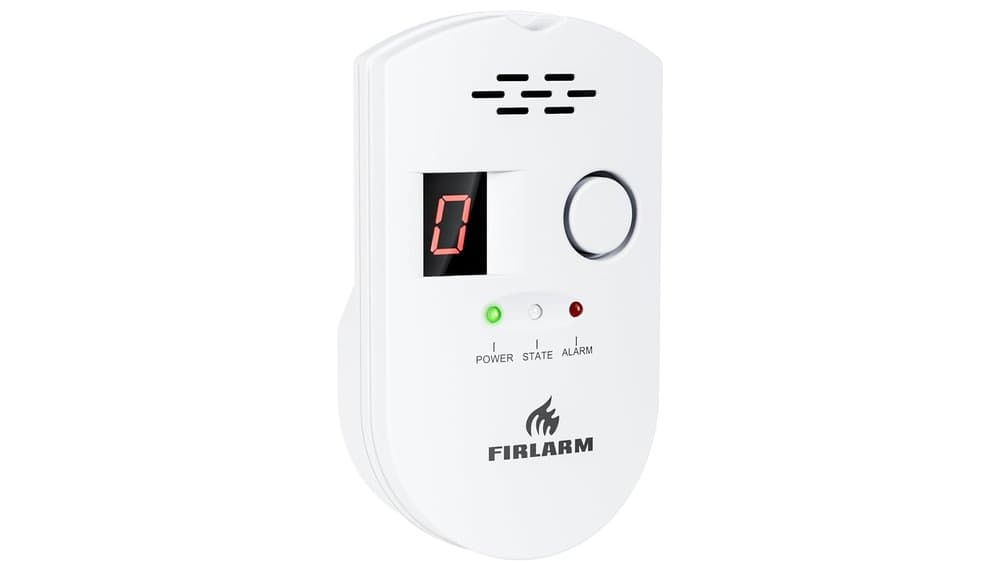
Firlarm Gas Detector Plug-in Alarm
Introduction
In our constant quest for a healthier and safer home, we often focus on visible pollutants or allergens. But some dangers, because they are invisible and odorless, require particular attention. Gas leaks, whether natural gas (methane), propane, or butane, represent a significant risk to safety and indoor air quality. This is where a dedicated monitoring device comes in, like the Firlarm Gas Detector Plug-in Alarm with Digital Display.
On a site dedicated to a healthy habitat and chemical-free cleaning, safety related to combustion appliances and heating systems is a fundamental pillar. This detector does not purify the air in the way a HEPA purifier would, but it acts as an essential sentinel against one of the most dangerous forms of indoor pollution. We will analyze its features, operation, and what it truly brings to your home environment in depth.
See also: RISOON WiFi CO Detector Carbon Monoxide Alarm Review · FireAngel FA6812 LCD Digital CO Detector Review
Key Strengths
- Proven Certification and Safety: The EN 50194 certification is a major argument. It guarantees that the detector meets strict European standards for the detection of combustible gases, offering a basis of technical trust.
- Radical Installation Simplicity: Its plug-in format (direct connection to an outlet) makes it accessible to everyone. No complex wiring, no wall mounting required. This is a considerable practical advantage.
- Proactive Monitoring and Alert: The real-time digital reading is a valuable feature. It allows you to visualize low concentration levels (from 1 to 9% LEL) even before the alarm triggers, offering visibility on the state of the air.
- Powerful Audible Alarm: At 85 dB, the signal is designed to be heard from another room, a crucial element for an effective alert, even at night or from the living room.
- Sleek Design and Minimal Consumption: Its compact white design integrates discreetly into a kitchen or laundry room. Its electrical consumption of less than 2 watts is negligible for 24/7 monitoring.
Weaknesses
- Dependence on Location: Its effectiveness is totally dependent on the plug-in location. A poor position (too high, too far from the potential source, in a draft) can greatly reduce its ability to detect a leak.
- Sensitivity to Dirty or Humid Environments: The manufacturer itself warns against installation in dusty, greasy, or humid places, on pain of false alarms. This rules out immediate installation too close to cooking stoves without protection.
- Required Warm-up Time: Like all semiconductor detectors, it requires 2 to 3 minutes of heating after being powered on before being fully operational. It does not provide protection during this short period.
- Does NOT Detect Carbon Monoxide (CO): It is crucial to understand that this detector is specific to combustible gases (methane, propane, butane). It does not in any way replace a carbon monoxide detector, a gas just as dangerous but resulting from incomplete combustion.
- Mixed Manual and Customer Support: User feedback regularly points out problems with an unclear or poorly translated manual, which can hinder the understanding of display codes and procedures.
Detailed Product Analysis
What Role in a Healthy and Safe Home?
The Firlarm Gas Detector is a passive safety equipment. Unlike an air purifier that actively filters particles, or a dehumidifier that regulates humidity, its role is purely to monitor and alert. It does not modify the composition of the air, but it informs you of an imminent danger. In a holistic approach to indoor air quality, it represents the first line of defense against the risks of explosion and asphyxiation related to gas appliances.
Detection Technology and Targeted Pollutants
This detector uses a semiconductor gas sensor. Simplifying, this sensor heats a material whose electrical resistance changes in the presence of the targeted gases. It is a proven technology suited for domestic detection.
It specifically targets combustible gases:
- Natural gas (primarily methane, distributed via network)
- Town gas (manufactured)
- LPG (Liquefied Petroleum Gas): propane and butane, used in bottles for stoves, space heaters, or motorhomes.
Important: It detects neither carbon monoxide (CO), nor VOCs (Volatile Organic Compounds) from household products or materials, nor allergens like dust mites or pollen. Its mission is unique and specialized.
See today's priceEffectiveness, Installation, and Daily Use
The real effectiveness of this product, as many experts and savvy users point out, relies on a strategic installation. Combustible gases being lighter than air (except for propane, which is heavier), they tend to rise. The ideal location is therefore about 30 cm from the ceiling and less than 3 meters from the potential source (boiler, stove, fireplace). It is essential to avoid placing it in dead corners, behind furniture, or in drafts from doors and hoods.
The alarm triggers when the concentration exceeds 3% of the LEL (Lower Explosive Limit). This is a standard safety threshold, designed to alert well before reaching a dangerously explosive mixture. The graduated digital display from 1 to 9 (then "A") allows you to monitor the evolution of a micro-leak, providing visual feedback even before the audible alarm.
Sound Level and Impact on Comfort
At 85 decibels, the alarm is designed to wake a sleeping person. This is a level comparable to a lawnmower or a very loud alarm clock. In normal monitoring mode, the device is completely silent (no fan) and only a small green light indicates it is functioning. It emits no hum, making it perfectly suited for a bedroom (if the risk source, like a boiler, is there) or a living room, without harming acoustic comfort.
Autonomy and Lifetime Cost
Being plugged into mains power, there are no batteries to change and no consumables like a filter. This is a major economic and ecological advantage. The operating cost is limited to the low electricity consumption (less than 2W). However, durability is linked to the lifespan of the semiconductor sensor. These sensors have a limited lifespan, generally estimated between 5 and 10 years under normal conditions. The manufacturer indicates the availability of spare parts for 2 years, but the device itself can function much longer. A self-diagnostic light (STATE) is supposed to indicate the end of the sensor's life. It is therefore recommended to test it regularly with the dedicated button (without a flame) and plan for its replacement after several years.
Technical Specifications
| Characteristic | Detail |
|---|---|
| Product Name | Firlarm Gas Detector Plug-in Alarm with Digital Display |
| Gases Detected | Natural gas (methane), LPG (propane, butane), manufactured gas |
| Certification | EN 50194 |
| Alarm Threshold | 3% LEL (Lower Explosive Limit) |
| Display | Digital LED (levels 0-9 and "A") |
| Alarm | Audible (≥ 85 dB) with red flashing light |
| Power Supply | Mains 100-240V AC, 50/60Hz |
| Consumption | < 2 Watts |
| Warm-up Time | 2 to 3 minutes |
| Material | Flame-retardant PC (polycarbonate) |
| Dimensions (HxWxD) | 12.1 x 6.9 x 7.2 cm |
| Operating Range | -10°C to 50°C, <97% relative humidity |
| Warranty & Parts | 2-year legal conformity warranty |
What Users and Testers Say
Analyzing the hundreds of available reviews, a clear and nuanced trend emerges.
Recurring Positive Points:
- Regained Peace of Mind: Many users express an increased feeling of safety and peace of mind after installation, especially near a boiler or in a kitchen equipped with gas.
- Childishly Simple Installation: The fact that you simply plug it into an outlet is unanimously praised as the product's major strength.
- Effective Operation During Tests: The majority of users who tested the product (often by cautiously releasing gas from a lighter nearby) confirm that the alarm triggers and the digital display reacts, thus validating its basic operation.
- Powerful Alarm: Its sound level is judged loud enough to be heard throughout the house.
Negative Points and Warnings:
- A Critical Installation: Several reviews, including very detailed ones from knowledgeable users, emphasize that effectiveness depends entirely on placement. A disappointed user reports a detection failure while the smell of gas was present, likely due to a poor location.
- Unclear Manual: The manual is frequently criticized for its approximate translations, making understanding the display codes and procedures more difficult.
- Potential False Positives: As anticipated by the specifications, installation in a very greasy kitchen or a dusty environment can cause unwanted triggers.
- Sensitivity to Power Outages: One user notes that in case of a power cut, the device, upon restarting, can emit an alarm (probably during its heating phase), which can be surprising at night.
Conclusion
The Firlarm Gas Detector Plug-in Alarm with Digital Display is a simple, effective, and affordable safety tool for any home equipped with appliances running on natural gas, propane, or butane. Its main asset is its plug-and-play installation that makes it accessible to everyone, and its digital display offers reassuring transparency about air quality regarding combustible gases.
However, it is not magic. Its effectiveness is conditioned by thoughtful installation: near the ceiling, close to the risk source, and in a relatively clean environment. It does not exempt you from also installing a proper carbon monoxide (CO) detector, as it does not fulfill that function.
For households concerned about indoor air quality and safety, this detector is a logical and prudent complement to your arsenal. It acts as a silent sentinel against a specific and major risk. Provided you respect its limits (installation, maintenance, non-detection of CO) and test it regularly, it constitutes a wise investment for the peace of mind of the whole family, allowing you to focus on other aspects of purification and well-being in your home.
Independent and transparent — Our articles are based on in-depth research and real user reviews. No brand sponsors our content. Affiliate links help fund the site, at no extra cost to you.
Articles you might like
RISOON WiFi CO Detector Carbon Monoxide Alarm Review
Silent killer in your home? Detect odorless, deadly carbon monoxide with the RISOON WiFi alarm and protect your family.
FireAngel FA6812 LCD Digital CO Detector Review
Silent killer: Understand carbon monoxide (CO), the invisible, odorless gas from incomplete combustion, and how to protect your home and family.

INKBIRDPLUS Portable CO2 Detector Air Quality Monitor Review
INKBIRDPLUS portable CO2 detector with an NDIR sensor, to see when a bedroom or office needs airing. CO2 only: no PM2.5, VOC or humidity reading, and no app.