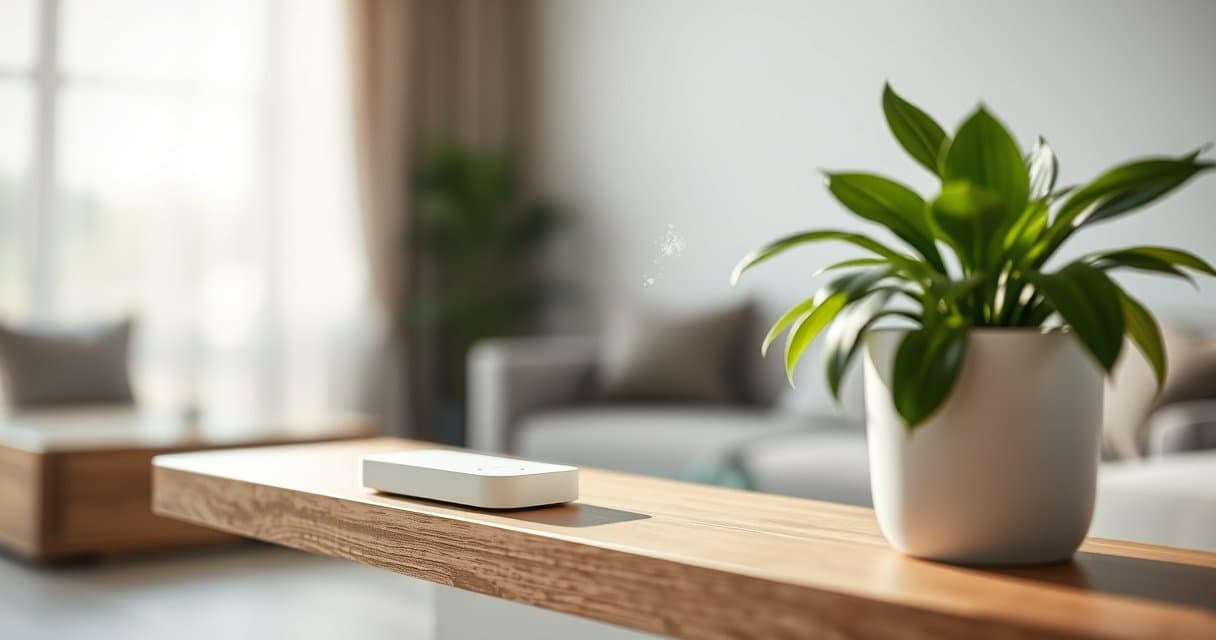
PNI SafeHouse HS291 Air Quality Sensor Review
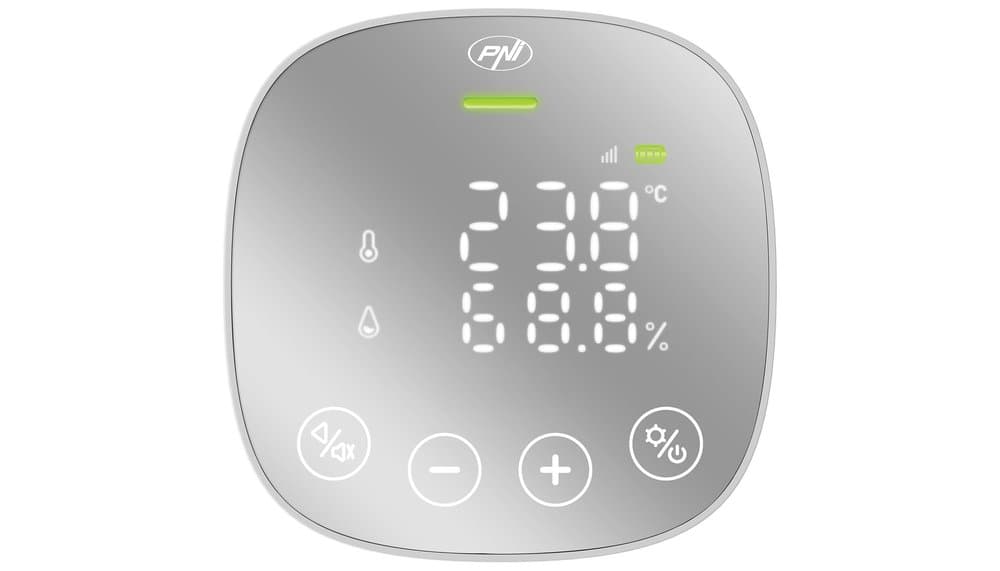
PNI SafeHouse HS291 Air Quality Sensor
Analysis of the PNI SafeHouse HS291: A Connected Air Sensor for Your Health
In our quest for a healthy home, free from chemical pollutants and allergens, the first step is always the same: knowing what we breathe. We cannot purify what we do not measure. It is with this in mind that we analyze the PNI SafeHouse HS291 Air Quality and CO2 Sensor today. This small, modern white device promises to inform us in real time about three key parameters of our environment: CO2, temperature, and humidity. But beyond the manufacturer's promises, what is it really worth for a home concerned about its air quality? Let's dive into its specifications, operation, and feedback from those who have welcomed it into their homes.
Strengths
Reliable CO2 measurement thanks to NDIR technology: The central point of this sensor is its ability to measure carbon dioxide (CO2) with Non-Dispersive Infrared (NDIR) technology. Unlike cheaper and less accurate chemical sensors, NDIR technology is known for its reliability and longevity, with an advertised lifespan of 10 years. This is a major asset for serious long-term monitoring.
Connectivity and data history: The Wi-Fi connection and integration with the Tuya Smart app transform this sensor into a proactive monitoring tool. You can view measurement history, understand daily variations, and, most importantly, receive alerts on your phone if thresholds are exceeded. This is a significant gain in peace of mind.
Backup autonomy and discreet design: The presence of an integrated lithium-ion battery providing up to 6 hours of operation in case of a power outage is a practical feature that guarantees continuous monitoring. Its compact and sleek design allows it to blend into any interior, placed on furniture or mounted on the wall.
Weaknesses
An incomplete picture of "air quality": It is crucial to understand what this sensor does not do. Despite its name "Air Quality and CO2 Sensor", it does not detect fine particles (PM2.5/PM10), VOCs (Volatile Organic Compounds), or allergens like dust mites or pollen. Its assessment is based solely on CO2, temperature, and humidity. To get a complete picture of pollutants, you will need to pair it with other devices.
Limited accuracy for temperature and humidity: While the CO2 measurement seems robust, user feedback points to uneven reliability of the temperature and relative humidity sensors. For a household managing allergy problems (where ideal humidity is between 40% and 60% to limit dust mites and mold), this inaccuracy can be a real handicap.
Dependence on a third-party app: Optimal use of the product necessarily requires the Tuya Smart app. This involves creating an account with a third party and relying on the evolution of their platform. The simplicity is there, but at the cost of a certain loss of control and sovereignty over your data.
Detailed Analysis: What is it really for in a healthy home?
CO2, a key indicator of air freshness
In our logic of a healthy home, monitoring CO2 is essential, but not for the reasons we often imagine. A high level of CO2 (above 1000-1200 ppm) is the unmistakable sign of insufficient air renewal. In a confined room, CO2 accumulates along with all the other pollutants we exhale or that our activities generate: odors, VOCs from furniture or cleaning products, etc. The PNI SafeHouse HS291 thus acts as an aeration warning device. Its visual and audible alarm, which triggers above 2000 ppm, reminds you to open the windows. It's a simple but extremely effective function for naturally and freely improving air quality.
See today's priceTemperature and humidity: Allies in the fight against allergens
The other two measurements, although less precise according to users, remain useful. Excessive humidity (above 65%) promotes the development of mold and the proliferation of dust mites, two major causes of allergies. Conversely, an atmosphere that is too dry (below 30%) can irritate the respiratory tract. Having an indication, even approximate, allows you to decide to activate a dehumidifier or, conversely, a humidifier. The temperature measurement completes this comfort picture.
What it does not replace: The limits of its monitoring
It is essential to repeat this point: this sensor is not an air purifier. It filters nothing. It informs you, that's all. If your problem is dust, pet dander, or pollen, you will need a purifier equipped with a HEPA filter. If it's persistent odors or VOCs (like those emitted after cleaning with certain chemical products), an activated carbon filter is necessary. The PNI SafeHouse HS291 is an excellent complement to these filtration devices. It will tell you when the air is stale and needs ventilation or when humidity might make your purifier or dehumidifier relevant.
Technical Specifications
| Feature | Specification of the PNI SafeHouse HS291 |
|---|---|
| CO2 Sensor | NDIR (Non-Dispersive Infrared) technology |
| CO2 Measurement Range | 400 - 5000 ppm |
| CO2 Accuracy | ±100 ppm or ±10% (whichever is greater) |
| CO2 Alarm Threshold | > 2000 ppm |
| Sensor Lifespan | Up to 10 years |
| Other Measurements | Temperature, Relative Humidity |
| Connectivity | 2.4 GHz Wi-Fi |
| Application | Tuya Smart (history, alerts, settings) |
| Battery Life | 1000 mAh Li-ion battery (≈ 6h backup) |
| Main Power Supply | 5V/1A adapter |
| Display | Integrated screen (CO2, Temp., Humid., Time) |
| Alerts | Audible and visual |
| Dimensions | 90 x 90 x 25 mm |
| Weight | 167 g |
What users say
By cross-referencing available reviews, a contrasting yet instructive picture emerges.
Recurring positive points revolve around ease of use and connectivity. Satisfied users find the Tuya app intuitive and appreciate being able to monitor their air remotely and receive alerts. The ease of installation and discreet design are also praised. The CO2 measurement, the core of the product, is generally perceived as reliable and responsive, fulfilling its role as an indicator of confinement.
Main criticisms focus on the reliability of the other sensors. Several testers report that the temperature and humidity measurements can be erroneous or inconsistent, which reduces the overall usefulness of the device for these parameters. Some also mention occasional Wi-Fi disconnections, breaking the data flow. Finally, the need to stay on the 2.4 GHz network can be a technical obstacle for some households.
The mixed overall rating (3.6/5) reflects this duality well: an excellent tool for CO2, but whose secondary features do not always deliver.
Conclusion: A good first step for awareness, but not a complete solution
The PNI SafeHouse HS291 is a tool that has a definite place in a home focused on health and air quality. Its strength lies in its ability to measure CO2 with serious technology (NDIR) and to alert you when your interior needs a good breath of fresh air. For families, remote workers, or people concerned about ventilation, this is a valuable function.
However, it must be considered for what it is: a CO2 specialist and a basic indicator of thermal and hygrometric comfort. Don't ask it to hunt allergens or neutralize paint fumes. Its role is information and prevention, not treatment.
If your goal is to take control of your home's ventilation and have a reliable indicator of confinement, this sensor represents a connected and functional option, despite the reservations about the accuracy of its other measurements. For a holistic view of your air, consider it as the cornerstone of an ecosystem that will also include, depending on your needs, a HEPA purifier, a dehumidifier, or a steam cleaner for surfaces. It gives you the data to act, but it's up to you, by opening the window or turning on the right device, to do the work of purification.
Independent and transparent — Our articles are based on in-depth research and real user reviews. No brand sponsors our content. Affiliate links help fund the site, at no extra cost to you.
Articles you might like
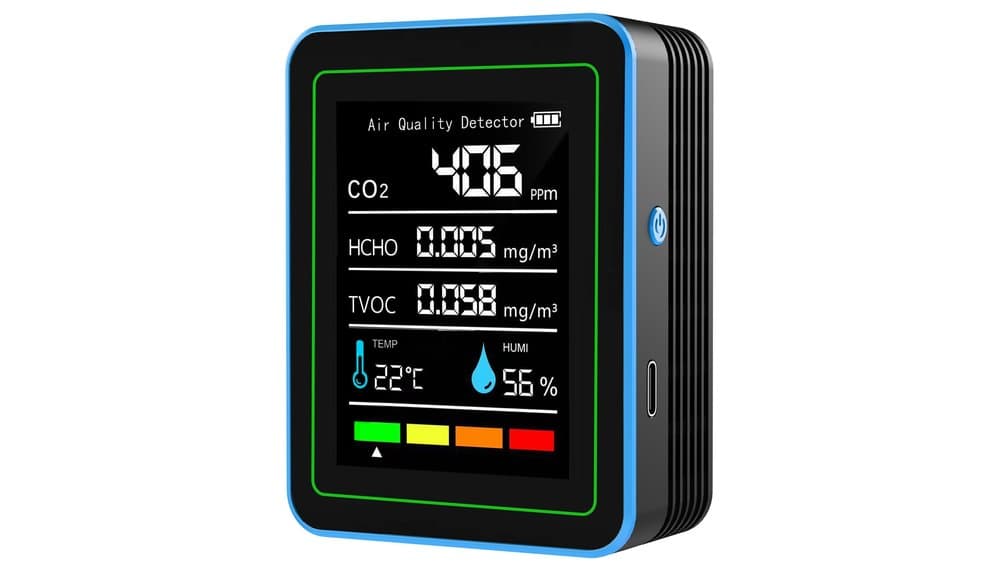
RISOON 5-in-1 Indoor Air Quality Monitor Review
Detailed review of the RISOON 5-in-1 Air Quality Monitor. Learn if this portable device accurately measures what you're breathing indoors.

RISOON 15 in 1 Indoor Air Quality Monitor Test & Review
Track indoor air pollutants with RISOON's 15-in-1 monitor. Know exactly what's in your air for a healthier home. Awareness before action.
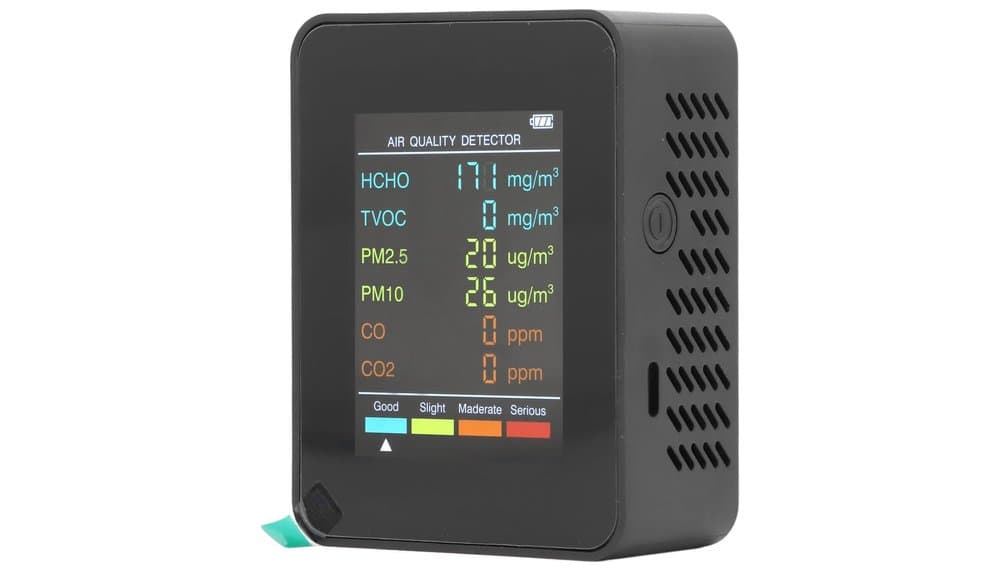
FTVOGUE CO2 Air Quality Monitor Indoor Tester Review
Track your home's air quality for a healthier life. Discover how monitors, like the FTV, reveal hidden pollutants and optimize your purifier's performance.